
The 2026 Hypercar Pantheon: A Masterclass in Automotive Extremism
The asphalt jungle has never been more thrilling. As we navigate the complexities of 2026, the hypercar sector has evolved into a breathtaking spectacle of engineering prowess, artistic expression, and raw, unadulterated power. What was once the exclusive domain of Le Mans prototypes and F1 challengers has bled into the mainstream consciousness, creating a market where demand consistently outstrips supply, and the definition of “extreme” is rewritten almost monthly.
This isn’t just about speed anymore—though speed remains the foundational currency. Today’s hypercar is a statement of intent, a rolling sculpture, and a testament to the near-limitless potential of human ingenuity when freed from the shackles of conventional automotive engineering. Whether you’re seeking the visceral thrill of a naturally aspirated V12, the mind-bending acceleration of an electric powertrain, or the sublime balance of a hybrid masterpiece, the choices available in 2026 are staggering. From the established titans like Bugatti and Ferrari to the disruptive innovators of the EV era, the church of the hypercar is more diverse, more electrifying, and more desirable than ever before.
For the seasoned collector viewing these machines as blue-chip assets, the enthusiast dreaming of a garage wall masterpiece, or the thrill-seeker chasing the ultimate driving experience, the landscape offers something for every discerning palate. Join us as we delve into the definitive list of the best hypercars defining 2026—machines that don’t just break records; they shatter our perception of what a road car can be.
The Icons: Redefining the Pinnacle
Before diving into the newest contenders, it’s crucial to acknowledge the benchmarks—the vehicles that forged the path these newcomers now tread. These legends remain fiercely relevant, proving that true automotive genius transcends model years.
The McLaren F1: The Unassailable Benchmark
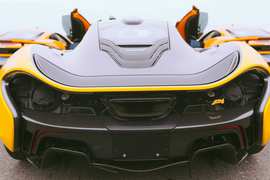
It feels almost sacrilegious to include a car born in the mid-90s on a list of 2026 hypercars, yet the McLaren F1 remains the yardstick against which all others are measured. Designed by the visionary Gordon Murray, the F1 wasn’t just fast; it was a philosophical statement. Its revolutionary three-seat layout with the driver positioned centrally offered an unparalleled sense of command. The decision to eschew power steering and traction control in favour of pure, analogue feedback resulted in a driving experience that remains, for many purists, the purest distillation of speed ever conceived.
Propelled by a bespoke, naturally aspirated 6.1-litre V12 sourced from BMW Motorsport, the F1 produced 618 horsepower. In an era where supercars struggled to break 400 horsepower, the F1’s 240 mph top speed was nothing short of science fiction. But the F1’s legacy isn’t defined by its peak velocity; it’s defined by its perfect symbiosis of weight, aerodynamics, and driver engagement. Its carbon-fibre monocoque chassis was decades ahead of its time, offering stiffness and lightness that modern rivals still strive to match.
Today, a clean F1 commands prices that dwarf even the most exotic contemporary hypercars, fetching upwards of $20 million on the collector market. Its continued relevance in 2026 isn’t nostalgia; it’s proof that true innovation, executed with surgical precision, is timeless.
The Bugatti Veyron: The Power Revolution
When Volkswagen Group announced its intention to build a 1000-horsepower road car with a top speed exceeding 250 mph, the automotive world laughed. Ferdinand Piëch had tasked his engineers with a seemingly impossible feat: blending the luxury of a Rolls-Royce with the performance of a Formula 1 car. The result was the Bugatti Veyron 16.4.
Unveiled in 2005, the Veyron stunned the world into silence. Its quad-turbocharged W16 engine—a compact marvel of engineering containing four banks of four cylinders—produced a scarcely believable 987 horsepower. This was a car that could dispatch the 0-62 mph sprint in a mere 2.5 seconds and obliterate the 200 mph barrier with contemptuous ease.
The Veyron wasn’t just fast; it was an engineering marvel of a different kind. It required a level of thermal management, aerodynamics, and transmission technology that had never before been attempted in a road-legal vehicle. The active aerodynamics, which deployed a massive airbrake at high speeds, were a visual spectacle and a technical necessity. While some critics found its immense weight and electronic complexity dulled the driving experience compared to more analogue rivals, there was no denying its impact. The Veyron single-handedly reset the performance benchmarks for the entire industry.
The Porsche 918 Spyder: The Hybrid Masterclass
In 2013, Porsche joined Ferrari and McLaren in the hypercar “holy trinity” with the 918 Spyder. While the LaFerrari focused on outright emotional intensity and the McLaren P1 emphasized track-day usability, Porsche took a pragmatic, engineering-first approach—a quintessentially German solution.
The 918 combined a high-revving, naturally aspirated 4.6-litre V8, derived from Porsche’s RS Spyder Le Mans prototype, with two electric motors. This potent hybrid system delivered a combined output of 875 horsepower and a staggering 944 lb-ft of torque. What set the 918 apart was its seamless integration. The PDK transmission and hybrid system worked in perfect harmony, providing instant throttle response and relentless acceleration.
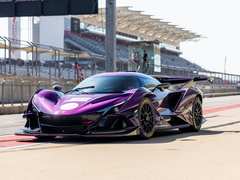
Beyond the headline figures, the 918 Spyder delivered a dynamic experience that was nothing short of sublime. Its lightweight carbon-fibre monocoque, advanced active aerodynamics, and sophisticated suspension tuning made it feel balletic on a circuit. It proved that hybrid technology wasn’t a compromise; it was an enhancement, offering both blistering performance and surprising efficiency. For many, the 918 remains the most complete and usable of the hypercar trinity.
The New Guard: 2026’s Reigning Champions
The hypercar landscape of 2026 is dominated by a new wave of machines that push the boundaries of physics, utilizing electrification and advanced materials to achieve performance levels that were unthinkable just a decade ago.
The Rimac Nevera R: The Electric Apex Predator
If the future of the hypercar is electric, then the Rimac Nevera R is its undisputed king. Hailing from Croatia, Mate Rimac’s brainchild has redefined what is possible with electric propulsion. The Nevera R isn’t just an electric car; it’s a rolling testament to the power of four-wheel independent electric motors.
With a combined output of 2,340 horsepower and 1,741 lb-ft of torque, the Nevera R is the most powerful production car ever created. This colossal power is distributed with surgical precision to each wheel, managed by Rimac’s sophisticated software. The result is acceleration that borders on the terrifying. A 0-62 mph time of just 1.74 seconds makes the Nevera R the fastest-accelerating production car on the planet. It reaches 100 mph in 3.3 seconds and covers a standing quarter-mile in a mind-bending 8.25 seconds.
Yet, what makes the Nevera R truly exceptional isn’t just its straight-line speed; it’s its usability. Despite its 2,150 kg curb weight, the Nevera R handles with the agility of a much lighter sports car. The torque vectoring capabilities of its four motors allow for cornering forces that defy conventional automotive physics. It’s a car that makes 2,000 horsepower feel approachable, controllable, and, most importantly, fun. For the tech-forward collector, the Nevera R is the ultimate statement piece.
The Aston Martin Valkyrie: The Formula 1 Car for the Road
When Aston Martin partnered with Red Bull Racing’s legendary designer, Adrian Newey, the automotive world braced for something extraordinary. The result, the Aston Martin Valkyrie, is precisely that: a street-legal Formula 1 car that happens to have a license plate.
The Valkyrie’s design is dictated entirely by aerodynamics. Its skeletal, shrink-wrapped body is a masterclass in airflow management, generating an astonishing 1,800 kg of downforce at speed. This allows the car to corner with the tenacity of a Le Mans prototype, offering levels of grip that challenge the very definition of road-legal performance.
At its heart lies a bespoke Cosworth-developed 6.5-litre naturally aspirated V12 engine. This high-revving masterpiece screams to a dizzying 11,000 rpm, producing 1,139 horsepower. Paired with a lightweight hybrid system, the Valkyrie delivers a driving experience that is nothing short of visceral. The noise, the vibration, the sheer physical intensity of the experience—it’s a pure, unadulterated assault on the senses. While its extreme nature makes it demanding on the road, on a racetrack, the Valkyrie is in its element, offering a glimpse into the future of motorsport-derived road cars.
The Lamborghini Revuelto: The V12’s Fiery Rebirth
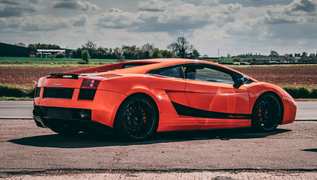
For years, Lamborghini loyalists feared the inevitable transition to electrification would signal the end of the screaming, naturally aspirated V12. With the Revuelto, Lamborghini has answered those