
The 2026 Hypercar Pantheon: From Electric Megawatts to Analog Souls
The landscape of the hypercar has fundamentally shifted. What was once a niche enclave for the ultra-wealthy—defined by naturally aspirated V12s and manual gearboxes—has exploded into a diverse, high-stakes arena where electric power and computational design are rewriting the rulebook. As we navigate 2026, the choices for the discerning billionaire or the passionate collector are richer and more bewildering than ever. We’re no longer just talking about fast cars; we’re discussing rolling sculptures, technological marvels, and the final bastions of the internal combustion engine.
This isn’t just about chasing 200 mph anymore. It’s about achieving orbital G-forces, crafting sustainable luxury, or preserving a visceral connection to the machine that dates back to the dawn of motoring. Whether you’re drawn to the ethereal silence of a 2,000-horsepower electric titan or the raw, mechanical scream of a methanol-burning V12, the church of the hypercar is broader, more exhilarating, and more competitive than at any point in history. Welcome to the definitive guide to the best hypercars that money can buy, drive, or simply dream about in 2026.
The Contenders: A Gallery of Mechanical Masterpieces

To truly appreciate the current state of hypercar evolution, one must look at the heavyweights that define the segment. These are the machines that grace bedroom walls, dominate auction headlines, and push the very boundaries of what automotive engineering can achieve.
The Electric Titans: Rimac Nevera R and the EV Revolution
In 2026, any discussion of hypercars is incomplete without acknowledging the seismic shift brought about by electrification. Leading this charge is the Rimac Nevera R. Emerging from the crucible of development that birthed the world’s first production EV hypercar, the Nevera R represents the apex of electric performance. It dismisses the notion that EVs are merely “green” alternatives, positioning itself instead as the absolute benchmark for straight-line acceleration and technological integration.
Powering this Croatian marvel are four independent electric motors, each meticulously tuned to deliver torque with surgical precision. The combined output is a staggering 2,078 horsepower, channeled through a sophisticated all-wheel-drive system managed by proprietary software that anticipates driver inputs milliseconds before they occur. The result is a 0-60 mph time that borders on the absurd—a reported 1.7 seconds. To put that into perspective, the Nevera R hits 100 mph in under 3.3 seconds, effectively out-accelerating the vast majority of sports cars through the first three gears.
But the Nevera R is more than just a drag strip demon. Its carbon fiber monocoque chassis, developed with input from Formula 1 engineers, provides a rigidity that belies its 2,150 kg weight. The handling is balletic, the braking forces immense, and the ability to customize power delivery for each wheel transforms the driving experience from merely fast to neurologically overwhelming. It is a technological statement, proving that the future of performance is electric, and it is already here.
The V12 Renaissance: Aston Martin Valhalla and the Hybrid Future
While electric power surges forward, the purists have found a powerful ally in hybrid technology. The Aston Martin Valhalla exemplifies this trend, representing a calculated, sophisticated pivot for the storied British marque. Born from a collaborative lineage tracing back to the extreme Valkyrie project, the Valhalla refines that extreme ethos into a more attainable, road-focused package.
At its heart lies a potent hybrid powertrain, pairing a mid-mounted, bespoke V8 engine—developed in partnership with Mercedes-AMG—with three electric motors. The combined output of 1,064 horsepower is delivered through a lightning-quick dual-clutch transmission. This is not merely about raw numbers, however. Aston Martin has meticulously calibrated the Valhalla to deliver an experience that bridges the gap between brute force and driving finesse. The electric motors provide instant torque fill, eliminating lag and ensuring the V8 operates in its most sonorous and powerful rev range.
Visually, the Valhalla is a masterpiece of aerodynamic sculpture. Its bodywork, crafted from advanced carbon composites, is shaped by airflow, generating downforce that presses the car into the tarmac as speeds rise. The driving position is central and low, offering a panoramic view of the road that enhances the feeling of connection and control. In a world increasingly dominated by screens and software, the Valhalla stands as a testament to the enduring appeal of the internal combustion engine, enhanced rather than replaced by electrical assistance.
The Analog Soul: Gordon Murray’s GMA T.50
In an era defined by hybridization and active aerodynamics, Gordon Murray’s GMA T.50 is a defiant act of automotive conservatism. Conceived by the legendary designer of the McLaren F1, the T.50 is a love letter to the analogue driver. It strips away the digital crutches—traction control, stability management, and even power steering—to deliver a raw, unfiltered driving experience that is increasingly rare in the hypercar realm.
The soul of the T.50 is its 4.0-liter naturally aspirated V12, developed by Cosworth. It revs to a spine-tingling 12,100 rpm, producing 654 horsepower. While these figures may seem modest compared to its electrified rivals, the T.50’s magic lies in its engineering philosophy. The car weighs a mere 986 kg, making it one of the lightest hypercars ever produced. This featherweight construction, combined with a perfect 40:60 front-to-rear weight distribution, results in agility and responsiveness that modern, heavier machines simply cannot match.

Perhaps the T.50’s most defining feature is its innovative fan system. A 48-volt electric fan integrated into the rear of the car actively manages airflow over the bodywork, creating a low-pressure zone that generates an astonishing amount of downforce—up to 1,800 kg at speed. This allows for the use of a smooth, flowing body design devoid of large wings and dive planes, maintaining a timeless aesthetic. For the purist, the T.50 is the ultimate hypercar: a lightweight, analog machine that demands skill, rewards precision, and offers a driving experience that is both visceral and deeply satisfying.
The Digital Edge: Czinger 21C
Hailing from the United States, the Czinger 21C represents the bleeding edge of automotive manufacturing. This hypercar is not merely assembled; it is 3D-printed. Utilizing advanced additive manufacturing techniques, Czinger has created a vehicle that pushes the boundaries of material science and design topology.
The 21C’s structure is a testament to this innovation. Its chassis is a lattice of printed titanium and carbon fiber, resulting in a structure that is both incredibly strong and astonishingly lightweight. The car’s design is a study in digital optimization, with every surface and curve calculated to manage airflow and reduce drag. This results in a hypercar that achieves aerodynamic efficiency levels previously thought impossible for road-legal vehicles.
Under the skin, the 21C is powered by a bespoke 2.88-liter twin-turbocharged V8 engine, complemented by an advanced hybrid system. The combined output exceeds 1,250 horsepower, propelling the car to a claimed top speed of over 250 mph. But the 21C’s true innovation lies in its driver interface. The cabin features a tandem seating arrangement, placing the driver and passenger in a fighter-jet-like configuration. This focus on the driver’s experience, combined with the car’s digital precision, creates a driving experience that is both futuristic and exhilarating.
The Evolving Narrative: Redefining Hypercar Excellence
The evolution of the hypercar in 2026 is not merely about incremental improvements in speed or power. It is about a fundamental redefinition of what constitutes automotive excellence. The segment is bifurcating, with manufacturers either embracing electrification and computational design or doubling down on the purity of the internal combustion engine.
The Electric Apex
The rise of electric hypercars like the Rimac Nevera R has forced a critical re-evaluation of performance metrics. With instant torque delivery and precise electronic control, EVs are rewriting the rulebook on acceleration and handling. This trend is not limited to boutique manufacturers. Established players like Porsche, with its Mission R concept, and McLaren, with its rumored P1 successor, are investing heavily in electric hypercar technology. The implications for the automotive industry are profound, suggesting that the hypercar of the future may bear little resemblance to its gasoline-powered ancestors.
The Return of the Manual
In response to the increasing digital saturation of the market, a counter-movement championing analogue driving has emerged. The Koenigsegg CC850, for example, features a revolutionary “manual” transmission that allows the driver to select gears via a traditional lever and clutch pedal, while still offering the efficiency and speed of an automated system. This trend signals a recognition among manufacturers that for many buyers, the driving experience itself—the connection between driver and machine—is the ultimate luxury.
The New Benchmark: Formula 1 Technology for the Road
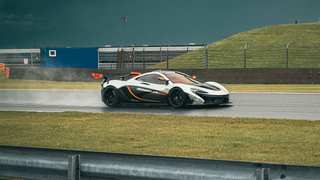
The line between Formula 1 and road cars has become increasingly blurred. Manufacturers are leveraging their motorsport expertise to create road-legal hypercars that offer race-car levels of performance. The Ferrari F80, for instance, draws direct inspiration from the Scuderia’s latest Formula 1 cars, incorporating advanced aerodynamics and hybrid technology to achieve track-ready performance. This trend suggests that