🔻 WATCH THE VIDEO BELOW 🔻

The Evolution of Automotive Extremes: A Deep Dive into the World’s Most Powerful Cars
In the relentless pursuit of speed and engineering perfection, the automotive industry has consistently pushed boundaries, transforming the concept of a “powerful car” from a mere descriptor of engine size into a benchmark for technological innovation. Over the past decade, we’ve witnessed a paradigm shift, moving away from traditional internal combustion engines (ICE) as the sole arbiter of performance. Today, the landscape is dominated by a thrilling fusion of electrification and hybrid technology, creating machines that redefine what is possible on four wheels. This evolution has been nothing short of spectacular, with horsepower figures that once belonged to the realm of science fiction now becoming standard fare for the world’s elite hypercars.
The term “hypercar” itself has evolved to encompass vehicles that transcend the capabilities of traditional supercars. While a supercar might offer exhilarating performance for the track-day enthusiast, a hypercar represents the pinnacle of automotive engineering, often produced in extremely limited quantities and featuring technologies usually reserved for Formula 1 or Le Mans prototypes. These machines are not just about raw power; they are about the seamless integration of aerodynamics, materials science, and cutting-edge powertrain technology. The quest for the title of “world’s most powerful car” is a continuous arms race, with manufacturers vying for supremacy through increasingly sophisticated and often astonishing engineering feats.
The modern hypercar landscape is a testament to human ingenuity. We are no longer just talking about adding more cylinders or increasing displacement; we are witnessing the dawn of an electric era where battery technology and power electronics are enabling performance levels previously unimaginable. This shift is not merely a trend; it represents a fundamental change in the automotive industry’s trajectory, driven by environmental regulations, technological advancements, and the insatiable desire of engineers to break records.
Let us embark on a comprehensive exploration of the most powerful cars that have graced our roads and racetracks, tracing the lineage of these engineering marvels and understanding the forces that drive their creation. From the thunderous V12s of yesteryear to the silent, electrifying force of today’s contenders, this journey will illuminate the remarkable progress that has redefined automotive excellence.
The Dawn of the Hybrid Era: Electrification Takes Center Stage
The early 2010s marked a turning point in the hypercar segment. Manufacturers began to experiment with hybrid powertrains, initially as a way to reduce emissions and improve fuel efficiency. However, it quickly became apparent that electric motors offered a significant performance advantage, providing instant torque and seamless power delivery that traditional engines could not match. This realization spurred a new wave of innovation, leading to the development of some of the most technologically advanced vehicles ever produced.

One of the pioneering models in this new era was the Ferrari LaFerrari. Introduced in 2013, it represented Ferrari’s first production hybrid, combining a high-revving V12 engine with a KERS (Kinetic Energy Recovery System) similar to those used in Formula 1. This synergy of technologies produced a combined output of 963 horsepower, shattering previous benchmarks for hybrid performance. The LaFerrari wasn’t just about power; it was a masterclass in aerodynamics and lightweight construction, utilizing carbon fiber extensively to achieve a dry weight of just 1,255 kg (2,767 lbs). Its success demonstrated that hybrid technology could enhance, rather than detract from, the pure driving experience that Ferrari customers demanded.
Following Ferrari’s lead, McLaren unveiled the P1 in the same year. Positioned as a spiritual successor to the legendary McLaren F1, the P1 took a more performance-focused approach to hybridization. It featured a twin-turbocharged V8 engine paired with an electric motor, producing a total of 916 horsepower. The P1’s innovation lay in its active aerodynamics and advanced hybrid system, which allowed for significant downforce generation and torque vectoring capabilities. This technological prowess enabled the P1 to achieve lap times that rivaled the best track-focused cars of its era, despite being a road-legal vehicle.
These early hybrid hypercars set the stage for the intense competition that would follow. They proved that electrification was not a compromise but a pathway to even greater performance, inspiring a generation of engineers to explore the full potential of electric motors and battery technology.
The Reign of the Internal Combustion Engine: V12 Power Reaches Its Zenith
While the hybrid era was dawning, the traditional internal combustion engine was also reaching its zenith. Manufacturers continued to refine their V12 and W16 powertrains, extracting ever-increasing levels of power through forced induction and advanced materials. This period saw some of the most iconic and powerful ICE hypercars ever created, pushing the boundaries of what was mechanically possible.
The Bugatti Veyron, and its successor the Chiron, stand as towering achievements in ICE engineering. The Veyron, launched in 2005, was a technological marvel that redefined the term “hypercar.” Its quad-turbocharged W16 engine produced 1,001 horsepower, shattering all previous production car records. The Veyron was a testament to the engineering prowess of Volkswagen Group, demonstrating that a massive, powerful engine could be packaged into a relatively compact and luxurious chassis. Its successor, the Chiron, took this formula to the next level, increasing the power output to 1,500 horsepower. This staggering figure allowed the Chiron to achieve a top speed of over 261 mph (420 km/h), albeit electronically limited for safety. The Chiron represents the pinnacle of ICE hypercar development, combining raw power with unprecedented levels of refinement and technology.
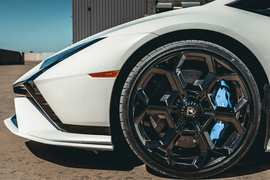
Beyond Bugatti, Lamborghini continued its tradition of producing naturally aspirated V12 masterpieces. The Aventador, launched in 2011, featured a screaming 6.5-liter V12 engine that produced around 700 horsepower in its initial guise. Over the years, Lamborghini released various limited-edition variants that pushed this figure even higher. The Aventador SVJ (Super Veloce Jota), for example, produced 770 horsepower, making it one of the most powerful naturally aspirated production cars ever made. The Aventador’s success lay not just in its power but in its dramatic design and the visceral driving experience it offered, characterized by its thunderous exhaust note and razor-sharp handling.
These ICE hypercars, while eventually surpassed in raw power figures by their electric counterparts, remain iconic for their engineering achievements and the pure, unadulterated driving experience they provide. They represent a significant chapter in the history of automotive performance, showcasing the remarkable capabilities of the internal combustion engine at its absolute peak.
The Electric Revolution: Battery Power Takes Over
The mid-2010s saw a dramatic shift in the hypercar landscape as battery technology and electric motor performance continued to advance at an exponential rate. Manufacturers realized that electric powertrains offered significant advantages over ICE, including instant torque, superior power density, and the potential for more sophisticated torque vectoring systems. This realization triggered a wave of electric hypercars that would soon eclipse their gasoline-powered predecessors in terms of raw power output.
The Rimac CTwo, later renamed the Nevera, emerged as a true game-changer in this new era. Developed by the Croatian company Rimac Automobili, the Nevera is a fully electric hypercar that combines four independent electric motors, one for each wheel, with a massive battery pack. This configuration allows for an unprecedented level of control over torque distribution, enabling the Nevera to achieve performance figures that were previously unthinkable. With a combined output of 1,914 horsepower and 2,360 Nm (1,741 lb-ft) of torque, the Nevera can accelerate from 0 to 60 mph (97 km/h) in just 1.85 seconds and reach a top speed of 258 mph (412 km/h). The Nevera is not just a straight-line speed demon; its advanced torque vectoring system allows for incredible agility and handling on the track, making it a formidable competitor to even the most track-focused ICE hypercars.
Following Rimac’s lead, Lotus, a brand synonymous with lightweight sports cars, unveiled the Evija. This all-electric hypercar represents Lotus’s bold foray into the realm of electrification. The Evija features four electric motors, one powering each wheel, producing a combined output of 2,000 horsepower and 1,700 Nm (1,254 lb-ft) of torque. This makes the Evija one of the most powerful production cars ever built. Its lightweight carbon fiber monocoque construction keeps the weight down to around 1,680 kg (3,704 lbs), allowing for a 0-60 mph time of under 3 seconds and a top speed of over 200 mph (322 km/h). The Evija showcases Lotus’s commitment to performance through lightweight design and advanced aerodynamics, proving that electric power can be combined with the brand’s traditional DNA.
These electric hypercars represent the cutting edge of automotive technology, pushing the boundaries of what is possible with electric powertrains. They demonstrate that electrification is not a compromise but a pathway to even greater performance, inspiring a new generation of engineers to explore the full potential of electric motors and battery technology.
The Pursuit of 2,000 Horsepower: A New Benchmark
As electric technology advanced, the 1,000-horsepower mark, once the exclusive domain of hypercars, became a mere stepping stone. The next major milestone in hypercar development was the 2,000-horsepower barrier. This ambitious target pushed manufacturers to innovate in battery technology, power electronics, and thermal management systems.
One of the most significant achievements in this pursuit was the Aspark Owl, a Japanese electric