🔻 WATCH THE VIDEO BELOW 🔻

The 2025 Edition: A Deep Dive into the World’s Most Powerful Cars
For the automotive enthusiast who has seen it all, the quest for the ultimate expression of engineering prowess often leads to a specific niche: the hypercar. These are not your everyday vehicles; they represent the bleeding edge of automotive technology, where constraints of practicality, comfort, and cost are set aside in favor of pure performance. In 2025, the landscape of these titans has shifted once again, with new contenders challenging the established order and pushing the boundaries of what we thought possible. This comprehensive analysis delves into the elite echelon of the world’s most powerful cars, examining the engineering marvels, design philosophies, and market dynamics that define this exclusive club.
Understanding the Hypercar Phenomenon
Before embarking on this journey into raw power, it is essential to define what separates a hypercar from a supercar. While the line can often blur, a hypercar generally signifies a vehicle that exists in a different league altogether. It is not simply about a higher horsepower figure; it is about the holistic integration of cutting-edge technology, exotic materials, and aerodynamic sophistication. A supercar might offer exhilarating performance, but a hypercar pushes the envelope to such an extent that it redefines automotive benchmarks.
The 2025 landscape is particularly interesting because it showcases a significant shift in powertrain technology. While internal combustion engines (ICE) have long reigned supreme, electric and hybrid powertrains are increasingly claiming the top spots. This transition reflects the broader automotive industry’s pivot towards electrification, but in the hypercar realm, it is not driven by environmental concerns as much as by the pursuit of ultimate performance. Electric motors offer instant torque and unprecedented power delivery, allowing engineers to achieve performance figures that were once confined to the realm of science fiction.
The Top Tier: 2025 Rankings
Topping the 2025 charts is a familiar name, albeit with a new benchmark. The Devel Sixteen, once a concept that many dismissed as pure fantasy, has solidified its place as the most powerful production hypercar in the world. In its 2025 iteration, the Sixteen boasts an astonishing 5,000 horsepower output. This figure is achieved through a quad-turbocharged V16 engine, a marvel of engineering that pushes the boundaries of internal combustion. While its claimed top speed of 350 mph remains a topic of debate among industry insiders, its on-track performance has silenced many skeptics. The Sixteen is a testament to what happens when an automaker refuses to bow to convention, prioritizing audacious engineering over market trends.
Securing the second position is a vehicle that represents the pinnacle of electric hypercar development: the Rimac Nevera. This Croatian-built machine is a masterclass in electric performance, combining a revolutionary quad-motor setup with advanced battery technology. In 2025, the Nevera continues to hold the title for the fastest accelerating production car, reaching 60 mph in a staggering 1.74 seconds. Its 1,914 horsepower output might seem modest compared to the Devel Sixteen, but the Nevera’s performance is a demonstration of electric powertrains’ potential. The car’s sophisticated torque vectoring system allows for unprecedented levels of control and agility, making it as capable on a twisting race track as it is on a straightaway.
The third spot is occupied by another electric marvel, the Lotus Evija. This British hypercar represents a significant departure for the iconic brand, marking its foray into the high-performance electric segment. The Evija’s 2,000 horsepower output is generated by four electric motors, one for each wheel, providing a seamless and powerful surge of acceleration. What sets the Evija apart is its focus on handling and driver engagement. Lotus engineers have meticulously optimized the car’s weight distribution and aerodynamics to deliver a driving experience that is both exhilarating and precise. In 2025, the Evija remains a benchmark for electric hypercar dynamics, proving that electrification does not have to come at the expense of driving pleasure.
A Close Contender: Pininfarina Battista
Just shy of the top three is the Pininfarina Battista, a stunning testament to Italian design and engineering. Developed by Automobili Pininfarina, a subsidiary of Mahindra & Mahindra, the Battista shares its powertrain with the Rimac Nevera, offering a similar 1,900 horsepower output. However, the Battista’s true magic lies in its design. Crafted by the legendary Italian design house, the car is a work of art, with flowing lines and an aggressive stance that commands attention. The interior is equally impressive, combining luxurious materials with cutting-edge technology to create a cockpit that is both beautiful and functional. In the 2025 market, the Battista stands out as a hypercar that prioritizes style and elegance without compromising on performance.
The American Challenger: Hennessey Venom F5
Representing the United States on this prestigious list is the Hennessey Venom F5. This Texas-built machine is a brute-force marvel, powered by a twin-turbocharged V8 engine that produces a staggering 1,817 horsepower. The F5 is a testament to American engineering ingenuity, showcasing what can be achieved when performance is the sole objective. While its electric counterparts may offer quicker acceleration, the Venom F5’s raw, mechanical power delivery provides a visceral driving experience that is increasingly rare in the modern automotive landscape. The car’s top speed of over 300 mph has been validated in real-world testing, cementing its place as one of the fastest internal combustion-powered cars in the world.
The Technical Marvel: SSC Tuatara
SSC North America’s Tuatara continues to be a dominant force in the hypercar world, pushing the boundaries of what is possible with a production vehicle. In 2025, the Tuatara remains available in multiple configurations, with the most powerful version boasting a remarkable 1,750 horsepower. What sets the Tuatara apart is its relentless pursuit of aerodynamic efficiency. The car’s design is a masterclass in airflow optimization, with advanced aerodynamic features that allow it to achieve incredible speeds. While the Tuatara has faced some controversy regarding its top speed claims, SSC has consistently pushed the envelope, demonstrating the car’s true potential on proving grounds around the world.
The German Contender: Mercedes-AMG ONE
Mercedes-AMG’s entry into the hypercar arena, the ONE, is a technical marvel that brings Formula 1 technology to the road. This hybrid hypercar combines a turbocharged 1.6-liter V6 engine with four electric motors to produce a combined output of over 1,000 horsepower. What makes the ONE truly unique is its powertrain, which is derived directly from Mercedes’ championship-winning Formula 1 cars. The engine revs to an astonishing 11,000 rpm, delivering a driving experience that is unlike anything else on the road. In 2025, the ONE remains a highly sought-after machine, representing the pinnacle of automotive engineering and a testament to Mercedes-AMG’s commitment to performance.
The Lightweight Champion: Gordon Murray Automotive T.50
At the opposite end of the spectrum from the power-obsessed machines on this list is the Gordon Murray Automotive T.50. This hypercar, designed by the legendary Gordon Murray, eschews the pursuit of ultimate horsepower in favor of a holistic approach to performance. Powered by a naturally aspirated V12 engine, the T.50 produces “only” 725 horsepower. However, what it lacks in raw power, it makes up for in weight, aerodynamics, and driver engagement. At just 986 kg, the T.50 is incredibly light, allowing it to achieve remarkable performance figures despite its modest power output. The car’s unique fan-assisted aerodynamics and manual transmission provide a driving experience that is both exhilarating and pure, making it a favorite among purists.
The Electrified Future: NIO EP9
The Chinese automaker NIO’s EP9 continues to make waves in the hypercar world, demonstrating the prowess of Chinese engineering. This all-electric hypercar boasts an impressive 1,341 horsepower output, distributed among four electric motors. The EP9 has set multiple lap records at tracks around the world, proving that electric powertrains can deliver exceptional performance. What makes the EP9 particularly interesting is its focus on technology and data sharing. NIO has made the car’s performance data publicly available, allowing enthusiasts to analyze its capabilities and learn from its engineering. In 2025, the EP9 remains a symbol of China’s growing influence in the high-performance automotive sector.
The All-Rounder: Lamborghini Revuelto
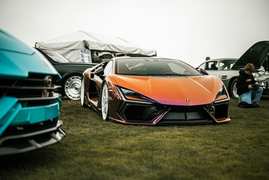
While many cars on this list are produced in extremely limited numbers, the Lamborghini Revuelto represents a more accessible entry point into the world of hypercars. As the successor to the iconic Aventador, the Revuelto combines a naturally aspirated V12 engine with a hybrid system to produce a combined output of 1,015 horsepower. The Revuelto is a testament to Lamborghini’s engineering evolution, showcasing the brand’s ability to adapt to changing times while staying true to its DNA. The car’s aggressive styling, exhilarating performance, and daily usability make it one of the most compelling hypercars on the market in 2025.
Market Dynamics and Future Trends
The 2025 hypercar market is characterized by several key trends. Firstly, the increasing dominance of electric and hybrid powertrains is undeniable. While internal combustion engines still have their place, the future of hypercar performance clearly lies in electrification. Secondly, the focus on aerodynamics and lightweight construction continues to intensify. With ever-increasing power outputs, engineers are turning to advanced