
The Definitive Guide to Hypercars: Power, Precision, and Automotive Perfection
In the rarefied atmosphere of the automotive world, where asphalt meets ambition and engineering becomes art, the hypercar reigns supreme. These are not mere vehicles; they are four-wheeled manifestations of obsession, where the boundaries of physics are pushed, and the pursuit of ultimate performance takes center stage. With 2026 ushering in a new era of automotive innovation, the hypercar landscape has never been more thrilling, more diverse, or more unattainable for the average enthusiast.
For those who dream in octane and horsepower, the world of hypercars offers a dizzying array of choices. Whether you’re captivated by the raw, unadulterated brutality of a combustion engine or the silent, electrifying surge of a next-generation EV, the market has evolved to cater to every conceivable desire. This isn’t just about speed; it’s about the visceral connection between driver and machine, the symphony of a high-revving engine, and the precision of a chassis honed for the track.
But what truly defines a hypercar in 2026? It’s a delicate alchemy of power, technology, rarity, and price. A figure that commands more than a fortune, a machine that demands respect, and a driving experience that recalibrates your understanding of what’s possible on four wheels. As we delve into the pantheon of hypercar royalty, we explore the icons that have shaped the genre and the newcomers that are poised to redefine it for a new generation.
The Titans of Torque: Internal Combustion Champions
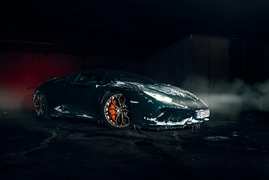
For decades, the hypercar was synonymous with the internal combustion engine, a roaring testament to man’s ingenuity in harnessing the power of controlled explosions. While the electric revolution is undeniably upon us, the allure of the V12, the ferocity of the V8, and the sheer audacity of the W16 continue to hold a powerful grip on the automotive psyche.
Bugatti: The Benchmark of Bonkers Power
No discussion of hypercars is complete without a reverence for Bugatti. This French marque, now operating under the synergistic umbrella of Bugatti-Rimac, has consistently redefined the upper echelons of automotive performance. The Chiron, successor to the legendary Veyron, remains a benchmark for a reason. Its quad-turbocharged W16 engine, a marvel of engineering, produces a staggering 1,500 horsepower, launching the car from 0 to 62 mph in a scarcely believable 2.5 seconds.
But the Chiron is more than just a straight-line weapon. Its sophisticated chassis, complete with adaptive suspension and torque vectoring, imbues it with an agility that belies its considerable mass. It’s a car that can be simultaneously brutal and balletic, a masterclass in controlled excess. The recent iterations, such as the Chiron Super Sport, push these boundaries even further, offering a driving experience that borders on the transcendental.
For the traditionalist, however, Bugatti’s latest offering, the Mistral, represents a poignant farewell to the W16 era. This open-top roadster, limited to just 99 examples, combines the raw power of the quad-turbo unit with a level of craftsmanship that borders on the artisanal. It’s a celebration of a bygone era, a rolling sculpture that commands attention with every curve and contour.
Ferrari: The Prancing Horse’s Enduring Legacy
For nearly a century, Ferrari has been the epitome of automotive passion and performance. While the marque has embraced hybridization in its road cars, its hypercar lineage remains a testament to the enduring power of the V12 engine. The LaFerrari, a cornerstone of the “holy trinity” of hybrid hypercars, demonstrated the potential of combining electric assistance with a high-revving naturally aspirated engine. Its 6.3-liter V12, capable of revving to a spine-tingling 9,250 rpm, is a symphony of mechanical perfection.
The recent introduction of the Ferrari F80 marks a new chapter for the Prancing Horse. While it retains a V12 heart, it’s a more compact, Formula 1-derived unit, augmented by a sophisticated hybrid system. This “junior hypercar,” as some have dubbed it, aims to bring the hypercar experience to a slightly more accessible price point (though still firmly in the realm of the ultra-wealthy). Its performance figures are, as expected, astronomical, but it’s the driving dynamics, honed on the demanding slopes of Fiorano, that truly set it apart.
McLaren: The Return to ‘1’
McLaren, a marque forged in the crucible of Formula 1, has always understood the delicate balance between road-going civility and track-honed precision. The legendary F1, with its central driving position and groundbreaking aerodynamics, remains an icon of automotive design. Now, the W1, bearing the sacred “1” badge, promises to continue this legacy.
The W1 represents a clean-sheet design, a complete departure from the brand’s existing lineup. At its core is a bespoke 4-liter V8 engine, augmented by a potent hybrid system. The result is a combined output exceeding 1,200 horsepower, with a claimed 0-60 mph time that dips below the 2.5-second mark. But more than the numbers, it’s the promise of McLaren’s signature driving dynamics—lightweight construction, communicative steering, and razor-sharp handling—that has the automotive world holding its breath.
The Electric Evolution: A New Breed of Hypercar
While the internal combustion engine has long dominated the hypercar landscape, the 2026 landscape is being reshaped by the inexorable rise of electric propulsion. Battery technology has advanced to the point where electric hypercars can now rival, and in some cases surpass, their fossil-fueled counterparts in terms of acceleration and overall performance.
Rimac: The Electrifying Maverick
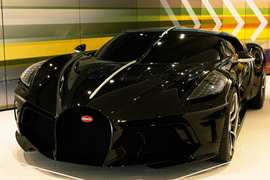
The Croatian marque Rimac has emerged as the undisputed leader in the electric hypercar segment. The Nevera, now in its R guise, is a technical tour de force. With four independent electric motors, each driving a specific wheel, the Nevera produces a mind-boggling 2,078 horsepower and an astronomical 1,740 lb-ft of torque. This translates to a 0-60 mph time of a scarcely believable 1.7 seconds and a top speed of 268 mph.
But the Nevera’s brilliance lies not just in its raw numbers. Rimac’s proprietary torque vectoring software allows for a level of chassis control and adjustability that is simply unattainable in traditional cars. It’s a car that can be simultaneously ferocious and forgiving, a testament to the potential of electric power when harnessed by visionary engineering.
Koenigsegg: The Hybrid Pioneer
Swedish manufacturer Koenigsegg has always been at the forefront of automotive innovation. The Jesko, with its revolutionary Cameraless gearbox and bespoke 5-liter twin-turbocharged V8, represents the pinnacle of internal combustion engineering. However, Koenigsegg’s recent embrace of electrification, evident in models like the CC850, demonstrates a pragmatic approach to the future.
The CC850, a tribute to the brand’s founder, Christian Von Koenigsegg, features a unique “Engage Shift System” that allows the driver to engage a fully manual gearbox with a clutch pedal, despite the presence of a sophisticated nine-speed transmission. This blend of old-world charm and cutting-edge technology perfectly encapsulates Koenigsegg’s philosophy: performance without compromise, innovation with soul.
The Analogue Anomaly: A Nod to the Past
In an era of digital dominance, there remains a segment of the hypercar market dedicated to the pure, unadulterated driving experience. These are the machines that eschew excessive electrification and complex driver aids in favor of mechanical engagement and driver involvement.
Gordon Murray Automotive: The Spiritual Successor
Gordon Murray, the visionary behind the legendary McLaren F1, has created a spiritual successor with the GMA T.50. Named for its 5-liter V12 engine, the T.50 is a masterclass in lightweight construction and aerodynamic efficiency. Its Cosworth-developed V12 produces 664 horsepower, but it’s the car’s featherlight 986 kg curb weight and manual transmission that make it truly special.
The T.50 is a car that demands driver input, rewarding skill and precision with an intoxicating blend of sound, feel, and acceleration. It’s a visceral experience, a reminder of what made the original F1 so revered.
Pagani: The Sculptural Masterpiece
Horacio Pagani’s creations are less like cars and more like moving works of art. The Utopia, his latest hypercar, is a testament to this philosophy. With a bespoke twin-turbocharged V12 sourced from Mercedes-AMG, the Utopia produces a staggering 852 horsepower. But it’s the car’s exquisite craftsmanship, its handcrafted interior, and its tactile driving experience that set it apart.
The Utopia retains a manual transmission, a nod to Pagani’s commitment to driver involvement. Its supple suspension and communicative steering create a driving experience that is both exhilarating and refined. It’s a car that celebrates the art of automotive engineering, a symphony of metal, carbon fiber, and passion.
The Rise of the “Junior” Hypercar

As technology advances and production volumes increase, the definition of a hypercar is beginning to blur. The lines between high-end supercars and entry-level hypercars are becoming increasingly indistinct, giving rise to a new category