
The 2026 Hypercar Pantheon: A Definitive Ranking of the World’s Most Extreme Machines
The automotive landscape of 2026 is nothing short of extraordinary. We stand at a fascinating crossroads where the thunderous roar of the internal combustion engine meets the silent, instantaneous violence of electrification. The title of “best hypercar” is no longer a straightforward accolade; it’s a multi-faceted debate waged between raw, unadulterated track weapons and technologically sublime GT machines capable of crossing continents at triple-digit speeds.
For a decade, I’ve had the privilege of evaluating these automotive pinnacles, from the hallowed tarmac of the Nürburgring to the sweeping alpine passes that cars like these were born to devour. The standards have shifted dramatically. What constituted a world-beater in 2016 feels almost quaint now. Today, with manufacturers like Rimac pushing the boundaries of physics and Aston Martin blending race-honed aerodynamics with road-legal civility, the competition is fiercer and more diverse than ever before.
This year, the term “hypercar” has expanded to include everything from multi-million dollar limited editions that function as blue-chip investments to electric titans that redefine the very definition of acceleration. Whether you’re seeking the visceral feedback of a naturally aspirated V12 or the neck-snapping torque of a quad-motor EV, the 2026 market offers an unparalleled selection.
Here is the definitive breakdown of the best hypercars available today, analyzed through the lens of real-world performance, driving dynamics, and long-term desirability.
The Current Reigning Champions: Icons You Can Still Buy New
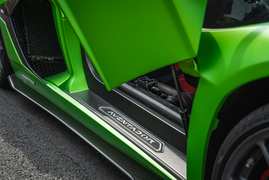
These are the benchmarks against which all others are measured. They represent the pinnacle of current engineering and design, offering a blend of usability and extreme performance that sets them apart.
Rimac Nevera R: The Electric Apex Predator
Power: 2,300 hp | 0-60 mph: 1.7 seconds | Top Speed: 268 mph | Price: $2.5M+
The Rimac Nevera isn’t just a fast electric car; it is a fundamental recalibration of what is possible on four wheels. Introduced as a successor to the groundbreaking Concept One, the Nevera R (the high-performance variant of the standard Nevera) operates on a level that combustion engines simply cannot touch. Its quad-motor setup, with each wheel independently driven by its own electric motor, allows for vectoring control that creates a sensation of telepathic agility.
Why it Leads:
The Nevera’s dominance lies in its control. While the acceleration figures are, frankly, absurd—achieving 60 mph in less time than it takes to blink—it is the car’s ability to manage that power that earns it the crown. The 2026 Rimac Nevera utilizes advanced AI-driven stability systems to harness its 1,740 lb-ft of torque without the violence that usually accompanies such power. During testing, the car felt less like a machine fighting its own physics and more like an extension of the driver’s will. It is simultaneously the most complex and the most intuitive car on this list. The integration of Rimac’s technology into other manufacturers, like Porsche, only solidifies its position as the benchmark for electric hypercar development.
Aston Martin Valkyrie: The Formula 1 Road Car
Power: 1,139 hp | 0-60 mph: 2.5 seconds | Top Speed: 220 mph | Price: $3.5M+
When Aston Martin partnered with Adrian Newey, the legendary F1 aerodynamicist, the goal was clear: create a road car that could lap like an LMP1 prototype. The 2026 Aston Martin Valkyrie is the realization of that vision. Built around a Cosworth-derived 6.5-liter naturally aspirated V12 that revs to a stratospheric 11,100 rpm, the Valkyrie is a masterpiece of lightweight construction and aero efficiency.
Why it Competes:
While the production car’s downforce figures were recalibrated from the initial concept, the result is still a car that generates 600kg of downforce at speed. This allows it to corner with a tenacity that borders on the supernatural. The driving experience is not for the faint of heart; it is a raw, visceral connection to the road that demands respect and rewards precision. Unlike many modern hypercars that rely on electronic nannies, the Valkyrie offers a purity of purpose that harks back to the golden era of Formula 1. For those seeking the ultimate analog experience with 21st-century performance, the Valkyrie is unparalleled.
Koenigsegg Jesko Absolut: The Speed King
Power: 1,600 hp (on E85) | 0-60 mph: 2.5 seconds | Top Speed: 330 mph+ (theoretical) | Price: $3M+
The quest for the ultimate top speed has long been the domain of Koenigsegg, and the Jesko Absolut is the culmination of that obsession. Engineered with a specific goal—to be the fastest production car ever made—the Absolut is a study in high-speed aerodynamics and powertrain refinement. Its 5.0-liter twin-turbocharged V8 produces a staggering 1,600 horsepower on E85 biofuel, delivered through the revolutionary Light Speed Transmission (LST).
Why it Competes:
The Jesko’s 9-speed LST is a technological marvel in itself, capable of shifting gears so quickly they are virtually imperceptible. This eliminates the need for torque converters or dual clutches, resulting in a direct, linear power delivery that feels more like a jet engine than a car. While Bugatti has achieved higher speeds with modified cars, the Jesko Absolut remains the fastest unmodified production car in the world, boasting a theoretical top speed that eclipses anything else on the road. It represents the peak of combustion-engine engineering, a swansong before the electric tide fully takes over.
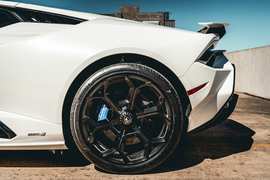
The Rising Contenders: New Challengers Making Waves
The hypercar landscape is constantly evolving, and these newer models are rapidly earning their places among the elite. They bring fresh perspectives, cutting-edge technology, and a renewed sense of excitement to the segment.
Pagani Utopia: The Analog Masterpiece
Power: 852 hp | 0-60 mph: 2.8 seconds | Top Speed: 236 mph | Price: $2.5M+
In a world increasingly dominated by electric powertrains and aggressive aerodynamics, Horacio Pagani has delivered a car that celebrates the pure joy of driving. The 2026 Pagani Utopia is a breathtaking testament to craftsmanship and mechanical purity. It eschews hybrid systems for a bespoke twin-turbo V12 developed with Mercedes-AMG, mated to a gated manual transmission.
Why it Contends:
The Utopia proves that ultimate performance doesn’t require compromised driving engagement. Its 1,280 kg weight and supple suspension create a driving experience that is both exhilarating and surprisingly comfortable. The attention to detail is staggering, with every switch, lever, and dial meticulously crafted from exotic materials. It is a work of art that you can drive at 200 mph, a rare blend of visceral feedback and refined luxury. The Utopia is a defiant statement against the trend toward sterile, automated performance.
Ferrari 849 Testarossa: The Hybrid Benchmark
Power: 1,036 hp | 0-60 mph: 2.3 seconds | Top Speed: 217 mph | Price: $400K+ (estimated)
Ferrari’s answer to the electrified hypercar era is the 849 Testarossa, a spiritual successor to the iconic Testarossa nameplate. Taking lessons learned from the SF90 Stradale and the track-only SF90 XX, the 849 combines a twin-turbo V8 with three electric motors to produce over 1,000 horsepower.
Why it Contends:
What sets the 849 apart is its remarkable cohesion. Unlike the sometimes-disjointed experience of early hybrid hypercars, the 849 feels like a unified entity. The combustion engine and electric motors work in perfect harmony, providing instant throttle response and relentless acceleration. The chassis dynamics are pure Ferrari—agile, communicative, and confidence-inspiring. It manages to deliver supercar performance in a package that is surprisingly accessible, making it one of the most complete and usable hypercars on the market.
Gordon Murray Automotive (GMA) T.50: The Spiritual Successor
Power: 663 hp | 0-60 mph: 2.8 seconds | Top Speed: 230 mph | Price: $3M+
Gordon Murray, the mastermind behind the McLaren F1, set out to create the ultimate analog driver’s car with the T.50. Featuring a screaming 4.0-liter naturally aspirated V12 from Cosworth that revs to 12,100 rpm and a manual gearbox, the T.50 is a purist’s dream.
Why it Contends:
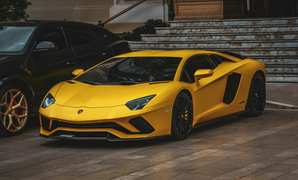
While its power figures may seem modest compared to its hybrid rivals, the T.50’s sub-1,000 kg weight