
Hypercar Renaissance: Bugatti to Pagani and the Electric Dawn
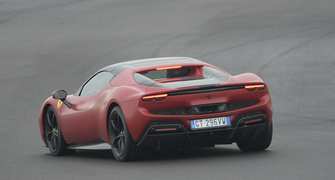
The automotive landscape of 2026 is a bewildering, exhilarating spectacle. We stand at the apex of the hypercar era, a moment where the internal combustion engine, pushed to its mechanical and sonic limits, is being hybridized and electrified into something altogether new. The church of the hypercar has never been more crowded, nor its dogma more diverse. Whether you covet a 2,000-bhp electric tire-shredder, a sinewy, naturally aspirated V12 symphony, or a four-wheeled mechanical watch, the market offers an almost embarrassing bounty. In this era of seven-figure machines and stratospheric performance, the line between bedroom wall poster and blue-chip investment has blurred completely.
The demand is insatiable, supply is finite, and the very definition of “hypercar” has expanded to encompass disciplines once thought mutually exclusive. We are witnessing the convergence of Le Mans prototypes, Formula 1 engineering, and Silicon Valley battery technology. The result is a vehicular tapestry woven with threads of carbon fiber, titanium, and pure, unadulterated excess. This is not merely about speed; it is about the poetry of physics, the audacity of engineering, and the creation of rolling sculpture that transcends mere transportation.
For the discerning enthusiast—or the investor seeking a four-wheeled asset that appreciates faster than market indices—the choices have never been richer. From the Gothic grandeur of Bugatti to the organic artistry of Pagani, the cerebral engineering of Koenigsegg to the electric violence of Rimac, the modern hypercar caters to every conceivable fantasy. Let us embark on a comprehensive survey of these automotive apex predators, exploring the icons that have defined the genre and the newcomers poised to redefine it for the next generation.
The Pantheon: Icons of the Hypercar Realm
Before we delve into the bleeding edge of 2026 technology, we must pay homage to the titans that forged this kingdom. These are the cars that broke the internet, the dynamos that recalibrated our understanding of velocity, and the benchmarks against which all successors are measured.
Aston Martin Valkyrie: The Valkyrie is not merely a car; it is a manifesto. Conceived in the crucible of Formula 1 collaboration with Adrian Newey and Red Bull Racing Advanced Technologies, it represents the ultimate distillation of racing technology for the road. When Aston Martin first unveiled its intentions in 2016, the motoring world collectively gasped. This was not an evolution of the hypercar; it was a revolution.
At its heart beats a Cosworth-derived 6.5-liter V12, a naturally aspirated behemoth that screams to an 11,000 rpm redline. Supplemented by a sophisticated hybrid system, it generates a staggering 1,139 bhp. However, the Valkyrie’s genius lies not merely in its power-to-weight ratio, though the sub-1,300 kg kerb weight is nothing short of miraculous. Its true power is aerodynamic. Newey designed a skeletal, shrink-wrapped body around the mechanicals, generating levels of downforce that border on the theoretical. While the production figures have been recalibrated from the initial LMP1-esque projections, the Valkyrie still generates 600 kg of downforce, effectively glueing the car to the tarmac.
Driving the Valkyrie is a visceral, almost spiritual experience. As evo editor-at-large Dickie Meaden noted, “At first, everything feels like it’s happening too fast… It feels unnatural, but it’s all part of the recalibration process.” The car demands total commitment, rewarding the focused driver with a level of precision and feedback that few road-legal machines can even approach. It is a pure, unadulterated expression of mechanical potential, a four-wheeled scalpel that dissects apexes with surgical precision. Its rarity, beauty, and engineering purity make it an instant classic and a coveted trophy in any collection.
Bugatti Chiron: If the Valkyrie is a scalpel, the Bugatti Chiron is a sledgehammer wrapped in silk. Successor to the legendary Veyron, the Chiron took the concept of the hyper-GT and elevated it to an absurd, magnificent extreme. Its heart is the monstrous 8.0-liter quad-turbocharged W16 engine, a symphony of forced induction that produces a baseline of 1,500 bhp in Super Sport guise. This power is deployed through a sophisticated all-wheel-drive system, launching the car from 0-62 mph in a scarcely believable 2.4 seconds.
The Chiron’s genius lies in its duality. It possesses the brutal, unadulterated performance to challenge for land speed records (achieving 304 mph in its optimized form), yet it wraps this violence in a cocoon of Rolls-Royce-like luxury. The interior is a study in exquisite craftsmanship, swathed in supple leather, polished aluminum, and rare veneers. Steve Sutcliffe, upon experiencing the Chiron, remarked, “You can push and sometimes even party a bit with the Chiron, and it doesn’t bite, doesn’t get wild. Instead, it flows from corner to corner on a tsunami of torque and poise.”
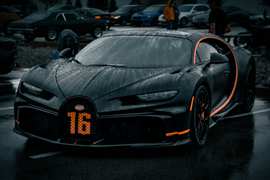
For the high-net-worth individual seeking a statement piece that can effortlessly traverse continents at triple-digit speeds while pampering its occupants, the Chiron remains the undisputed monarch. It is a testament to the power of engineering excess, a rolling monument to the Bugatti legacy.
Pagani Zonda C12 S: Before the legions of electric hypercars and hybrid behemoths, there was the Pagani Zonda. When Horacio Pagani launched his first production car in 1998, he defied convention. In an era dominated by established marques and carbon fiber monocoques, Pagani created a hypercar that was artisanal, organic, and breathtakingly beautiful. The Zonda C12 S, a zenith of the original Zonda lineage, embodied this philosophy perfectly.
While its headline figures—542 bhp, a 3.8-second 0-62 mph time—may seem modest by 2026 standards, the Zonda’s impact was profound. It used a Mercedes-AMG V12 engine, a marriage of Italian design genius and German mechanical muscle. The chassis was constructed from advanced carbon composites, and the suspension was a marvel of inboard engineering. Yet, it was the driving experience that truly set the Zonda apart. It was tactile, communicative, and deeply engaging, offering a level of driver involvement that was becoming extinct in the increasingly digitalized performance car market.
Today, Zondas are automotive totems, their values having skyrocketed past £4 million on the collector market. The Zonda C12 S represents the genesis of this phenomenon—a pure, unfiltered expression of automotive passion that remains one of the most desirable and soulful hypercars ever created.
The New Guard: Redefining the Hypercar Formula
While the icons hold their hallowed ground, the vanguard of 2026 is busy rewriting the rulebook. These are the machines that are pushing the boundaries of physics, electrifying the driving experience, and challenging our very definition of what a hypercar can be.
Rimac Nevera R: If the future of the hypercar is electric, then the Rimac Nevera R is its high priest. Developed by Croatian prodigy Mate Rimac, this all-electric machine shatters every conceivable performance metric. Powered by four independent electric motors, one for each wheel, the Nevera R generates a mind-boggling 2,078 bhp and over 1,740 lb-ft of torque. The result is the fastest-accelerating production car on the planet, capable of dispatching 0-62 mph in a scarcely believable 1.7 seconds.
But the Nevera R is more than a drag strip weapon. Its sophisticated torque-vectoring system allows for near-infinite adjustability in power distribution, creating a dynamic experience that is both astonishingly fast and surprisingly exploitable. Senior staff writer Yousuf Ashraf even managed to explore its prodigious potency on the demanding Goodwood hillclimb, proving that over 2,000 bhp can, in the right hands, feel approachable. At 2,150 kg, it is a leviathan by traditional hypercar standards, but its performance redefines the very concept of mass-energy equivalence. For the technophile seeking the ultimate expression of electric hypercar performance, the Nevera R is the benchmark.
Ferrari F80: The Prancing Horse has long been synonymous with the V12-powered hypercar, but in 2026, Maranello has embraced a radical new formula. The Ferrari F80, conceived to celebrate the marque’s 80th anniversary, represents the firm’s most complex and sophisticated road-going model to date. It retains the Ferrari DNA of motorsport-derived technology, but its powertrain is a startling departure. At its heart beats a 3.0-liter V6, augmented by both MGU-K and MGU-H electric motors.
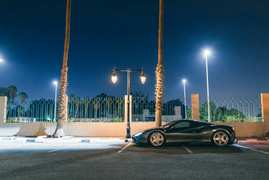
The result is a staggering 1,187 bhp, with 888 bhp originating from the V6 itself. This compact powerplant, combined with an advanced aerodynamic package that generates over a ton of downforce at 155 mph, allows the F80 to lap Fiorano 4.4 seconds quicker than the legendary LaFerrari. More importantly, Ferrari has weaponized its race technology to create a driving experience that is both deeply engaging and astonishingly intuitive. The F80 is a masterclass in systemic harmony, a car that feels less like a collection of components and more like an extension of the driver’s will. For those