
The Definitive Guide to 2026 Hypercars: From V16 Legends to 2000bhp Electric Beasts
The automotive world is currently experiencing a golden age for the hypercar. Gone are the days when such machines were confined to the realm of science fiction or ultra-niche concept cars. Today, the market is flooded with extraordinary vehicles that blur the lines between road car, race car, and digital art. Whether you’re an aspiring collector eyeing a four-wheeled blue-chip stock or a driving enthusiast seeking the ultimate thrill, 2026 offers more choice than ever before.
The sheer volume of hypercars available now is staggering—more than most manufacturers offer in their entire lineup. This isn’t just about speed; it’s about a diverse spectrum of automotive engineering that caters to every imaginable desire. We’re seeing the swansong of the internal combustion engine in the form of naturally aspirated V12s and quad-turbocharged W16s, standing defiantly against the tide of electrification. Yet, even the electric contenders are pushing boundaries previously thought impossible, promising acceleration figures that border on the absurd.
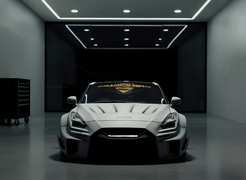
From the spiritual successors to Le Mans prototypes for the road, like the Aston Martin Valkyrie, to the analog purist’s dream in the form of the GMA T.50, the criteria for what constitutes a hypercar have expanded. Bugatti continues its legacy of brute force with the Mistral, while McLaren teases the next generation of its ‘1’ series. This is a landscape where rarity commands stratospheric prices, innovation is relentless, and the driving experience is elevated to a level of intensity few road cars can approach. Join us as we delve into the definitive list of the best hypercars defining 2026.
The Pinnacle of Hypercar Excellence: Our Top Picks for 2026
When compiling a list of the best hypercars, the bar is set impossibly high. These are not merely fast cars; they are automotive icons, engineering masterpieces, and cultural touchstones. Each vehicle on this list represents the zenith of its manufacturer’s capabilities, often pushing the boundaries of what was thought possible in terms of performance, technology, and design.
Aston Martin Valkyrie: The F1 Car for the Road
When Aston Martin announced its collaboration with Red Bull Racing’s Adrian Newey to create the Valkyrie, the motoring world collectively held its breath. This wasn’t just a new supercar; it was a manifesto—a declaration that Formula 1 levels of performance could be translated to the road. The result is a car that looks as if it was sculpted by the wind, with a skeletal, shrink-wrapped body designed to generate aerodynamic forces previously unseen outside of a race paddock.
At its heart lies a Cosworth-derived 6.5-litre V12 engine, a high-revving marvel capable of spinning to a dizzying 11,000 rpm. Coupled with a sophisticated hybrid system, the Valkyrie produces a staggering 1,139 bhp. While the initial projections of over a ton of downforce have been recalibrated for the road-legal version, the car still generates an immense 600 kg of downforce, pinning it to the tarmac at speed.
Driving the Valkyrie is described as a recalibration of the senses. The forward visibility is limited, forcing the driver to look further ahead than ever before. The acceleration is relentless, and the braking forces are immense. It demands focus and mental stamina, rewarding the driver with a connection to the machine that is both profound and exhilarating. It’s a raw, uncompromising experience that reminds us of the very essence of performance driving.
Bugatti Chiron: The Benchmark of Hyper-Luxury
The Bugatti Chiron needs little introduction. As the successor to the legendary Veyron, it was tasked with an unenviable job: to be faster, more luxurious, and more capable than the car that redefined the hypercar category. Bugatti achieved this with characteristic audacity, equipping the Chiron with its iconic quad-turbocharged W16 engine. In its Super Sport guise, this mechanical behemoth churns out a scarcely believable 1,500 bhp.
The Chiron’s performance figures are the stuff of legend. A 0-62 mph time of 2.5 seconds is merely the appetizer; it smashes through 124 mph in under four seconds, continuing to accelerate with a force that seems to defy the laws of physics. Yet, what sets the Chiron apart is its duality. Despite its mind-bending speed, it possesses an uncanny level of refinement and accessibility. The chassis is adaptive, capable of smoothing out road imperfections while also providing the poise and agility needed for spirited driving.
The driving experience is defined by a sense of flow. The Chiron doesn’t just accelerate; it glides, propelled by a tsunami of torque that makes overtaking maneuvers feel like a mere formality. It’s a car that allows you to indulge in the excess of its performance without feeling overwhelmed, a testament to Bugatti’s engineering prowess.
Bugatti Veyron: The Original Legend
Before the Chiron, there was the Veyron. When Volkswagen Group announced its intention to build a 1,000-horsepower road car with a top speed exceeding 250 mph, many dismissed it as pure fantasy. But Bugatti, with its unparalleled resources, made it a reality. The arrival of the Veyron in 2005 rewrote the rulebook for hypercars, setting a new benchmark for performance and engineering excellence.
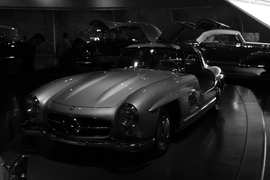
Its 1,001 metric horsepower (987 bhp) was enough to propel it from 0-62 mph in a mere 2.5 seconds, with a top speed of 253 mph. Even today, these figures remain deeply impressive. The Veyron Super Sport version pushed the envelope further, achieving a verified top speed of 267.856 mph, holding the title of the world’s fastest production car for several years.
While some critics found the Veyron less emotionally engaging than its Italian rivals, its technical achievements are undeniable. It was a triumph of engineering over skepticism, proving that the seemingly impossible could be achieved through sheer determination and innovation. The Veyron remains an icon, a symbol of a bygone era of hypercar development where internal combustion reigned supreme.
Bugatti Mistral: The Final Act of the W16 Era
For over two decades, the Bugatti W16 engine has been the beating heart of the world’s most exclusive hypercars. Now, with the dawn of electrification, Bugatti is bidding farewell to this legendary powerplant in spectacular fashion. The Mistral is the open-top iteration of the Chiron platform, a car that Bugatti-Rimac CEO Mate Rimac insisted must exist, even though the engineers never intended for a roadster version.
The Mistral is not just a Chiron without a roof; it’s a masterpiece of design and engineering in its own right. It features a unique, hand-crafted body that pays homage to Bugatti’s illustrious history, while its 8.0-litre quad-turbocharged W16 engine produces a staggering 1,578 bhp. This power allows it to achieve a verified top speed of 282.1 mph, making it the fastest open-top car in the world.
Beyond the staggering figures, the Mistral is a celebration of craftsmanship and artistry. The interior is a haven of luxury, with bespoke materials and meticulous attention to detail. Driving the Mistral is an experience that combines the raw power of the W16 with the elegance of a grand touring roadster. It’s a fitting swansong for an engine that has defined an era of hypercar excellence.
Ferrari F80: The Future of Maranello
Ferrari is no stranger to pushing the boundaries of automotive performance, but the F80 represents a significant shift in the company’s philosophy. To celebrate its upcoming 80th anniversary, Ferrari has unveiled its most complex and powerful road car yet. The F80 pays homage to the brand’s racing heritage, drawing inspiration from both Le Mans prototypes and Formula 1 cars.
At the heart of the F80 is a 3.0-litre twin-turbocharged V6 engine, a departure from Ferrari’s traditional V12 flagships. However, this is no ordinary V6. Developed with insights from Ferrari’s racing programs, it produces a remarkable 888 bhp, augmented by a hybrid system that adds another 299 bhp. The combined output of 1,187 bhp is channeled through a carbon fiber chassis and an aerodynamic package that generates over a ton of downforce at speed.
The F80’s performance is nothing short of astonishing. It can lap Ferrari’s Fiorano test track 4.4 seconds faster than the LaFerrari, the brand’s previous hybrid hypercar. Despite its complexity, the F80 is surprisingly intuitive to drive, with the software and calibration expertly blending the combustion engine and electric motors for a seamless experience. It represents a bold vision of Ferrari’s future, where electrification and racing technology converge to create something truly extraordinary.
Ferrari LaFerrari: A Hybrid Icon
The LaFerrari was a landmark vehicle for Ferrari, representing the company’s first foray into hybrid hypercars. As part of the “holy trinity” of hybrid hypercars from the early 2010s, it combined a naturally aspirated V12 engine with an electric motor to deliver a combined output of 950 bhp.
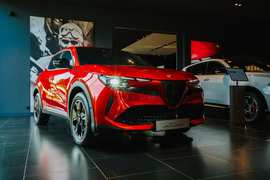
The 6.3-litre V12 engine revs to an ear-splitting 9,250 rpm, producing 789 bhp on its own. The electric system adds an additional 16