
Title: The 2026 Hypercar Pantheon: A Comprehensive Analysis of Automotive Pinnacle and Market Evolution
The global automotive landscape of 2026 is experiencing an unprecedented renaissance in the hypercar segment. Far from being a niche market catering only to the ultra-wealthy, the pursuit of automotive perfection—characterized by extreme performance, innovative materials, and boundary-pushing engineering—has evolved into a sophisticated ecosystem. This evolution is driven by a confluence of factors: the mainstreaming of electrification, the relentless demand for digital integration, and the philosophical debate between raw, analogue driving purity and synthetic, AI-optimized precision. For industry analysts, investors, and enthusiasts alike, understanding the dynamics of this market requires more than just a superficial glance at horsepower figures; it demands a deep dive into the engineering philosophies, material sciences, and brand legacies that define the modern hypercar.
The Shifting Definition of a Hypercar
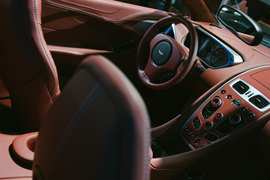
Historically, the term “hypercar” was reserved for machines that fundamentally redefined the limits of the internal combustion engine (ICE). Pioneers like the McLaren F1, with its lightweight carbon fiber monocoque and driver-centric philosophy, or the Bugatti Veyron, which shattered speed records with its quad-turbocharged W16 engine, established a benchmark based on raw power and top speed. However, the 2026 market has rendered this definition obsolete. Today, a hypercar is defined less by a singular metric and more by its holistic approach to performance and luxury.
The most significant disruptor in this redefinition is electrification. While early hybrid hypercars like the Ferrari LaFerrari and Porsche 918 Spyder were lauded for their technological prowess, they were essentially ICE cars augmented by electric motors. The new generation, spearheaded by the Rimac Nevera R, represents a paradigm shift. The Nevera R, with its staggering 2,078 horsepower delivered by four independent electric motors, redefines the relationship between power and control. Its ability to achieve 0-60 mph in a scarcely believable 1.7 seconds is not merely a statistical achievement; it represents a fundamental alteration of the driver’s perception of acceleration.
This electric revolution, however, has ignited a passionate debate within the enthusiast community. For purists, the visceral sound, mechanical engagement, and sensory feedback of a naturally aspirated engine—such as the Cosworth-derived V12 in the Aston Martin Valkyrie—are non-negotiable components of the hypercar experience. The Valkyrie, despite its comparatively modest 1,139 horsepower output, offers a level of driver involvement that electronic drivetrains struggle to replicate. This dichotomy—the synthetic perfection of the electric era versus the raw, organic connection of the combustion era—is the central tension defining the 2026 market.
Market Dynamics: Scarcity, Value, and Investment
The financial and investment value of hypercars has reached unprecedented levels. The traditional automotive market operates on principles of depreciation, where vehicles lose value the moment they leave the showroom. The hypercar market, conversely, operates on principles of appreciation, often referred to as “blue chip” asset classes. This phenomenon is driven by a combination of factors: limited production runs, the inherent difficulty of replication, and the increasing rarity of analog driving experiences.
Consider the Pagani Utopia. Priced at approximately $2.2 million new, its value has appreciated significantly due to its manual transmission and emphasis on driver engagement. In a market increasingly dominated by autonomous driving features and paddle-shift gearboxes, the Utopia represents a deliberate rejection of convenience in favor of experience. This scarcity of \”pure\” driving machines has created a speculative bubble, where buyers are not merely purchasing transportation but acquiring movable works of art and potentially appreciating assets.
Furthermore, the current market is characterized by an oversupply of digital integration and driver assistance technologies. While these features enhance safety and accessibility, they dilute the exclusivity and emotional connection that define a true hypercar. Consequently, vehicles that prioritize mechanical purity and driver skill—such as the Gordon Murray Automotive (GMA) T.50—command premium prices. The T.50’s 661 horsepower V12 engine, coupled with a manual gearbox and a curb weight of under 1,000 kilograms, offers a driving experience that cannot be replicated by modern, technologically saturated alternatives. This divergence in market valuation highlights a fundamental truth: in 2026, the most valuable hypercars are not the fastest or the most powerful, but the most authentic.
Engineering Innovation: Aerodynamics and Chassis Technology
The pursuit of performance in 2026 extends far beyond engine output. The development of hypercar chassis and aerodynamic systems has reached a level of sophistication previously exclusive to Formula 1 and LMP1 racing. The key metric is no longer simple drag reduction but the optimization of downforce, stability, and handling precision.
The Aston Martin Valkyrie serves as a prime example of this trend. Its skeletal, shrink-wrapped bodywork is designed to generate an astonishing 1,800 kg of downforce at high speeds. This is achieved through a combination of Venturi tunnels that channel air beneath the car, active aerodynamic elements, and an aggressive rear diffuser. The result is a vehicle that generates its own \”sky,\” effectively pressing itself into the track surface, allowing for cornering speeds that defy conventional physics.
However, the optimization of downforce presents a significant engineering challenge. Excessive downforce typically comes at the cost of straight-line speed due to increased drag. The 2026 hypercar landscape is defined by the delicate balance between these competing requirements. The Bugatti Mistral, for instance, achieves a remarkable 282.1 mph top speed while maintaining significant downforce levels, a feat made possible by advanced active aerodynamics and a highly optimized chassis design.
Beyond aerodynamics, materials science continues to push the boundaries of possibility. The widespread adoption of carbon fiber monocoques has become standard practice, but the latest innovations lie in the refinement of these structures. The Czinger 21C, for example, utilizes additive manufacturing (3D printing) for complex structural components, allowing for geometries that are lighter, stronger, and more aerodynamically efficient than traditional manufacturing methods permit. This technological integration is not merely about performance; it is about demonstrating the pinnacle of modern engineering capability.

The Digital Divide: Connectivity and Autonomy
The integration of digital technology into the automotive sector has reached a critical juncture. While the hypercar market has historically resisted the encroachment of autonomous driving features, the 2026 landscape is defined by the strategic deployment of these technologies. The challenge for manufacturers is to integrate digital systems in a manner that enhances the driving experience without compromising the sense of control that is central to the hypercar ethos.
The Ferrari F80 represents a potential solution to this challenge. While featuring a cutting-edge hybrid powertrain and advanced driver assistance systems, its software architecture is designed to prioritize driver feedback and engagement. The car’s control systems coalesce to create a transparent and intuitive driving experience, ensuring that the driver remains the central focus of the vehicle’s operation. This approach contrasts sharply with the trend toward full autonomy in mainstream vehicles, highlighting the fundamental difference in purpose between a consumer appliance and a driver-focused hypercar.
Furthermore, the hypercar segment is increasingly utilizing digital simulation and virtual testing environments. The development of the McLaren W1, for instance, involved extensive virtual testing to optimize its aerodynamic performance and chassis dynamics. This digital integration allows manufacturers to push the boundaries of performance in a controlled environment, accelerating the development cycle and enabling the creation of vehicles that would be impossible to develop through traditional empirical methods alone.
Regional Manufacturing and Supply Chain Dynamics
The hypercar market of 2026 is not solely dominated by established European manufacturers. The rise of boutique manufacturers and the re-emergence of national automotive pride have created a more diverse and competitive landscape. The most notable example of this trend is the emergence of American-made hypercars that rival and, in some cases, surpass their European counterparts.
The SSC Tuatara, for instance, has emerged as a serious contender in the top-speed wars, challenging the dominance of Bugatti. Its all-American engineering and manufacturing prowess represent a significant milestone in the evolution of the U.S. automotive industry. Similarly, the Rimac Nevera R, though produced in Croatia, highlights the increasing globalization of hypercar manufacturing, with components and expertise drawn from across the world.
However, this diversification has also exposed vulnerabilities in the supply chain. The production of hypercars relies on highly specialized components, many of which are sourced from a limited number of suppliers. The COVID-19 pandemic and subsequent geopolitical tensions have highlighted the fragility of these supply chains, leading manufacturers to prioritize vertical integration and the development of in-house manufacturing capabilities. This trend toward self-sufficiency is likely to shape the competitive landscape for years to come, as manufacturers seek to insulate themselves from external disruptions.
Sustainability and the Future of the Hypercar
The automotive industry is facing increasing pressure to adopt sustainable manufacturing practices. While the concept of a \”green\” hypercar may seem paradoxical, manufacturers are exploring innovative solutions to mitigate the environmental impact of their products.
The electrification of hypercars is the most obvious manifestation of this trend. By replacing traditional internal combustion engines with electric powertrains, manufacturers can significantly reduce emissions. However, the environmental impact of battery production and disposal remains a significant concern. The 2026 market is seeing increased investment in battery recycling technologies and the development of more sustainable materials for battery construction.

Furthermore, the focus on efficiency and lightweight design inherent in hypercar development aligns with broader sustainability goals. By optimizing aerodynamics, reducing weight, and improving powertrain efficiency, manufacturers are developing technologies that can be applied to mainstream vehicles, contributing to a more sustainable automotive future. The lesson from the hypercar segment is clear: performance and sustainability are not mutually exclusive; they are complementary goals