
The Ultimate 2026 Hypercar Showcase: From Electrifying Speed to Analog Excellence
The world of the hypercar is currently experiencing an unprecedented golden age. Demand for these multi-million dollar machines has never been higher, with supply struggling to keep pace with the insatiable appetites of the ultra-wealthy. What’s truly remarkable, however, is the sheer diversity flooding the market today. Gone are the days when a hypercar simply meant a mid-engine V12 with a massive wing. Now, the spectrum ranges from tire-shredding, 2,000-horsepower electric legends to meticulously crafted, four-wheeled mechanical sculptures that prioritize driver engagement above all else.
Whether you’re spec-ing out a dream bedroom poster, seeking a blue-chip automotive investment, or searching for the most thrilling driving experience money can buy, 2026 presents a bewildering array of choices. We’re talking about everything from Bugatti’s majestic Mistral hyper-GT roadster to the Formula 1-derived violence of the Aston Martin Valkyrie and the purist’s choice, the GMA T.50. And the innovation doesn’t stop there, with newcomers like McLaren’s W1 and the revolutionary Bugatti Tourbillon set to redefine the boundaries of what’s possible.
Having spent years at the sharp end of performance car testing, evaluating the most extreme machines ever conceived, we’ve compiled the definitive list of the best hypercars available today. These are the vehicles that have fundamentally changed our perception of speed, engineering, and automotive artistry.
The Benchmark Contenders: Tried, Tested, and Truly Legendary
Before diving into the latest arrivals, it’s crucial to acknowledge the titans that paved the way and continue to dominate the conversation. These cars have set the standards for performance, luxury, and technological innovation that all others are measured against.
Aston Martin Valkyrie: The Track Weapon for the Road
When Aston Martin first unveiled plans for the Valkyrie in 2016, the automotive world collectively held its breath. This wasn’t just a new supercar; it was a declaration of war on conventional thinking, a product born from the fertile mind of Formula 1 design maestro Adrian Newey. The initial figures were staggering: a Cosworth-developed 6.5-liter V12 engine paired with a cutting-edge hybrid system, producing a combined 1,139 horsepower. Even more astonishing was the projected weight, hovering just over the one-ton mark.
The Valkyrie was conceived as a road-legal LMP1 racer. Newey sculpted the bodywork into a skeletal, shrink-wrapped shell designed to generate a mind-bending 1,800 kilograms of downforce, enough to allow the car to maintain grip at speeds that would leave conventional supercars paralyzed with terror. While the production version has seen some of those initial downforce figures slightly dialed back—owing to the complexities of homologation for road use—the essence of its track-bred DNA remains intact.
Having experienced the Valkyrie firsthand on the unforgiving tarmac of a circuit, the overwhelming sensation is one of utter recalibration. The braking zones arrive with a violence that demands total commitment, forcing you to look further and further ahead than you ever thought possible. As evo editor-at-large Dickie Meaden eloquently put it, “At first everything feels like it’s happening too fast, but the trick is to look further and further ahead. It feels unnatural, but it’s all part of the recalibration process. One that you gradually get on top of, but with less time to relax on the straights and so much compressed into each braking effort, the Valkyrie is a ruthless and relentless test of your focus and mental stamina.” It’s a brutal, beautiful, and utterly uncompromising machine that pushes the very definition of what a road car can be.
Bugatti Chiron: The Masterclass in Speed and Stability
For decades, Bugatti has reigned supreme in the realm of outright top speed. The Veyron shattered preconceived notions of what was possible, and its successor, the Chiron, elevated the game to an entirely new stratosphere. This isn’t just a car; it’s a rolling monument to excess, a rolling declaration that physics is merely a suggestion. At its heart lies the legendary quad-turbocharged W16 engine, a mechanical marvel displacing 8.0 liters and producing a frankly obscene 1,500 horsepower in standard guise.
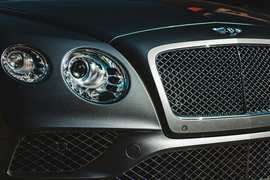
When we first strapped ourselves into the Chiron Super Sport, the numbers alone were enough to induce whiplash. A 0-62 mph time of 2.4 seconds is already laughably quick, but the Chiron smashes through 124 mph in less than four seconds. This relentless surge of acceleration is delivered with a smoothness that borders on the supernatural. The four turbochargers spool up with an orchestral crescendo, pinning you to the exquisitely crafted leather seat. Yet, what truly sets the Chiron apart is its astonishing agility. Despite its gargantuan size and power, the chassis is a masterclass in balance and control. The steering is precise, the adaptive suspension molds itself to the road surface, and the car flows from one corner to the next with a confidence that belies its kerb weight. As Steve Sutcliffe noted during his assessment, “You can push and sometimes even party a bit with the Chiron, and it doesn’t bite, doesn’t get wild. Instead it flows from corner to corner on a tsunami of torque and poise, its thunderous sequentially turbocharged W16 engine providing you with a constant source of temptation. It will fire you out of any corner and down any straight with three times more energy than you’ll ever need, or sometimes even want.” It’s a car that makes 200 mph feel like 70 mph, a feat of engineering that remains unmatched in its ability to combine ultimate speed with surprising accessibility.
Bugatti Veyron: The Original Legend
You cannot discuss the modern hypercar era without paying homage to the car that started it all: the Bugatti Veyron. When Volkswagen Group announced its intention to resurrect the legendary Bugatti marque with a car boasting 1,000 horsepower and a top speed exceeding 250 mph, many in the industry dismissed it as pure fantasy. The Veyron endured a famously turbulent gestation period, marked by technical challenges and delays. However, when it finally arrived in 2005, it didn’t just meet expectations; it obliterated them.
The original Veyron produced 1,001 metric horsepower, translating to 987 horsepower in road-legal trim. This was enough to propel the heavy machine from 0-62 mph in a blistering 2.5 seconds and onto a top speed of 253 mph. But Bugatti wasn’t finished. The Veyron Super Sport variant pushed the envelope further, unleashing 1,183 horsepower and eventually claiming the title of the world’s fastest production car with a verified two-way average of 267.856 mph. While its successor has since surpassed this figure, the Veyron remains an unparalleled technological tour de force. It might have lacked the raw, visceral emotion of its Italian counterparts, but its straight-line performance was simply on another planet. The mind-bending acceleration was an experience that transcended mere driving; it was a visceral confrontation with the limits of automotive engineering.
Pagani Zonda: The Soulful Italian Alternative
In a landscape dominated by German precision and British engineering prowess, the Pagani Zonda emerged as a breath of fresh, carbon-fiber-scented air. When Horacio Pagani launched the Zonda in 1998, he defied every convention of the hypercar industry. He proved that a startup marque, armed with little more than sheer vision and obsessive attention to detail, could compete with the established giants. The Zonda wasn’t built on a shoestring budget; it was a painstakingly crafted work of art, utilizing the finest materials and most advanced construction techniques available.
What truly set the Zonda apart, however, was its accessibility. Unlike the intimidating, razor-sharp nature of many of its contemporaries, the Zonda was surprisingly forgiving behind the wheel. It possessed a certain charm, a mechanical symphony that invited spirited driving rather than demanding it. Underpinning this masterpiece was a full carbon-fiber monocoque, providing exceptional rigidity while keeping weight to a minimum. Power was eventually sourced from a magnificent 7.3-liter V12 developed by Mercedes-AMG, delivering over 540 horsepower in Zonda S guise. This was enough to propel the lightweight Italian to 62 mph in under four seconds and a top speed exceeding 220 mph. While it stood toe-to-toe with the Ferrari Enzo and Porsche Carrera GT in terms of performance metrics, the Zonda’s legacy rests on something more profound: it captured the very essence of what a dream car should be. It was exotic, it was breathtakingly beautiful, and it possessed a soul that resonated with drivers on a deeply emotional level.
The Next Generation: Redefining Performance for 2026
The hypercar landscape is constantly evolving, and 2026 is shaping up to be one of the most exciting years yet. Manufacturers are pushing the boundaries of electrification, aerodynamics, and lightweight construction, creating machines that promise to eclipse their predecessors in every conceivable metric.
McLaren W1: The Electrifying Successor to the F1 Legacy
McLaren has always been synonymous with innovation, and its latest hypercar, the W1, represents the next chapter in its illustrious ‘1’-badged lineage. This is not a mere evolution of the P1; it is a complete ground-up reinvention, featuring a bespoke