
The Apex Predators: An Expert’s Guide to the 2025-2026 Hypercar Pantheon
The automotive landscape of 2025-2026 is a battlefield of extremes. Where once the term “hypercar” conjured images of deafening V12s and questionable aerodynamics, today it represents the bleeding edge of human ingenuity. This isn’t just about speed anymore; it’s a philosophical debate waged in carbon fiber and silicon. As someone who has spent the last decade breathing the rarefied air of these machines, I can tell you: the game has changed fundamentally.
We are no longer just spectators to a horsepower arms race. We are witnessing the birth of a new era, one where electrification and digital intelligence are rewriting the very definition of a road-legal race car. Forget your practicality concerns; the hypercar buyer of 2026 is looking for a multi-million dollar statement piece, a four-wheeled mechanical watch, or perhaps most importantly, the purest, most visceral driving experience money can buy.
From the re-emergence of Bugatti under Rimac’s stewardship to the electric juggernauts threatening to eclipse gasoline altogether, the choices available to the discerning (and obscenely wealthy) collector have never been more diverse. This is the ultimate guide to the titans of the asphalt, the machines that make Formula 1 cars look pedestrian.
The Reigning Monarchs: V12 Icons That Refuse to Fade
Even in an increasingly electric world, the soul of the hypercar remains rooted in the glorious combustion of internal combustion. These are the legends that have defined the genre, and they are still here, evolved and refined for a new generation.
The Aston Martin Valkyrie: A Formula 1 Car for the Road
When Aston Martin partnered with Adrian Newey, the legendary F1 aerodynamicist, back in 2016, the automotive world collectively held its breath. The Valkyrie wasn’t just an ambitious project; it was a declaration of war on convention. Its Cosworth-derived 6.5-liter V12 screams to an 11,000 rpm redline, delivering 1,139 horsepower through a hybrid system that would make a Le Mans prototype blush.
But raw numbers only tell half the story. The Valkyrie is a study in extreme engineering. Newey’s obsession with downforce resulted in a body so aerodynamically sophisticated it looks like it was sculpted by the wind itself. While the initial claims of 1,800 kg of downforce have been dialed back for road legality, the result is still a machine that generates more negative lift than any road car before it.
Driving the Valkyrie is a recalibration of the senses. The cockpit is a snug, carbon-fiber cocoon where the driver sits almost directly above the rear axle. Visibility is limited, the pedals are offset, and the noise… the noise is biblical. It’s a raw, unfiltered, and frankly terrifying experience that demands your complete attention. As our editor-at-large, Dickie Meaden, noted, “The Valkyrie is a ruthless and relentless test of your focus and mental stamina.” It’s not a car you simply drive; it’s a car you survive.
Power: 1,139 bhp
0-62 mph: <3.0 sec
Top Speed: 220 mph
Price New: £2.5 million
Why It Matters in 2026: It represents the absolute peak of combustion-engine hypercar engineering. A testament to what is possible when cutting-edge F1 technology is applied to a road car.
The Ferrari F80: Prancing Horse Power Reimagined
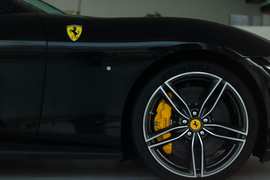
Ferrari's 80th-anniversary celebration, the F80, is a bold statement of intent. Eschewing the V12 for its flagship, Maranello opted for a 3.0-liter V6 – but this is no ordinary six-cylinder. Supplemented by a sophisticated hybrid system featuring both MGU-K and MGU-H electric motors, the F80 unleashes a staggering 1,187 horsepower.
The design is a dramatic fusion of F1 aggression and GT elegance. It's lower, sleeker, and more visually arresting than anything Ferrari has produced in years. But where the F80 truly shines is in its digital prowess. Ferrari's notoriously finicky electronics have been refined to near perfection, creating a seamless bridge between man and machine.
The F80 lapping Fiorano 4.4 seconds quicker than the legendary LaFerrari is a statistic that speaks volumes. It proves that electrification, when executed with Ferrari's engineering nous, isn't a compromise—it's an enhancement. It’s the sound of tradition meeting the future, and it sounds magnificent.
Power: 1,187 bhp
0-62 mph: 2.5 sec
Top Speed: 217 mph
Price New: £3.6 million
Why It Matters in 2026: It demonstrates Ferrari's commitment to hybrid technology without sacrificing the emotional engagement that defines the brand.
The Pagani Utopia: Horacio Pagani's Masterpiece
In the hypercar world, Pagani is less a manufacturer and more a religion. Horacio Pagani's philosophy centers on the idea that a car should be art, an experience, a mechanical symphony. The Utopia is the culmination of this vision, a successor to the sublime Huayra that manages to be both more advanced and more soulful.
Powering the Utopia is a bespoke 6.0-liter twin-turbo V12 developed by AMG, producing a robust 852 horsepower. But the true stroke of genius is the gearbox. In a world dominated by dual-clutch automatics, Pagani offers a gated seven-speed manual. This isn't just a nostalgic nod to the past; it's a deliberate choice to prioritize driver engagement.
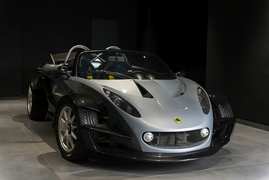
The Utopia is staggeringly light (1,280 kg) and impossibly beautiful. Its aerodynamic surfaces flow with an organic grace that belies its function. On the road, it’s a revelation. The steering is telepathic, the chassis balletic, and the manual gearbox allows you to become one with the mechanical symphony under the carbon-fiber clamshell. It is, quite possibly, the most complete hypercar ever made.
Power: 852 bhp
0-62 mph: 3.1 sec
Top Speed: 217 mph
Price New: £2.2 million
Why It Matters in 2026: It’s a defiant celebration of analog driving in a digital world. A reminder that the best driving experiences often come from simplicity executed perfectly.
The Gordon Murray Automotive (GMA) T.50: The Purest Connection
If the Pagani Utopia is art, the GMA T.50 is engineering poetry. Created by the legendary Gordon Murray, the man behind the original McLaren F1, the T.50 is designed to be the ultimate analogue hypercar. Its philosophy is simple: lightweight, driver focus, and mechanical purity.
At its heart is a naturally aspirated 4.0-liter V12 developed by Cosworth. It revs to an astonishing 12,100 rpm, producing 661 horsepower. Crucially, the entire car weighs just 986 kg (with fluids). This power-to-weight ratio is simply staggering, rivaling that of a Formula 2 car.
But the T.50’s party trick is its fan. Yes, a giant fan at the rear of the car, inspired by Murray’s Brabham BT46B Formula 1 racer. This active aerodynamic system can generate up to 1,500 kg of downforce, sucking the car to the road surface. The result is a driving experience that is visceral, immediate, and utterly addictive. It’s a car that makes you feel alive in a way few modern machines can.
Power: 661 bhp
0-62 mph: NA
Top Speed: NA
Price New: £2.8 million
Why It Matters in 2026: It’s the antithesis of the modern tech-laden hypercar. It proves that sometimes, less is more, especially when “less” means a screaming V12 and a manual gearbox.
The Electric Revolution: When Batteries Outpace Gasoline
While the V12 legends command respect, the future of the hypercar is undeniably electric. Battery technology has advanced at a breathtaking pace, allowing engineers to extract performance figures that were once relegated to the realm of science fiction.
The Rimac Nevera R: The Benchmark Setter
When Rimac Automobili entered the scene, many dismissed them as just another electric startup. Then came the Nevera, and the hypercar world was forced to take notice. The Nevera isn’t just fast; it’s a technological marvel that has redefined the boundaries of automotive performance.

The Nevera R boasts an all-electric powertrain with four independent motors, one for each wheel. This allows for unprecedented torque vectoring and traction control capabilities. The combined output is a mind-bending 2,078