
The Evolution of the Hypercar: From Street Legal Supercar to 300+ MPH Legends

The world of automotive excellence has always been a realm where imagination takes flight, pushing the boundaries of what’s possible on four wheels. While the supercar has long reigned as the pinnacle of performance and luxury, a new breed of machine has emerged, redefining speed, engineering, and exclusivity: the hypercar. These aren’t just faster versions of already impressive vehicles; they represent a paradigm shift, where race-track technology meets road-legal design, creating automotive legends that blur the line between art and engineering.
The term “hypercar” itself wasn’t always part of our automotive lexicon. It emerged organically as certain manufacturers began to eclipse the already stratospheric performance metrics of supercars. If a supercar pushes the envelope, a hypercar shatters it. These machines are characterized by their limited production runs, astronomical price tags, and engineering that often borrows directly from Formula 1 or Le Mans prototype technology. They are the bleeding edge of automotive innovation, where every component is optimized for peak performance, regardless of cost or complexity.
To truly appreciate the significance of the modern hypercar, we must first look back at its predecessor: the supercar. For decades, the supercar reigned supreme as the ultimate expression of automotive desire. Vehicles like the Ferrari F40, Lamborghini Countach, and Porsche 959 set the benchmark for what was possible, combining exotic materials, powerful engines, and head-turning designs. These cars were exclusive, fast, and expensive, but they were, in a sense, accessible to a select few who could afford the multi-million dollar price tags.
The transition from supercar to hypercar wasn’t a sudden event but a gradual evolution driven by technological advancements and the relentless pursuit of speed. The early 2000s saw a new generation of vehicles that pushed beyond the traditional supercar formula. Cars like the McLaren F1, with its revolutionary carbon fiber monocoque and central driving position, demonstrated that a road car could achieve performance levels previously thought impossible. The Bugatti Veyron then took this concept to an entirely new level, combining a quad-turbocharged W16 engine with luxurious amenities to create a car that was both a technological marvel and a comfortable grand tourer.
What truly separates a hypercar from a supercar in the 2025 landscape is the level of engineering sophistication and the integration of electrification. While early supercars relied purely on internal combustion engines, today’s hypercars are increasingly hybrid or fully electric. This isn’t just a nod to environmental trends; it’s a strategic decision to unlock performance levels that are physically impossible with traditional powertrains alone. Electric motors provide instant torque, allowing for brutal acceleration that can overwhelm even the most powerful gasoline engines. When combined, these systems create a synergistic effect that results in performance metrics that were once the exclusive domain of top-tier race cars.
The design language of hypercars has also evolved dramatically. In the past, supercars were often characterized by flamboyant styling and dramatic aerodynamics. Today’s hypercars take this to an extreme, with designs that are often dictated by computational fluid dynamics. Every curve, vent, and wing is meticulously sculpted to manage airflow, reduce drag, and generate downforce. The result is a visual spectacle that is both beautiful and menacing, a perfect reflection of the engineering prowess contained within. These are not cars designed for subtlety; they are designed to command attention and dominate the road.
Beyond the raw performance figures and striking aesthetics, the hypercar represents the ultimate expression of automotive exclusivity. Production numbers are often limited to just a few dozen or even a handful of units, making them incredibly rare. This scarcity, combined with the astronomical price tags often exceeding $3 million, ensures that ownership remains the privilege of a tiny elite. Each hypercar is a rolling work of art, a testament to the skill of its creators and a potential collector’s item that can appreciate in value over time. This combination of performance, artistry, and exclusivity is what defines the modern hypercar.
The Evolution of the Hypercar: From Street Legal Supercar to 300+ MPH Legends
The world of automotive excellence has always been a realm where imagination takes flight, pushing the boundaries of what’s possible on four wheels. While the supercar has long reigned as the pinnacle of performance and luxury, a new breed of machine has emerged, redefining speed, engineering, and exclusivity: the hypercar. These aren’t just faster versions of already impressive vehicles; they represent a paradigm shift, where race-track technology meets road-legal design, creating automotive legends that blur the line between art and engineering.
The term \”hypercar\” itself wasn’t always part of our automotive lexicon. It emerged organically as certain manufacturers began to eclipse the already stratospheric performance metrics of supercars. If a supercar pushes the envelope, a hypercar shatters it. These machines are characterized by their limited production runs, astronomical price tags, and engineering that often borrows directly from Formula 1 or Le Mans prototype technology. They are the bleeding edge of automotive innovation, where every component is optimized for peak performance, regardless of cost or complexity.
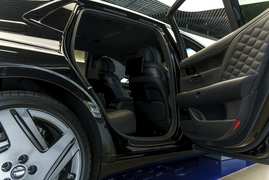
To truly appreciate the significance of the modern hypercar, we must first look back at its predecessor: the supercar. For decades, the supercar reigned supreme as the ultimate expression of automotive desire. Vehicles like the Ferrari F40, Lamborghini Countach, and Porsche 959 set the benchmark for what was possible, combining exotic materials, powerful engines, and head-turning designs. These cars were exclusive, fast, and expensive, but they were, in a sense, accessible to a select few who could afford the multi-million dollar price tags.
The transition from supercar to hypercar wasn’t a sudden event but a gradual evolution driven by technological advancements and the relentless pursuit of speed. The early 2000s saw a new generation of vehicles that pushed beyond the traditional supercar formula. Cars like the McLaren F1, with its revolutionary carbon fiber monocoque and central driving position, demonstrated that a road car could achieve performance levels previously thought impossible. The Bugatti Veyron then took this concept to an entirely new level, combining a quad-turbocharged W16 engine with luxurious amenities to create a car that was both a technological marvel and a comfortable grand tourer.
What truly separates a hypercar from a supercar in the 2025 landscape is the level of engineering sophistication and the integration of electrification. While early supercars relied purely on internal combustion engines, today’s hypercars are increasingly hybrid or fully electric. This isn’t just a nod to environmental trends; it’s a strategic decision to unlock performance levels that are physically impossible with traditional powertrains alone. Electric motors provide instant torque, allowing for brutal acceleration that can overwhelm even the most powerful gasoline engines. When combined, these systems create a synergistic effect that results in performance metrics that were once the exclusive domain of top-tier race cars.
The design language of hypercars has also evolved dramatically. In the past, supercars were often characterized by flamboyant styling and dramatic aerodynamics. Today’s hypercars take this to an extreme, with designs that are often dictated by computational fluid dynamics. Every curve, vent, and wing is meticulously sculpted to manage airflow, reduce drag, and generate downforce. The result is a visual spectacle that is both beautiful and menacing, a perfect reflection of the engineering prowess contained within. These are not cars designed for subtlety; they are designed to command attention and dominate the road.
Beyond the raw performance figures and striking aesthetics, the hypercar represents the ultimate expression of automotive exclusivity. Production numbers are often limited to just a few dozen or even a handful of units, making them incredibly rare. This scarcity, combined with the astronomical price tags often exceeding $3 million, ensures that ownership remains the privilege of a tiny elite. Each hypercar is a rolling work of art, a testament to the skill of its creators and a potential collector’s item that can appreciate in value over time. This combination of performance, artistry, and exclusivity is what defines the modern hypercar.
The Evolution of the Hypercar: From Street Legal Supercar to 300+ MPH Legends
The world of automotive excellence has always been a realm where imagination takes flight, pushing the boundaries of what’s possible on four wheels. While the supercar has long reigned as the pinnacle of performance and luxury, a new breed of machine has emerged, redefining speed, engineering, and exclusivity: the hypercar. These aren’t just faster versions of already impressive vehicles; they represent a paradigm shift, where race-track technology meets road-legal design, creating automotive legends that blur the line between art and engineering.
The term \”hypercar\” itself wasn’t always part of our automotive lexicon. It emerged organically as certain manufacturers began to eclipse the already stratospheric performance metrics of supercars. If a supercar pushes the envelope, a hypercar shatters it. These machines are characterized by their limited production runs, astronomical price tags, and engineering that often borrows directly from Formula 1 or Le Mans prototype technology. They are the bleeding edge of automotive innovation, where every component is optimized for peak performance, regardless of cost or complexity.
To truly appreciate the significance of the modern hypercar, we must first look back at its predecessor: the supercar. For decades, the supercar reigned supreme as the ultimate expression of automotive desire. Vehicles like the Ferrari F40, Lamborghini Countach, and Porsche 959 set the benchmark for what was possible, combining exotic materials, powerful engines, and head-turning designs. These cars were exclusive, fast, and expensive, but they were, in a sense, accessible to a select few who could afford the multi-million dollar price tags.

The transition from supercar to hypercar wasn’t a sudden event but a gradual evolution driven by technological advancements and the relentless pursuit of speed. The early 2000s saw