
The 10 Most Expensive Cars in the World in 2025: A Deep Dive into Automotive Opulence
For the vast majority of drivers, selecting a new vehicle involves a careful balancing act of practicality, performance, and budget. A premium sedan or a well-appointed SUV represents the pinnacle of automotive desire. However, for an ultra-exclusive stratum of global billionaires, these considerations are laughably pedestrian. These connoisseurs of excess demand vehicles that transcend mere transportation; they seek rolling sculptures, engineering marvels, and statements of unparalleled wealth.
In 2025, the landscape of hyper-exclusive automotive artistry continues to be dominated by a familiar triumvirate of marques: Bugatti, Pagani, and Rolls-Royce. These manufacturers have transcended the traditional definition of a car company. They are now purveyors of bespoke lunacy, crafting one-off creations or ultra-limited series that command prices capable of funding small nation-states. The criteria for entry into this elite club are simple: an almost infinite bank account and a desire for something utterly unique.
The term “hypercar” fails to adequately capture the essence of these machines. They are automotive unicorns, born from collaborative sessions between visionary clients and master artisans. Every curve, every material, and every mechanical component is scrutinized, refined, and executed to a standard that makes Formula 1 engineering look mass-produced. This is not about horsepower figures or top speeds—though those metrics are certainly astronomical—it is about legacy, exclusivity, and the audacious realization of a singular vision.
Join us as we navigate the stratosphere of automotive pricing, exploring the ten most expensive cars in the world as of 2025. These are the vehicles that redefine the very concept of a car, pushing the boundaries of engineering, design, and luxury to their absolute limits.
The 2025 Ranking: A Gallery of the Exorbitant
Before delving into the specifics of each mechanical masterpiece, here is the definitive list of the titans of automotive expenditure for 2025:

Rolls-Royce La Rose Noire Droptail – $30 Million (approx. £23 million)
Rolls-Royce Boat Tail – $28 Million (approx. £22 million)
Bugatti La Voiture Noire – $18.7 Million (approx. £14.7 million, including taxes)
Rolls-Royce Sweptail – $13 Million (approx. £10 million)
Bugatti Chiron Profilée – $10.8 Million (approx. £8.4 million)
Bugatti Centodieci – $9 Million (approx. £7 million)
Mercedes-Maybach Exelero – $8 Million (approx. £6.2 million)
Pagani Huayra Codalunga – $7.4 Million (approx. £5.9 million)
Pagani Imola Roadster – $6 Million (approx. £4.7 million)
Bugatti Divo – $5.8 Million (approx. £4.4 million)
It is crucial to note that the prices listed are the manufacturers’ stated prices or widely reported transaction values at the time of unveiling or resale. The actual value of these vehicles can fluctuate wildly based on auction results, provenance, and rarity. For instance, the Bugatti La Voiture Noire, while carrying an official price tag, reportedly saw its final transaction value rise significantly higher when accounting for taxes and bespoke customizations.
Now, let’s dissect each of these automotive behemoths.
Bugatti Divo – $5.8 Million (£4.4m)
The Bugatti Divo serves as a perfect entry point into the world of hyper-exclusive automobiles. It represents a fascinating philosophical departure from Bugatti’s traditional pursuit of outright top speed. While the standard Chiron is a bastion of velocity, the Divo is a testament to the art of the corner.
The Genesis of Agility
Named in honor of Albert Divo, a legendary French-Italian racing driver and former Bugatti works pilot who triumphed in the treacherous Targa Florio race twice in the 1920s, the Divo was conceived for a specific purpose: to be the most exhilarating track-focused Bugatti ever created for the road. This objective necessitated a fundamental shift in engineering philosophy.
The heart of the Divo remains the colossal 8.0-liter, quad-turbocharged W16 engine, a powerplant that has become synonymous with the Bugatti legend. In the Divo, this engine produces a scarcely believable 1,479 horsepower. However, unlike the Chiron, which is optimized for straight-line velocity, the Divo sacrifices its theoretical top speed for a more visceral, corner-carving experience.
A Masterclass in Aerodynamics
The most striking visual departure from the standard Chiron is the Divo’s dramatic aerodynamic package. Bugatti engineers recognized that raw power alone does not guarantee track dominance. To truly excel in the twists and turns, the car needed downforce—loads of it.
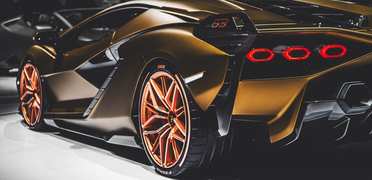
The Divo features a massive 1.8-meter wide fixed rear wing, a design element that immediately signals its aggressive intentions. This is complemented by a significantly larger front spoiler, extended side skirts, and enlarged air intakes that channel air with surgical precision. These modifications, while visually arresting, serve a critical function: they generate an immense amount of downforce, effectively pressing the car into the tarmac as speeds increase. This allows the Divo to maintain higher speeds through corners than its siblings, providing a level of handling prowess previously unseen in a Bugatti.
To accommodate this aerodynamic restructuring, Bugatti engineers made the conscious decision to disable the Chiron’s “Top Speed” mode. The Divo’s top speed is electronically limited to 236 mph. While this figure may seem underwhelming compared to the Chiron’s 300+ mph capability, it is a deliberate trade-off. The engineers understood that the Divo’s raison d’être was not to break speed records, but to redefine Bugatti’s handling identity.
Visual Distinction and Exclusivity
Beyond its performance credentials, the Divo is meticulously differentiated from the standard Chiron to ensure its exclusivity. The iconic Bugatti horseshoe grille has been widened, creating a more imposing front fascia. The headlights and taillights are entirely new designs, eschewing the Chiron’s quad-light signature for a more intricate, sculptural arrangement.
The interior, while still luxurious, reflects the car’s sporting ethos. The cabin is finished in bespoke materials, often featuring unique color combinations and trim elements chosen by the commissioning client. This level of personalization is a hallmark of Bugatti’s Coachbuild program, ensuring that no two Divos are exactly alike.
Production of the Divo was strictly limited to just 40 units worldwide. These were not simply sold; they were allocated. Potential buyers had to demonstrate their commitment to the Bugatti brand, often through the prior ownership of other Bugatti models, before being invited to commission a Divo. This rigorous selection process ensured that the Divo landed in the hands of only the most devoted collectors.
The Bugatti Divo represents a pivotal moment in the company’s modern history, proving that Bugatti is not merely a manufacturer of fast cars, but a purveyor of automotive art capable of executing highly specialized, niche visions. Its $5.8 million price tag reflects not just the engineering prowess involved, but the sheer audacity of its concept and the exclusivity of its ownership.
Pagani Imola Roadster – $6 Million (£4.7m)
When considering the crème de la crème of automotive engineering, the name Pagani inevitably surfaces. Horacio Pagani, the Italian visionary behind the eponymous marque, has cultivated a reputation for creating vehicles that blur the line between high art and high performance. The Pagani Imola Roadster stands as a testament to this philosophy, representing the zenith of the Huayra lineage.
The Birth of a Hyper-Exotic
The genesis of the Imola Roadster lies within Pagani’s elite “Grand Complications” division. This secretive atelier is dedicated to serving the most discerning and demanding clientele, those who seek creations that transcend even the already exclusive realm of standard Pagani production. The Imola Roadster is a product of this exclusive division, a vehicle crafted for a select few who understand that true luxury lies in the absence of compromise.
Named in homage to the historic Autodromo Internazionale Enzo e Dino Ferrari in Imola, Italy, the very circuit where the car’s chassis was meticulously fine-tuned, the Imola Roadster embodies the spirit of Italian automotive passion. The choice of name is no mere affectation; it signifies a deep connection to the very asphalt that shaped the car’s character.
Powertrain and Performance: A Symphony of Power
At the heart of the Imola Roadster beats a modified iteration of the revered AMG-sourced V12 twin-turbo engine. This powerplant, a marvel of German engineering, has been massaged to deliver an astonishing 838 horsepower. This prodigious output is channeled exclusively to the rear wheels through a sophisticated seven-speed sequential gearbox.
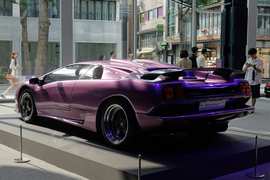
The driving experience promised by these specifications is nothing short of intoxicating. The Imola Roadster is capable of catapulting its occupants from a standstill to 62 mph in a breathtakingly brief span. While the official top speed is electronically capped at 217 mph—a seemingly modest figure for a vehicle of this caliber—it translates to a more rounded 350 kph in the metric