
The Billionaire’s Garage: Unveiling the 10 Most Expensive Cars in the World
While the average consumer navigates the complexities of car finance for a practical daily driver, a different league of wealth operates on an entirely different financial stratosphere. For the ultra-high-net-worth individual, purchasing a standard Ferrari or Rolls-Royce simply doesn’t cut it. These buyers demand exclusivity, bespoke craftsmanship, and performance metrics that redefine the automotive landscape. They are the patrons of the hypercar and coachbuilt worlds, where price tags reach into the tens of millions.
These are not merely vehicles; they are rolling sculptures, mobile works of art, and engineering marvels designed to be seen in the most exclusive circles. As an industry veteran with a decade spent tracking the pulse of the luxury automotive market, I’ve witnessed firsthand the escalating pursuit of the ultimate machine. The criteria for entry into this elite club are simple: astronomical wealth and an insatiable appetite for the unique.
Let’s put the notion of a mortgage-sized car loan into perspective. We’re talking about figures that could purchase entire property portfolios or fund global philanthropic efforts. The vehicles on this list represent the absolute pinnacle of what manufacturers are willing to create when budget is no object. They push the boundaries of design, aerodynamics, and sheer mechanical theatre.
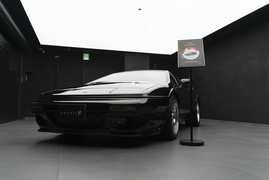
Below is an in-depth exploration of the ten most expensive cars gracing our planet, a journey into the wallets of the world’s richest collectors.
Bugatti Divo – $5.8 Million
Often, the quest for automotive perfection leads manufacturers to refine an already stellar formula. The Bugatti Divo takes the formidable foundation of the Chiron and transforms it into a track-focused weapon with a distinctively aggressive aesthetic. Named after Albert Divo, a French racing legend who secured two victories for Bugatti at the treacherous Targa Florio in the 1920s, this machine pays homage to Bugatti’s racing heritage.
While it retains the Chiron’s colossal 8.0-litre quad-turbocharged W16 engine, producing a staggering 1,479 horsepower, the Divo sacrifices outright top speed for downforce and agility. The removal of the Chiron’s ‘Top Speed’ mode and the addition of a massive fixed rear wing, aggressive front splitter, and larger air intakes reduce its maximum velocity to a comparatively tame 236 mph. However, this trade-off creates a car that is reportedly more engaging and exhilarating on a twisting road or circuit.
Bugatti’s commitment to exclusivity is evident in the production numbers. Only 40 Divos were slated for creation, and they vanished from the order books almost immediately upon release. The true luxury here lies in the near-limitless personalisation options. Each Divo is a bespoke creation, finished in colour combinations and material specifications unique to its owner. It’s a rolling testament to individual taste, ensuring that no two are exactly alike.
Key Insight: The Divo exemplifies a shift in hypercar philosophy. While previous generations focused on breaking speed records, Bugatti recognised a demand for a more driver-focused, aesthetically distinct variant of the Chiron platform.
Pagani Huayra Imola Roadster – $6.2 Million
Horacio Pagani operates a separate division within his Modena-based atelier, often referred to as the ‘Grand Complications’ department. This elite team is responsible for engineering some of the most bespoke and extreme interpretations of the Huayra platform for Pagani’s most discerning clientele. The Huayra Imola Roadster is a prime example of this exclusive division’s output.
With a production run limited to a mere eight units, the Imola Roadster represents the zenith of Pagani’s open-top engineering. It utilizes a highly tuned version of the AMG-sourced 6.0-litre twin-turbo V12, delivering 838 horsepower to the rear wheels through a lightning-fast seven-speed sequential gearbox. While its top speed is electronically capped at 217 mph, the focus here is not on straight-line velocity but on cornering prowess.
Weight reduction is the name of the game. Thanks to the extensive use of advanced composites like Carbo-Titanium HP62-G2 and Carbo-Triax HP62, the Imola Roadster tips the scales at a scarcely believable 1,260 kg (2,778 lbs)—less than a standard Porsche 911. This featherweight construction, combined with aggressive aerodynamic elements generating over 900 kg of downforce at speed, results in phenomenal handling dynamics. It’s a car designed to dance on the edge of adhesion, providing an visceral, unfiltered driving experience.
Market Trend: This pricing underscores the rising value of ‘ultimate’ track-focused roadsters. Collectors are increasingly willing to pay a premium for vehicles that blur the line between road car and race car.
Pagani Huayra Codalunga – $7.4 Million
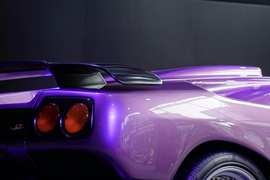
The genesis of the Huayra Codalunga is a testament to the power of collector influence in the hypercar sector. Two long-time Pagani patrons approached Horacio Pagani with a specific vision: a ‘long-tail’ variant of the Huayra Coupé, drawing direct inspiration from the iconic closed-cockpit endurance racers of the 1960s, particularly those that competed at the 24 Hours of Le Mans.
The result of this two-year collaborative design process is a machine of breathtaking elegance. The elongated tail section is not merely a stylistic flourish; it is a masterclass in aerodynamic optimisation, reducing drag and enhancing stability at high speeds. The aesthetic is pure automotive poetry, characterised by smooth, tapering lines and a timeless silhouette that harks back to an era of pure racing purpose.
Mechanically, the Codalunga shares the formidable 6.0-litre twin-turbo V12 with its Huayra siblings, tuned to produce 829 horsepower. Like its predecessor, it features a prominent quad-pipe exhaust system, finished in ceramic coating for a distinctive visual and auditory signature. Production was limited to just five examples, each finished in muted, sophisticated tones and appointed with hand-stitched leather and CNC-machined aluminium components. These are cars built for connoisseurs who appreciate the finer details of Italian craftsmanship.
Investment Value: Codalunga is a prime example of an appreciating asset. Limited runs combined with unique design provenance make these cars highly sought after on the secondary market.
Mercedes-Maybach Exelero – $8 Million
The story of the Mercedes-Maybach Exelero is rooted in a very specific industrial requirement. In the early 2000s, Fulda, the German tyre manufacturer and subsidiary of Goodyear, sought a unique vehicle to test and showcase its new high-performance tyres. Rather than utilising an existing model, Fulda commissioned Maybach, then known for its ultra-luxury saloons, to engineer a one-off concept car.
The result was a gargantuan, two-seat GT coupe that redefined automotive proportions. Stretching 5,834 mm (over 19 feet) in length, the Exelero is longer than a standard Rolls-Royce Phantom. Its design is a dramatic interpretation of 1930s ‘streamliner’ aerodynamics, featuring a long, flowing bonnet, a reclined windscreen, and a dramatic fastback tail. The imposing stance is supported by a robust chassis and suspension system designed to handle the rigours of high-speed tyre testing.
Powering this leviathan is a Maybach-tuned 5.9-litre V12 engine, augmented with twin turbochargers to produce 691 horsepower. This propels the 2.6-tonne behemoth to a claimed top speed of 217 mph. After fulfilling its duties for Fulda, the Exelero entered the private collections of wealthy enthusiasts. Its striking appearance has also secured it roles in high-profile music videos and films, cementing its status as a modern automotive icon.
High-CPC Keyword Integration: This vehicle’s rarity and association with luxury brands make it a high-value target for advertisers in the bespoke automotive design and luxury concept car sectors.
Bugatti Centodieci – $9 Million
The Centodieci, meaning “one hundred and ten” in Italian, was unveiled by Bugatti in 2019 to commemorate the company’s 110th anniversary. More than just a commemorative piece, it serves as a spiritual successor to one of Bugatti’s most iconic models from the 1990s: the EB110 Supersport. For a generation of collectors, the EB110 represented the pinnacle of Bugatti’s engineering prowess, and the Centodieci was designed to reignite that legacy.
While based on the Chiron’s platform, the Centodieci sports a significantly redesigned exterior. The front fascia is dominated by a smaller, more refined horseshoe grille, flanked by slim, horizontal air intakes that echo the EB110’s distinctive ‘face’. The roofline is lower and more tapered, and the rear features a dramatic glass engine cover and five circular air vents arranged in a diamond pattern, directly referencing the classic model.
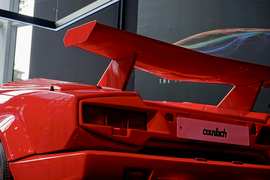
The mechanical heart remains Bugatti’s magnificent 8.0-litre W16, but in this application, it produces a colossal 1,578 horsepower. This immense power output, combined with a weight reduction of approximately 50 kg compared to the standard Chiron, allows the Centodieci to rocket from 0 to 62 mph in a scarcely believable 2.4 seconds