
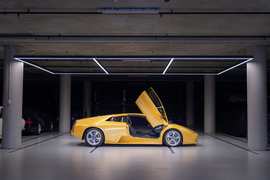
The Pinnacle of Automotive Desire: A Deep Dive into the World’s Most Expensive Cars
While the average driver navigates the complexities of a car loan or lease, a rarefied stratum of global elite operates on an entirely different financial plane. For these ultra-high-net-worth individuals, automotive acquisition transcends mere transportation; it becomes an exercise in bespoke luxury, engineering exclusivity, and unparalleled status. When a Rolls-Royce Phantom or a Ferrari 12Cilindri is deemed too commonplace, the true connoisseurs turn their attention to creations that redefine the very concept of a “hypercar.” These are not simply vehicles; they are rolling sculptures, rolling museums, and rolling testaments to the outer limits of human ingenuity and financial capacity.
The market for these automotive rarities operates far removed from the public eye. Transactions are often private, specifications are infinitely customizable, and production runs are frequently measured in single digits. This extreme exclusivity commands prices that dwarf even the most luxurious mainstream offerings, creating a landscape where a million dollars is merely the entry fee and a billion dollars isn’t out of the question for the truly legendary pieces. In this exclusive domain, the pursuit of the ultimate automotive experience dictates a willingness to pay a staggering premium for uniqueness, heritage, and cutting-edge technology.
Join us as we traverse the stratosphere of automotive excellence, exploring the ten most expensive cars in the world. From the heart-stopping power of Bugatti’s W16 behemoths to the artisanal mastery of Pagani’s carbon-fiber marvels and the bespoke elegance of Rolls-Royce’s coachbuilt wonders, this is a journey into a realm where automotive dreams become reality—for a price few could ever comprehend.
Bugatti Divo: The Track-Focused Masterpiece – Priced at approximately $5.8 Million
For the individual who finds the standard Bugatti Chiron—already a benchmark for hypercar performance—lacking in visceral excitement, the Divo emerges as the ultimate solution. Named in homage to the legendary French-Italian racing driver Albert Divo, a two-time Targa Florio victor with Bugatti in the late 1920s, this machine pays tribute to a golden era of motorsport while embracing the pinnacle of modern engineering. The Divo is not merely a Chiron with a different badge; it represents a fundamental rethinking of the hypercar philosophy, prioritizing agility and track prowess over outright top speed.
At its core, the Divo retains the Chiron’s formidable 8.0-liter quad-turbocharged W16 engine, a powerplant that has become synonymous with Bugatti’s identity. This engineering marvel churns out an astonishing 1,479 horsepower, launching the car from 0 to 62 mph in a breathtaking 2.4 seconds. However, the Divo’s true genius lies not in its straight-line acceleration, but in its dynamic transformation. Bugatti engineers deliberately capped the top speed at 236 mph—significantly lower than the Chiron’s electronically limited 261 mph—to allow for a dramatic increase in aerodynamic efficiency and downforce.
The exterior of the Divo is a visual symphony of aggression and artistry. A massive, hydraulically operated rear wing spans an impressive 1.8 meters, generating enough downforce to glue the car to the tarmac through high-speed corners. The front fascia is dominated by a larger, more aggressive spoiler and wider air intakes, feeding air to the colossal engine and brakes with ferocious efficiency. Distinctive new headlamps and a reshaped, more compact version of Bugatti’s iconic horseshoe grille further differentiate the Divo from its stablemate, ensuring its visual identity is as potent as its performance.
Production of the Divo was strictly limited to just 40 units worldwide. In a testament to its desirability, every single example was spoken for within 24 hours of its unveiling, long before the first car rolled off the assembly line. This immediate sell-out underscores the deep well of pent-up demand among Bugatti’s elite clientele for a more focused, track-oriented variant. The true cost of a Divo extends far beyond its initial sticker price, however. Owners were afforded near-infinite personalization options, allowing for a level of bespoke customization that ensured no two Divos would ever be exactly alike. From custom paint colors and interior trims to unique material combinations and detailing, each Divo is a rolling reflection of its owner’s individual tastes and desires—a private masterpiece in a limited edition of one. This approach to ownership transforms the car from a mere possession into a deeply personal artifact, a unique expression of automotive passion that transcends the ordinary boundaries of luxury goods.
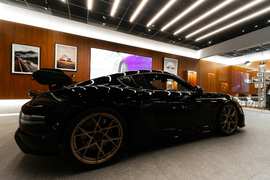
Pagani Huayra Imola Roadster: The Track-Bred Masterpiece – Priced at approximately $6.2 Million
Pagani, the Modena-based maestro of automotive artistry, operates on a philosophy where form and function are inseparable, and where every curve of a carbon-fiber body tells a story of engineering precision. The company’s ‘Grand Complications’ division is reserved for its most ambitious, ultra-limited-production projects, and the Huayra Imola Roadster stands as a shining example of this exclusive atelier’s capabilities. Named in honor of the legendary Autodromo Internazionale Enzo e Dino Ferrari in Imola, Italy, the very circuit where its chassis was meticulously honed, this open-top marvel represents the zenith of Pagani’s track-focused philosophy.
Just eight examples of the Imola Roadster were ever conceived, each assigned to a fortunate custodian who was invited to collaborate on its final specification. This intimate collaboration ensures that every Nuova Imola is a unique creation, a perfect synthesis of Pagani’s engineering genius and the owner’s personal vision. Powering this exceptional machine is a heavily revised version of Pagani’s AMG-sourced twin-turbocharged V12 engine. With displacement increased to 6.0 liters and output elevated to a staggering 838 horsepower, the engine delivers a visceral surge of acceleration that is seamlessly managed through a seven-speed sequential gearbox, sending power exclusively to the rear wheels.
While its power output is undeniably prodigious, the Imola Roadster’s true engineering triumph lies in its astonishingly low weight. At just 1,260 kilograms—less than many compact city cars—it possesses a lightness that defies its size and power. This remarkable feat is made possible through the extensive use of advanced composite materials, including exotic alloys such as Carbo-Titanium HP62-G2 and Carbo-Triax HP62. These materials offer unparalleled stiffness-to-weight ratios, providing the chassis with a rigidity that allows the suspension to function with surgical precision.
The aerodynamic package is equally breathtaking. A massive front splitter, aggressive side skirts, and a prominent rear diffuser work in concert with the car’s sculpted bodywork to generate an incredible 900 kilograms of downforce at track speeds. This aerodynamic grip presses the car firmly against the pavement, allowing for breathtaking cornering speeds that would leave lesser machines trailing in its wake. The top speed, though limited to 217 mph (350 km/h), is a testament to the car’s design philosophy—in the world of the Imola Roadster, cornering speed is the ultimate metric of performance, not outright velocity. For the discerning collector seeking the purest expression of track-focused hypercar engineering, the Pagani Huayra Imola Roadster represents a singular, unattainable pinnacle.
Pagani Huayra Codalunga: The Streamlined Masterpiece – Priced at approximately $7.4 Million
In the rarefied realm of Pagani ownership, the Huayra Codalunga stands as a testament to Horacio Pagani’s relentless pursuit of beauty and performance. This extraordinary machine, whose name translates to “longtail” in Italian, was born from the specific desires of two visionary collectors who approached the Modena-based maestro with a singular request: to create a ‘long-tail’ version of the Huayra Coupé that would pay homage to the iconic Le Mans racers of the 1960s. The result is a car that masterfully blends classic automotive elegance with cutting-edge engineering, creating a rolling work of art that transcends conventional hypercar boundaries.
The Codalunga’s most striking feature is its elongated rear section, which tapers gracefully to a point, echoing the aerodynamic streamlining of legendary endurance racers like the Ferrari 250 LM and the Porsche 917. This extended tail is not merely a stylistic flourish; it is a carefully sculpted aerodynamic appendage designed to optimize airflow and enhance high-speed stability. Beyond the distinctive silhouette, the Codalunga’s aesthetic purity is evident in its deliberately restrained color palette. All five examples produced feature matte finishes in muted, sophisticated tones, eschewing the vibrant hues often associated with hypercars. This deliberate choice emphasizes the car’s organic curves and sculptural form, allowing its inherent beauty to take center stage.
The interior is a sanctuary of artisanal craftsmanship, a space where mechanical precision meets artistic expression. The seats are upholstered in a unique woven leather, a technique that combines traditional materials with modern design sensibilities, while the exposed aluminum components are meticulously machined from solid billets, showcasing the obsessive attention to detail that defines every Pagani. A quad-pipe exhaust system, finished in ceramic coating for a distinctive visual and auditory signature, further harks back to the golden age of Le Mans racing.
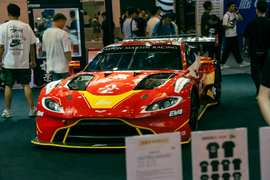
At the heart of the Codalunga beats the same formidable engine that powers the standard Huayra: a 6.0-liter twin-turbocharged V12 sourced from AMG. In this application, the engine produces a staggering 829 horsepower, delivered through a seven-speed sequential gearbox to the rear wheels. While the top speed is officially limited to 217