🔻 WATCH FULL VIDEO BELOW 🔻

The Pinnacle of Automotive Engineering: An Expert’s Deep Dive into the World’s Most Powerful Cars
Welcome, fellow gearheads, speed enthusiasts, and anyone who’s ever felt that primal surge of adrenaline at the sound of a high-revving engine. I’m [Your Name], and after spending the last decade immersed in the automotive industry—from track days at Laguna Seca to private collection tours—I’ve developed a deep appreciation for what happens when engineers push the boundaries of physics and performance.
We’re living in a golden age of hypercars, where the metrics of speed and power are constantly being redefined. Gone are the days when a 500-horsepower sedan was considered monstrous. Today, we’re talking about machines that blur the line between road car and fighter jet, capable of performances that were pure science fiction just a generation ago.
In this comprehensive guide, I’m not just going to list the most powerful cars in the world. I’m going to break down why they’re powerful, the engineering marvels that make their performance possible, and what it truly means to be at the helm of such a machine. This is a journey into the heart of automotive extremity, tailored for those who understand that power isn’t just a number—it’s an experience.
Understanding the Metrics: Horsepower, Torque, and the Quest for Speed
Before we dive into the metal and carbon fiber, let’s get our terminology straight. When we talk about the “most powerful cars,” we’re primarily looking at horsepower (hp), the rate at which the engine can do work. But horsepower alone doesn’t tell the whole story. It’s the torque—the rotational force—that pins you to your seat during acceleration, and the power-to-weight ratio that dictates how quickly that power can be put to the pavement.
In 2024, the landscape of hypercar performance is shifting rapidly. We’re seeing a fascinating crossover between traditional internal combustion engines (ICE), advanced turbocharging and supercharging technologies, and the electrifying force of hybrid systems. Electric motors, with their instant torque delivery, are proving to be the ultimate performance enhancers, often working in tandem with gasoline engines to create a combined output that shatters previous benchmarks.
The pursuit of the perfect hypercar is a balancing act. Engineers must contend with the fundamental laws of physics—aerodynamics, friction, and thermal management. A car can have 2,000 horsepower, but if it weighs too much or can’t generate enough downforce to stay planted on the road, that power is effectively useless. It’s this delicate interplay of brute force and sophisticated engineering that separates the true titans from the pretenders.
The Contenders: A Deep Dive into the World’s Most Powerful Machines
The following list represents the apex predators of the automotive world. These are not just cars; they are rolling works of art, engineering masterpieces, and, for a select few, the ultimate expression of automotive passion.
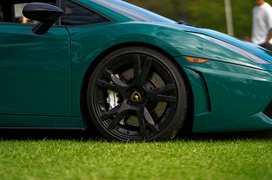
The Hybrid Dominator: Mercedes-AMG ONE
When Mercedes-AMG announced their intention to bring Formula 1 technology to the road, the automotive world took notice. The Mercedes-AMG ONE is the realization of that ambition. It’s not merely a road car with racing tech; it is a Formula 1 car, homologated for public streets.
The Powertrain: At the heart of the AMG ONE lies a 1.6-liter V6 hybrid system, derived directly from the championship-winning F1 car. This isn’t your average road engine. It revs to a staggering 11,000 rpm, assisted by an electric turbocharger that eliminates lag almost entirely. Combined with four electric motors—one for each front wheel, one integrated into the turbo, and one powering the rear axle—the AMG ONE produces a mind-bending 1,063 horsepower.
The Experience: What makes the AMG ONE a true leader is the delivery of that power. The electric motors provide instant torque, launching the car from 0 to 60 mph in a blistering 2.9 seconds. But it’s the high-revving V6 that truly defines the experience. The sound is pure motorsport—a high-pitched, mechanical scream that builds to a fever pitch as the revs climb.
Engineering Marvel: The aerodynamic package is a work of art in itself. Active aero elements, including a multi-stage adjustable rear wing and louvers on the front wheel arches, adapt to driving conditions to optimize downforce and cooling. This isn’t just about straight-line speed; the AMG ONE is designed to dominate on a racetrack, with a Nürburgring lap time that rivals dedicated race cars.
Why It’s Here: The AMG ONE represents the pinnacle of current automotive technology. It proves that hybrid systems aren’t just for fuel efficiency; they are the key to unlocking unprecedented levels of performance. It’s a rolling testament to the synergy between Formula 1 and production car engineering.
The American Powerhouse: Koenigsegg Jesko Absolut
The Swedish marque Koenigsegg has long been a thorn in the side of traditional supercar manufacturers. With a relentless focus on innovation and performance, Christian von Koenigsegg has created a machine that challenges the very notion of what’s possible. The Jesko Absolut is the culmination of that philosophy.
The Powertrain: While many manufacturers are turning to electrification, Koenigsegg remains a champion of the internal combustion engine. The Jesko Absolut is powered by a 5.0-liter twin-turbo V8 that produces a staggering 1,600 horsepower on biofuel (1,280 hp on standard gasoline). This engine is mated to Koenigsegg’s revolutionary Light Speed Transmission (LST), a nine-speed dual-clutch gearbox that can shift between any gear in milliseconds, without the need to go through intermediate gears.
The Experience: The name “Absolut” says it all. This car is designed for one purpose: ultimate top speed. With a theoretical top speed unofficially claimed to be over 330 mph, the Jesko Absolut is engineered to break records. The acceleration is brutal—0 to 60 mph in just 2.5 seconds, and 0 to 124 mph in under 5 seconds.
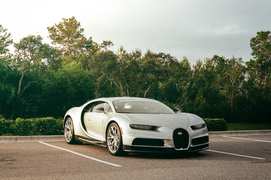
Engineering Marvel: The aerodynamic design is a masterclass in efficiency. The body is a teardrop shape, optimized to minimize drag. The rear features a fixed rear wing that generates massive downforce, while the front splitter and side fins work together to channel air for maximum stability at extreme speeds. The monocoque chassis, made of carbon fiber and aluminum, ensures rigidity without adding unnecessary weight.
Why It’s Here: The Jesko Absolut represents the absolute limit of what a gasoline-powered car can achieve. It’s a celebration of the internal combustion engine at its most extreme, combined with engineering ingenuity that pushes the boundaries of what’s considered possible. It’s a true collector’s item, with a production run limited to just 125 examples worldwide.
The All-Electric Beast: Rimac Nevera
In the world of electric vehicles, the Rimac Nevera stands alone. Developed by the Croatian prodigy Mate Rimac, this all-electric hypercar has shattered production car records and redefined expectations for electric performance.
The Powertrain: The Nevera is powered by four independent electric motors, one at each wheel. These motors produce a combined output of 1,914 horsepower and a mind-boggling 1,741 lb-ft of torque. This all-electric setup allows for torque vectoring, where the car can precisely control the power delivered to each wheel, optimizing traction and handling in real-time.
The Experience: The acceleration of the Nevera is simply otherworldly. It rockets from 0 to 60 mph in a scarcely believable 1.85 seconds, and can cover the quarter mile in just 8.62 seconds. The top speed, electronically limited to 258 mph, is still blistering for an EV. But it’s not just about straight-line speed. The Nevera’s advanced chassis and suspension system allow it to handle corners with the precision of a dedicated track car.
Engineering Marvel: The Nevera’s carbon fiber monocoque chassis is a masterpiece of engineering, providing exceptional rigidity while keeping weight down. The battery pack is integrated into the structure, lowering the center of gravity for improved handling. Rimac has also developed a sophisticated thermal management system to keep the batteries and motors operating at optimal temperatures during high-performance driving.
Why It’s Here: The Rimac Nevera is the benchmark for electric hypercars. It proves that electric vehicles can be the ultimate performance machines, offering acceleration and handling that traditional gasoline cars simply cannot match. It’s a glimpse into the future of automotive performance, and it’s here today.
The Track-Ready Legend: McLaren P1
While newer hypercars have emerged with even higher horsepower figures, the McLaren P1 remains a legend in the automotive world. Introduced in 2013, it was one of the first production cars to successfully blend a high-performance internal combustion engine with electric power, creating a true hybrid hypercar.
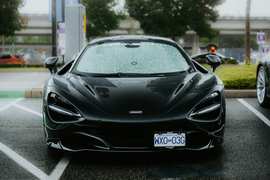
The Powertrain: The P1 combines a 3.8-liter twin-turbo V8 with an electric motor, producing a combined output of 903 horsepower. This might seem modest compared to today’s