🔻 WATCH THE VIDEO BELOW 🔻

The Reigning Beasts: America’s Most Potent Hypercars in 2025
The automotive landscape has shifted dramatically over the past decade. Where once the pinnacle of automotive engineering was defined by the roar of a V12 and the promise of 600 horsepower, we now live in an era where a family sedan can boast the output of a former supercar. This isn’t just an evolution; it’s a horsepower revolution, and the United States is at the epicenter of this seismic shift. The $200k-$300k bracket, once the exclusive domain of high-performance exotics, is now being infiltrated by electric vehicles capable of challenging the established order.
For the dedicated enthusiast, the metrics of success have been recalibrated. A four-figure power output is no longer a mere talking point; it’s the baseline. Anything less struggles to make the cut in the upper echelons of the automotive hierarchy. This saturation of power, particularly in the American market, is a testament to both technological advancement and the unyielding demand for the ultimate driving experience. The very definition of “hypercar” is being rewritten in real-time, with electric powertrains now vying for dominance against the established giants of internal combustion.
This article delves into the heart of this horsepower arms race, specifically focusing on the most potent vehicles currently available or on the cusp of production in the United States. We will explore the engineering marvels, the performance benchmarks, and the technologies that are pushing the boundaries of what we once thought possible. From the established titans to the disruptive newcomers, these are the cars that define the 2025 hypercar landscape.
The Reigning Monarch: Hennessey Venom F5
For years, the American tuning scene was characterized by modified muscle cars and aftermarket modifications. Then came John Hennessey, a visionary who dared to dream bigger than the established European marques. His creation, the Hennessey Venom F5, is the embodiment of American ambition and engineering prowess. Named after the most powerful category of tornado, the F5 is designed to obliterate speed barriers.
The heart of the Venom F5 is its bespoke “Fury” V8 engine. This 6.6-liter, twin-turbocharged behemoth is a testament to Hennessey’s refusal to compromise. It produces a staggering 1,817 horsepower and 1,193 lb-ft of torque. This power is sent exclusively to the rear wheels, a nod to traditionalist drivers who crave a direct, unfiltered connection to the machine. The F5 isn’t just about straight-line speed; its carbon fiber monocoque chassis and advanced aerodynamics ensure it can handle the immense power it commands.
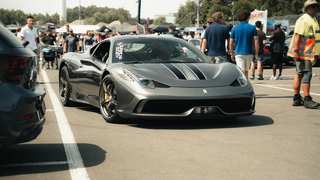
Hennessey’s quest for the ultimate top speed has been relentless. The F5 has unofficially surpassed the 300 mph mark, with targets set even higher. This isn’t just a car; it’s a statement. In a market increasingly dominated by electric hypercars, the Venom F5 stands as a defiant monument to the internal combustion engine. Its $2.1 million price tag places it firmly in the realm of the ultra-exclusive, but for those who can afford it, the F5 offers an experience that is both visceral and terrifyingly fast. It is, without question, the current king of American horsepower.
The Electric Contenders: Rimac Nevera and Tesla Roadster 2.0
The automotive world is undergoing an electrifying transformation, and the United States is at the forefront of this shift. While traditionalists may lament the decline of the V8 and V12, the advent of electric hypercars has introduced a new dimension of performance. These machines, powered by advanced battery technology and sophisticated electric motors, are challenging the established order and rewriting the rulebook on acceleration and power delivery.
The Rimac Nevera, although technically a Croatian creation, has found a significant following in the US market. This electric hypercar is a technological tour de force. It features four independent electric motors, one for each wheel, allowing for unprecedented levels of torque vectoring and control. The combined output of the Nevera is a mind-bending 1,888 horsepower. This power translates to a 0-60 mph time of just 1.74 seconds, a figure that seems to defy the laws of physics. The Nevera’s top speed of 256 mph, while lower than some of its gasoline-powered rivals, is achieved with a level of refinement and smoothness that is simply astounding. The $2.4 million price tag reflects the cutting-edge technology packed into this machine, but for the tech-savvy billionaire, the Nevera represents the pinnacle of electric performance.
On the other side of the spectrum, the Tesla Roadster 2.0 represents the American electric dream. While still awaiting its official production release, the promises made by Elon Musk have set the automotive world abuzz. The Roadster 2.0 is slated to deliver 1,400 horsepower and a 0-60 mph time of a mere 1.9 seconds. What makes the Roadster particularly compelling is its accessibility compared to the Rimac. While still a premium vehicle, its projected price of around $200,000 places it within reach of a wider audience of performance enthusiasts. The Roadster 2.0 isn’t just a fast car; it’s a statement about the future of American automotive engineering, proving that high performance and electric propulsion can go hand-in-hand.
The Next Frontier: Lotus Evija and McLaren W1
The pursuit of ultimate power is a relentless one, and even the established titans of the automotive world are being forced to adapt. As electric technology continues to mature, even traditional supercar manufacturers are embracing electrification to deliver performance levels that were once unimaginable. In the United States, two new contenders are emerging that promise to redefine the hypercar landscape: the Lotus Evija and the McLaren W1.
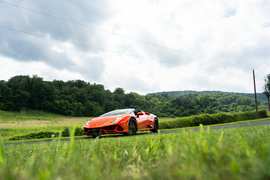
The Lotus Evija, a British marque with a storied history in motorsport, has ventured into the electric realm with a vehicle that is both beautiful and brutally powerful. The Evija boasts a total output of 2,012 horsepower, making it one of the most powerful production cars in the world. This power is delivered through a state-of-the-art electric drivetrain, allowing for breathtaking acceleration and agility. While Lotus has traditionally prioritized handling over raw power, the Evija demonstrates a new commitment to the horsepower arms race. Its sleek, aerodynamic design and advanced carbon fiber construction ensure that it remains true to the Lotus ethos while pushing the boundaries of performance.
From the legendary halls of Woking, England, comes the McLaren W1. This vehicle represents a new chapter for McLaren, one that embraces electrification to achieve unprecedented levels of performance. The W1 is set to deliver a staggering 1,258 horsepower, a figure that would have been unthinkable for a road-legal McLaren just a few years ago. What makes the W1 particularly exciting is its F1-inspired technology, which promises to deliver a driving experience that is both exhilarating and refined. While its price point will undoubtedly place it in the upper echelon of the market, the W1 is a testament to McLaren’s continued innovation and its commitment to pushing the boundaries of automotive engineering. These two new entrants underscore a fundamental shift in the hypercar market, where electric power is no longer a niche alternative but a dominant force in the pursuit of ultimate performance.
The Disruptors: Czinger 21C and SSC Tuatara
The American automotive landscape is characterized by a spirit of innovation and a relentless pursuit of the next big thing. This ethos is perhaps best exemplified by the emergence of two hypercar manufacturers that are challenging the established order: Czinger Vehicles and SSC North America. These companies, operating outside the traditional automotive power structures, are demonstrating that with enough vision and engineering expertise, anything is possible.
The Czinger 21C, a product of Los Angeles-based Czinger Vehicles, is a marvel of modern engineering. This hybrid hypercar combines a high-revving internal combustion engine with electric motors to produce a combined output of 1,332 horsepower. What sets the 21C apart is its radical design and manufacturing process. The car features a tandem seating arrangement, reminiscent of a fighter jet, and utilizes advanced 3D printing technology for much of its chassis and bodywork. This approach allows for a level of customization and lightweight construction that is simply not possible with traditional manufacturing methods. The 21C is a bold statement about the future of hypercar design, one where technology and performance converge in a truly unique package.
Meanwhile, SSC North America, based in Richland, Washington, continues its quest to reclaim the title of the world’s fastest production car with the SSC Tuatara. This hypercar is a purebred speed machine, designed with one goal in mind: to shatter speed records. The Tuatara boasts a twin-turbocharged V8 engine that produces a mind-bending 1,750 horsepower. While its journey to achieve official top-speed validation has been fraught with challenges, the Tuatara represents the pinnacle of American engineering and the unyielding spirit of a company determined to prove its mettle on the world stage. Both the Czinger 21C and the SSC Tuatara exemplify the innovative spirit that defines the American hypercar market, proving that the most exciting developments are often happening outside the traditional automotive strongholds.
The Power Surge: Understanding the Hypercar Explosion
The proliferation of high-horsepower vehicles in the American market is not merely a trend; it is a reflection of a fundamental shift in automotive engineering and consumer demand. This explosion in power can be attributed to a confluence of factors, primarily the maturation of electric vehicle technology and the unyielding desire of