
The 10 Most Expensive Supercars in the World: A Deep Dive into Automotive Extravagance
In the rarefied atmosphere where performance metrics blur and luxury knows no bounds, a select cadre of automobiles transcends mere transportation to become rolling works of art and engineering marvels. These are not simply cars; they are statements of intent, testaments to human ingenuity, and, invariably, among the most expensive supercars ever conceived. As an industry veteran with a decade of immersion in the automotive world, I’ve witnessed firsthand the evolution of this exclusive domain. What was once the exclusive purview of royalty and industrial titans has now been amplified by the democratizing forces of digital media—YouTube, Instagram, and high-octane cinema—bringing these mechanical masterpieces into the global consciousness like never before.
Join me as we embark on an exhaustive exploration of the world’s most opulent and high-performance machines. This isn’t merely a list; it’s a narrative of innovation, exclusivity, and the relentless pursuit of automotive perfection.
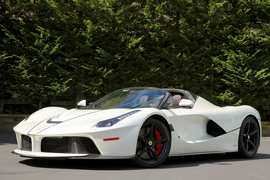
The Apex Predators of Performance: What Defines the World’s Most Expensive Cars?
Before we delve into the specifics of each vehicle, it’s crucial to understand the confluence of factors that elevates these machines to stratospheric price points. The label of “most expensive” isn’t solely dictated by a manufacturer’s suggested retail price; it’s a complex interplay of several variables.
Material Science and Craftsmanship: Unlike mass-produced vehicles, these hypercars are often constructed using exotic materials such as carbon fiber, titanium, and advanced alloys. The labor involved in crafting a single monocoque chassis or hand-finishing an interior can span hundreds of hours. Consider the Pagani Huayra Roadster B.C., where the carbon fiber body isn’t just structural; it’s a canvas for artisanal excellence.
Performance Metrics: Raw power is a given, but the most expensive models push the boundaries of what’s technically feasible. We’re talking about the integration of Formula 1-derived hybrid systems, bespoke gearboxes capable of near-instantaneous shifts, and aerodynamics that generate downforce measured in tons. The Koenigsegg Jesko’s Light Speed Transmission, for instance, is a proprietary marvel designed to optimize power delivery in a way that conventional automatics simply cannot replicate.
Exclusivity and Provenance: Scarcity is a powerful driver of value. Many of these vehicles are produced in extremely limited runs—sometimes as few as ten units, or even one-offs. This manufactured rarity ensures that ownership remains a privilege reserved for a select few. Furthermore, the provenance of a specific model, such as a historic lineage or a connection to a racing legend, can further inflate its desirability and cost.
Technological Integration: In the 2025 landscape, the most expensive supercars are essentially rolling supercomputers. They feature advanced driver-assistance systems (ADAS) that rival those of luxury sedans, sophisticated telemetry for track analysis, and connectivity features that seamlessly integrate the digital and analog driving experience. The Rimac CTwo, a pioneer in electric hypercar technology, showcases a level of software engineering that was unthinkable just a decade ago.
A Comprehensive Breakdown of the World’s Most Coveted Machines
Let us now turn our attention to the titans of the automotive world, examining the engineering prowess and design philosophy that underpin their astronomical valuations.
The Pagani Huayra Roadster B.C. — Approximately $4.6 Million
Horacio Pagani has long been regarded as an artist working with carbon fiber, and the Huayra Roadster B.C. is perhaps his most audacious sculpture to date. This machine represents the zenith of Pagani’s philosophy: to create road-legal vehicles that deliver an unadulterated, visceral driving experience.
At its heart lies a bespoke 6.0-liter V-12 engine, meticulously developed by AMG’s high-performance division. This powerplant isn’t merely a combustion engine; it’s a symphonic instrument, capable of producing up to 800 horsepower and an intoxicating soundtrack that reverberates through the open-top cabin. The torque delivery is relentless, propelling the Roadster B.C. from a standstill to 60 mph in under three seconds.
However, the true magic of the Huayra lies in its construction. Pagani utilizes an advanced carbo-titanium composite for the chassis, a material that offers the torsional rigidity of steel with a fraction of the weight. The aerodynamics are equally breathtaking. A complex array of active aero elements—including deployable rear wings and front flaps—adjusts milliseconds to optimize downforce and minimize drag, effectively allowing the car to rewrite its aerodynamic profile in real-time.
The interior is a masterclass in bespoke luxury. Every switch, dial, and surface is crafted from premium materials—machined aluminum, supple leather, and exotic woods. It’s a space that envelops the driver, fostering a sense of occasion that few other vehicles can replicate. The $4.6 million price tag is not merely for the engineering; it’s for the privilege of owning a piece of automotive art that is both breathtakingly beautiful and ferociously fast.
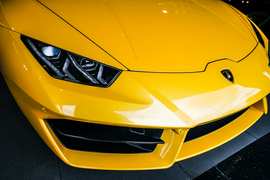
The Aston Martin Valkyrie — Approximately $3.0 Million
The Aston Martin Valkyrie represents a paradigm shift for the venerable British marque. Forged in the crucible of Formula 1 engineering, in collaboration with Red Bull Racing Advanced Technologies, the Valkyrie blurs the line between a road car and a Le Mans prototype.
The centerpiece of this machine is a naturally aspirated 6.5-liter V-12 engine, a screaming work of art that redlines at an astonishing 10,500 rpm. Developed by Cosworth, this engine is a masterpiece of internal combustion engineering, producing over 1,000 horsepower on its own. This gasoline powerplant is augmented by an advanced KERS (Kinetic Energy Recovery System), borrowed directly from Formula 1 technology, which further boosts power and torque, particularly in the mid-range.
The result is a staggering 1,130 horsepower and a power-to-weight ratio that is simply extraordinary. The Valkyrie’s bodywork is a testament to aerodynamic efficiency, sculpted by wind tunnels to generate maximum downforce while maintaining a relatively low drag coefficient. The underbody diffuser is a work of art in itself, managing airflow beneath the car to create a low-pressure zone that effectively sucks the car to the road.
Structurally, the Valkyrie takes an unconventional approach. The V-12 engine is an integral part of the chassis, acting as a stressed member that contributes to the car’s rigidity. This innovative engineering solution allows for a lighter overall structure without compromising safety or performance. The $3.0 million price tag reflects not only the cutting-edge technology but also the limited production run—only 150 road-legal examples were ever planned.
The Koenigsegg Jesko — Approximately $4.1 Million
From the visionary mind of Christian von Koenigsegg comes the Jesko, a hypercar that pushes the boundaries of physics and engineering. Named in honor of the founder’s father, the Jesko is a testament to Swedish ingenuity and the relentless pursuit of ultimate performance.
At the heart of the Jesko lies a twin-turbocharged 5.0-liter V-8 engine. This powerplant is a marvel of forced induction technology, capable of producing an astonishing 1,280 horsepower on pump gas and a mind-boggling 1,600 horsepower when fueled with E85 ethanol. The engine’s redline extends to a stratospheric 8,500 rpm, delivering a soundtrack that is both menacing and melodic.
However, the true innovation of the Jesko lies in its transmission. The Koenigsegg Light Speed Transmission (LST) is a revolutionary seven-speed dual-clutch system that features nine forward gears. Unlike conventional transmissions that rely on sequential gear changes, the LST can shift to any gear almost instantaneously, regardless of the current gear selection. This allows the driver to access the engine’s full torque band at a moment’s notice, resulting in breathtaking acceleration.
Aerodynamically, the Jesko is a masterpiece of efficiency. The Jesko Absolut variant, designed for ultimate straight-line speed, features a long-tail design with a massive rear wing that generates over 1,400 kg of downforce at high speeds. This downforce keeps the car planted on the road even as it approaches its theoretical top speed of over 300 mph.
The interior of the Jesko is a blend of high-tech functionality and luxurious comfort. The “Smart Cluster” dashboard features a wrap-around digital display that provides the driver with all the necessary information in a clear and concise manner. The cabin is appointed with premium materials, including carbon fiber, Alcantara, and machined aluminum, creating an environment that is both sporty and sophisticated. At $4.1 million, the Jesko represents the pinnacle of modern hypercar engineering.
The Bugatti Chiron — Approximately $4.7 Million
The Bugatti Chiron needs little introduction. As the successor to the legendary Veyron, the Chiron carries the weight of expectation to deliver an unparalleled driving experience. It succeeds with aplomb, combining brute force with limousine-like refinement.
The heart of the Chiron is an 8.0-liter quad-turbocharged W-16 engine, a powerplant of such immense scale and complexity that it seems almost mythical. This engine produces a staggering 1,500 horsepower and an earth-shattering 1,180 lb-ft of torque. This power is channeled through a sophisticated all-wheel-drive system and a seven-speed dual-clutch transmission, allowing the Chiron to accelerate from 0 to 60