
Why the Most Expensive Cars in the World Are More Than Just Transportation
For the vast majority of us, a car is a tool—a means of getting from point A to point B. It needs to be reliable, efficient, and perhaps offer a certain level of comfort. But for a rarefied few, a car is art. It’s a statement. It’s the culmination of engineering prowess taken to its absolute zenith. These aren’t just vehicles; they are rolling sculptures, technological marvels, and status symbols that command prices capable of purchasing small islands. In 2025, the world of the hypercar continues to push the boundaries of what’s possible, blending electrification, F1-derived technology, and bespoke craftsmanship to create machines that beggar belief.
As an industry veteran with a decade spent immersed in the automotive sector, I’ve had the privilege of seeing some of these legends up close. I’ve heard the unearthly shriek of a V12 at 10,000 RPM and felt the G-forces of electric torque that pin you to your seat. The conversation around the world’s most expensive cars has shifted dramatically. It’s no longer just about horsepower figures; it’s about the narrative, the materials, and the sustainable luxury that defines the next generation of automotive excellence.
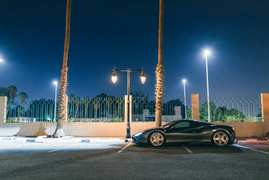
Let’s peel back the carbon fiber and take a deep dive into the rarefied air of the world’s most expensive automobiles.
The Reigning Monarch: Rolls-Royce La Rose Noire Droptail ($30 Million+)
When you think of the pinnacle of automotive luxury, Rolls-Royce is the name that invariably comes to mind. But even within the hallowed halls of Goodwood, there exists a tier reserved for the truly extraordinary. The La Rose Noire Droptail isn’t merely a car; it is a coachbuilt masterpiece, a one-of-one commission that redefines exclusivity.
This vehicle is the first of four planned Droptail commissions, each a unique expression of the owner’s vision. The “La Rose Noire” specifically draws inspiration from the Black Baccara rose, a flower known for its deep crimson hue. This theme is executed with breathtaking precision. The interior features an unprecedented marquetry inlay of 1,603 individually placed pieces of black sycamore wood veneer, arranged in a breathtaking cascade that mimics falling rose petals. It took artisans over two years to perfect this surface, a testament to the patience and skill that separates Rolls-Royce coachbuilding from mere manufacturing.
Underneath the sculpted hood lies the heart of a gentleman’s GT: a 6.75-liter twin-turbo V12 engine. While the power output is substantial (in the region of 593 horsepower), the focus here is not on lap times but on effortless, imperious motion. The car glides rather than drives, isolating its occupants from the world outside in a cocoon of unparalleled luxury. The price? A reported $30 million, making it the most expensive new car ever commissioned. It’s a price tag that reflects the countless hours of human ingenuity, the rarest materials, and the priceless value of absolute uniqueness.
The Electrified Challenger: Rimac Nevera ($2.2 Million)
Transitioning from the realm of bespoke coachbuilding to cutting-edge electric performance, we arrive at the Rimac Nevera. This Croatian powerhouse has single-handedly rewritten the rulebook for what electric vehicles are capable of. When Mate Rimac founded his company, his vision was simple yet audacious: to create the world’s fastest electric hypercar. In 2025, the Nevera stands as a formidable testament to that vision.
The Nevera is an engineering marvel, deploying four independent electric motors—one for each wheel. This allows for something known as “torque vectoring,” where the car can instantaneously adjust the power sent to each individual wheel. The result is a level of handling precision that feels almost supernatural. On the track, the Nevera is a monster. It holds the production EV lap record at the Nürburgring, a circuit notorious for humbling even the most exotic gasoline-powered machines.
But the Nevera isn’t just a track weapon. It’s a remarkably comfortable and sophisticated road car, capable of covering 300 miles on a single charge. This duality is the key to its success. It proves that electrification does not necessitate a compromise on performance or practicality. For around $2.2 million, buyers are acquiring not just a car, but a piece of technological history—a machine that signifies the tipping point where electric power truly surpassed internal combustion.
The Track-Day Weapon: McLaren Speedtail ($2.3 Million)
McLaren has always marched to the beat of its own drum. While Italian marques obsessed over V12 engines and German brands refined their turbocharged V8s, McLaren, under the leadership of Gordon Murray, revolutionized the supercar world with the F1 in the 1990s. The Speedtail is the spiritual successor to that icon, a car that embodies McLaren’s core philosophy: “Everything is about the driver.”
The most striking feature of the Speedtail is its elongated, teardrop shape. It is one of the most aerodynamically efficient cars ever conceived, with a drag coefficient so low that it achieves speeds that seem to defy physics. To achieve this, McLaren employed a unique three-seat configuration, mirroring the F1, with the driver positioned centrally, flanked by two passenger seats slightly behind.

Power comes from a hybrid powertrain, combining a gasoline engine with electric motors to produce a staggering 1,036 horsepower. This allows the Speedtail to reach a top speed of 250 mph (403 km/h), all while cocooning its occupants in a cockpit that feels more like a fighter jet than a road car. The materials are equally impressive, with lightweight carbon fiber and advanced titanium woven into the very fabric of the chassis. It’s a car that demands respect and rewards its driver with an intoxicating blend of speed and agility.
The Return of an Icon: Bugatti Mistral ($5 Million)
To speak of the world’s most expensive cars without mentioning Bugatti would be a disservice to the very notion of automotive extravagance. The French marque, now under the stewardship of the Rimac Group, continues its legacy of creating hypercars that transcend mere transportation. The Mistral is a fitting farewell to the W16 engine, the iconic powerplant that defined the Bugatti brand for two decades.
Named after a strong wind that blows through the south of France, the Mistral is a roadster designed to be driven and savored. It utilizes the quad-turbocharged, 8.0-liter W16 engine from the Chiron, albeit in a slightly detuned state to suit the open-top configuration. Even so, it produces a breathtaking 1,578 horsepower, launching the car from 0 to 60 mph in under 2.5 seconds.
But the Mistral is more than just raw power. It is a work of art. The design is a masterful blend of modern engineering and classic Bugatti elegance. The horseshoe grille, the signature C-line on the side, and the intricate details in the exhaust tips all pay homage to the brand’s illustrious history. The interior is a testament to French craftsmanship, with exquisite leatherwork and bespoke finishes. With a price tag of $5 million and a limited production run, the Mistral represents the end of an era, and a highly desirable one at that.
The F1 Homage: Aston Martin Valkyrie ($3 Million)
Aston Martin has long been associated with sophistication and style, often serving as the car of choice for the fictional secret agent James Bond. However, with the Valkyrie, the British marque embarked on a mission to create something altogether different: a road-legal Formula 1 car. Developed in collaboration with Red Bull Racing Advanced Technologies, the Valkyrie is a machine born from a deep understanding of motorsport aerodynamics and lightweight construction.
The name itself, Valkyrie, references the Norse mythology of Odin’s choosers of the slain, suggesting a car of almost mythical prowess. This is not hyperbole. The Valkyrie is powered by a naturally aspirated 6.5-liter V12 engine developed by Cosworth. In a world increasingly dominated by turbochargers and hybrid systems, this engine stands out for its purity and its sound. It revs to an ear-splitting 11,100 RPM, producing 1,130 horsepower.
The chassis is a marvel of engineering, utilizing a carbon fiber monocoque that is both incredibly stiff and astonishingly light. The aerodynamics are so extreme that the car generates significant downforce even at low speeds, allowing it to corner with the grip of a racing prototype. The interior is minimalist and driver-focused, with a racing harness and a digital display that provides all the critical information a driver needs. It’s a car that demands concentration and rewards it with an unparalleled driving experience.
The Italian Masterpiece: Pagani Huayra Roadster BC ($4.6 Million)
Horacio Pagani is an artist who happens to use carbon fiber and titanium as his medium. The Italian manufacturer’s vehicles are not simply fast cars; they are automotive sculptures, each one a testament to obsessive attention to detail and a profound understanding of materials science. The Huayra Roadster BC is arguably the pinnacle of Pagani’s achievement in the roadster segment.

The “BC” designation honors Benny Caiola, an early supporter of Pagani and a renowned collector of rare and exotic automobiles. This tribute is reflected in the car’s uncompromising performance. The Huayra Roadster BC is powered by a bespoke 6.0-liter twin-turbo V12 engine sourced from AMG, producing a