
The Billion-Dollar Bazaar: Your Definitive Guide to the World’s Most Extreme Hypercars
The automotive landscape of 2025 is a battlefield of escalating insanity. Where once the realm of the hypercar was reserved for the aristocracy of Maranello and Molsheim, today the gates have been thrown open. This isn’t just about horsepower anymore; it’s a high-stakes collision of raw physics, digital wizardry, and artisanal craftsmanship. The question is no longer if a car can exceed 200 mph, but whether it can do so while calculating your next tax return.
For the discerning collector—or the dreamer currently wallpapering their bedroom with printouts—the market has never been more bewilderingly opulent. We are witnessing a schism in the species: the cerebral, battery-powered titans from Silicon Valley versus the organic, scream-inducing V12 leviathans clinging to tradition. To navigate this glittering minefield requires a new kind of expertise. It requires understanding that a seven-figure price tag today might be the entry fee for tomorrow’s blue-chip investment.
Having spent the last decade immersed in the rarefied air of automotive testing, I can attest that the definition of a “hypercar” has evolved from a simple metric of speed to a reflection of our technological anxieties and desires. It is the ultimate expression of what is possible when engineers are given unlimited budgets and permission to ignore the naysayers.
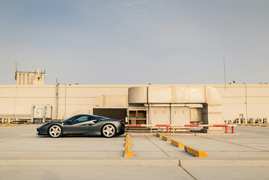
This is not merely a list; it is a diagnostic of the modern automotive apex. Below is the definitive dossier on the machines currently defining the upper echelon of performance, exclusivity, and sheer audacity.
The Pantheon of Power: The Elite of 2025
The cars listed here represent the bleeding edge. They are the benchmark against which all others are measured, the cars that make Formula 1 prototypes look pedestrian.
Aston Martin Valkyrie
When Aston Martin partnered with Adrian Newey, the legendary architect of Red Bull Racing’s championship-winning F1 machines, the automotive world braced for impact. The result, the Valkyrie, is less a car and more a weaponized aerospace experiment. Its Cosworth-derived 6.5-litre V12 is a masterpiece of mechanical violence, revving to a stratospheric 11,000 rpm. While the initial promises of 1,800 kg of downforce have been slightly reined in for road legality, the experience remains utterly terrifying. It doesn’t drive so much as it attacks the asphalt. The cockpit is a claustrophobic, carbon-fiber cocoon where every surface is functional, every gram is scrutinized, and every second feels like an eternity. It is the closest you will ever get to piloting a fighter jet on public roads.
Bugatti Chiron Super Sport 300+
For years, Bugatti was the undisputed king of the straight line. The Veyron paved the way, but the Chiron, and specifically the Super Sport variant, rewrote the rulebook. This machine is the physical embodiment of German engineering hubris. Its quad-turbocharged W16 engine is an industrial symphony, a terrifying crescendo of 1,500 horsepower that shoves you into your seat with the force of a collapsing star. We tested the Super Sport, and the experience was surreal. It doesn’t accelerate; it teleports. The chassis, once the Achilles’ heel of Veyron predecessors, is now astonishingly agile, allowing this 4,400-pound monolith to dance through corners with a grace that defies its mass. It remains the ultimate expression of \”too much is never enough.\”
Rimac Nevera R
If the Bugatti represents the pinnacle of the combustion era, the Rimac Nevera R is the dawn of a new age. Built in Croatia by a team of young engineers who clearly missed the memo on automotive tradition, the Nevera is an electric leviathan that renders traditional hypercars obsolete in a straight line. With four electric motors generating a combined 2,078 horsepower, it sprints from 0 to 60 mph in a scarcely believable 1.7 seconds. But the genius of Rimac is not just in the numbers. It is in the software. The Nevera’s torque vectoring system is so advanced it feels telepathic, adjusting power to each wheel thousands of times per second. Driving it is an exercise in recalibration; the physics you thought you knew simply don’t apply here. It is the fastest, most advanced, and perhaps the most important hypercar of the decade.
Gordon Murray Automotive T.50
In a world obsessed with hybridization and electrification, the Gordon Murray Automotive T.50 is a defiant middle finger to the future. Designed by the man who gave the world the McLaren F1, the T.50 is a purist’s dream. It features a naturally aspirated 4.0-litre V12 sourced from Cosworth, revving to a heart-stopping 12,100 rpm. Crucially, it has a manual gearbox. A real one. With a gated shifter. The kerb weight is a mere 986 kg (2,174 lbs), thanks to a carbon-fiber monocoque chassis. The result is an experience that is visceral, raw, and utterly immersive. It connects you to the road in a way that no digital nanny can replicate. It is the last of a dying breed, and perhaps the most special car on this list.
Pagani Utopia
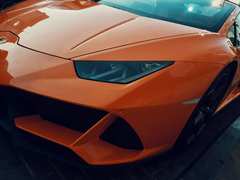
Horacio Pagani doesn’t build cars; he crafts rolling sculptures. The Utopia, the successor to the legendary Huayra, is a testament to this philosophy. It is a breathtaking blend of artistry and engineering, featuring a bespoke twin-turbocharged V12 developed by AMG, producing 852 horsepower. But unlike its rivals, the Utopia offers a seven-speed manual transmission. The interior is a symphony of exposed carbon fiber, anodized aluminum, and hand-stitched leather. It is a place where the technology serves the experience, rather than dominating it. The Utopia doesn’t just accelerate; it glides with an elegance that belies its brutal power. It is, quite simply, art in motion.
Koenigsegg Jesko
Christian von Koenigsegg operates on a different plane of existence. While other manufacturers iterate, Koenigsegg reinvents. The Jesko is the culmination of a lifetime spent chasing impossible numbers. Its 5.0-litre twin-turbocharged V8 produces 1,600 horsepower when running on E85 biofuel, propelling the car to speeds that flirt with the 300 mph barrier. But the real magic lies in its transmission. The 9-speed Light Speed Transmission uses multiple clutches to shift gears almost instantaneously, without the need to step through the ratios. It is a seamless surge of power that defies conventional physics. The Jesko is not just a car; it is a statement of intent, a declaration that the pursuit of ultimate performance knows no bounds.
Ferrari SF90 Stradale
Ferrari’s entry into the hybrid hypercar fray, the SF90 Stradale, marked a seismic shift for the Prancing Horse. For the first time, the flagship model was not a V12. Instead, Ferrari combined a mid-mounted 4.0-litre twin-turbo V8 with three electric motors for a combined output of 986 horsepower. This isn’t just a hybrid; it’s a technological tour de force, capable of electric-only driving and blistering acceleration that rivals the best in the world. The chassis is a marvel of F1-derived engineering, providing a level of agility and feedback that belies its complex powertrain. It is the perfect synthesis of tradition and innovation, proving that Ferrari can adapt to the future without sacrificing its soul.
Lamborghini Revuelto
The spiritual successor to the iconic Murcielago, the Revuelto is Lamborghini’s bold declaration that the V12 era is far from over. This hybrid hypercar combines a naturally aspirated 6.5-litre V12 with three electric motors for a staggering 1,001 horsepower. The result is an experience that is quintessentially Lamborghini: loud, dramatic, and outrageously fast. The Revuelto attacks corners with a ferocity that is both exhilarating and terrifying, its rear-axle steering providing a level of agility that defies its 1,760 kg mass. It is a car that demands your attention, a V12-powered spectacle that reminds us why we fell in love with supercars in the first place.
McLaren Senna GTR
Designed purely for the track, the Senna GTR takes the Senna road car and cranks the intensity up to eleven. With 813 horsepower from its 4.0-litre twin-turbo V8, race-bred aerodynamics that generate over 1,000 kg of downforce, and a dry weight of just 1,188 kg, this machine is a scalpel. It is brutally effective, demanding precision and commitment from its driver. The lack of road-legal niceties—no stereo, no carpets, no concessions—makes it an uncompromising track weapon. It is the purest distillation of McLaren’s racing DNA, a car that rewards skill and punishes mistakes with equal measure.
Ferrari LaFerrari
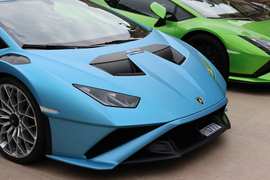
Though now superseded by newer models, the LaFerrari remains a benchmark in the hypercar pantheon. As the third member of the \”Holy Trinity\” alongside the Porsche 918 Spyder and McLaren P1, it defined the hybrid hypercar era. Its 6.3