
The Best Hypercars of 2026: A Definitive Guide to the World’s Ultimate Machines
The automotive landscape of 2026 is a breathtaking testament to human ingenuity, where the lines between road car and race machine continue to blur. In the rarefied atmosphere of the hypercar segment, the pursuit of ultimate performance, luxury, and technological supremacy has reached new zeniths. From thousand-horsepower electric marvels to hand-built V12 symphonies, the options for the discerning collector or the thrill-seeking aficionado have never been more diverse or exhilarating. This is not merely a market; it is a gallery of automotive masterpieces, where engineering prowess meets artistic expression.
The defining characteristic of the modern hypercar is its duality. It must perform on the world’s most demanding racetracks, offering downforce, chassis dynamics, and braking capabilities that rival Le Mans prototypes. Yet, it must also transition seamlessly to the public road, providing a level of refinement, comfort, and user-friendliness that makes such extreme performance accessible. This balancing act, once thought impossible, is now the benchmark by which these multi-million-dollar machines are judged. The best hypercars of 2026 are not just fast; they are intelligent, intuitive, and intoxicatingly beautiful.
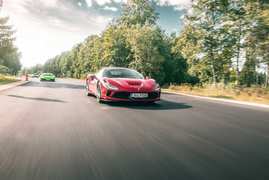
In this comprehensive exploration, we delve into the titans of the hypercar world, examining the engineering marvels, the design philosophies, and the driving experiences that set them apart. We will traverse the spectrum from Bugatti’s relentless pursuit of top speed to Pagani’s dedication to artisanal craftsmanship, and from the electrification wave led by Rimac to the spiritual successors of iconic legends. Whether you are seeking a four-wheeled blue-chip investment or the most thrilling driving experience money can buy, this guide will illuminate the path to automotive nirvana.
The Evolution of the Hypercar
To truly appreciate the 2026 landscape, one must understand the journey that brought us here. The term “hypercar” itself was popularized in the late 20th century, describing vehicles that transcended the already elite category of “supercar.” These were machines built with a singular focus on performance, often utilizing Formula 1 technology and materials. The original benchmarks, such as the McLaren F1 and the Bugatti Veyron, established the non-negotiable metrics: triple-digit horsepower, sub-three-second 0-60 mph times, and top speeds that challenged the very fabric of automotive capability.
The mid-2010s marked a significant inflection point with the arrival of the “holy trinity”—the Ferrari LaFerrari, the Porsche 918 Spyder, and the McLaren P1. These cars introduced hybrid powertrains to the hypercar realm, proving that electrification could enhance, rather than detract from, the visceral experience. They demonstrated that electric motors could fill the torque gaps of combustion engines, providing instantaneous response and allowing for unprecedented levels of chassis control through torque vectoring.
Today, in 2026, the hypercar segment is experiencing its most radical transformation yet: the rise of the electric hypercar. Companies like Rimac have shattered previous performance barriers, delivering acceleration figures that make the Veyron seem leisurely. This electric revolution is forcing even the most traditional marques to rethink their entire engineering paradigms. The challenge is no longer just about going faster; it is about doing so with soul, character, and a level of driver engagement that prevents the technology from overwhelming the experience.
The Best Hypercars of 2026: The Icons Redefined
Bugatti Chiron Super Sport: The Master of Speed
When evaluating the best hypercars of 2026, the Bugatti Chiron Super Sport remains an unavoidable benchmark for ultimate performance. It represents the culmination of a lineage that began with the Veyron, taking the legendary quad-turbocharged W16 engine and pushing it to its absolute limits. With 1,578 horsepower and an electronically limited top speed of 273 mph, the Chiron Super Sport is a testament to the engineering might of the Volkswagen Group.
What sets the Chiron Super Sport apart is not merely its stratospheric top speed, but its ability to deliver that performance with an almost serene level of composure. Driving a Chiron is less like operating a machine and more like commanding a forces of nature. The acceleration is relentless, a physical compression of space and time that few other vehicles can replicate. Yet, beneath the layers of carbon fiber and aerodynamic wizardry, the car remains remarkably tractable. The quad-turbo system, once a source of lag, has been refined to deliver a seamless surge of torque that makes the car feel elastic.
In 2026, the Chiron Super Sport continues to command attention for its combination of raw power and luxurious appointments. It is a grand tourer capable of crossing continents at breathtaking speeds, all while cocooning its occupants in the finest materials. For those who value speed above all else, and who appreciate the engineering mastery required to tame such a beast, the Chiron Super Sport remains the ultimate expression of automotive excess.
Koenigsegg Jesko Absolut: The Speed King
While Bugatti may own the legacy, Koenigsegg owns the potential. The Swedish manufacturer, led by the visionary Christian von Koenigsegg, has consistently pushed the boundaries of what is possible in a road-legal car. The Jesko Absolut is their magnum opus, a machine designed with a singular focus: to achieve the highest possible top speed in a production car.
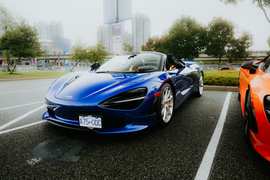
The heart of the Jesko Absolut is a 5.0-liter twin-turbocharged V8 that produces a staggering 1,600 horsepower when running on E85 biofuel. This power is delivered through Koenigsegg’s revolutionary 9-speed Light Speed Transmission (LST), a gearbox so advanced it functions almost as a CVT, allowing for near-instantaneous gear changes without the interruption of torque.
However, the true genius of the Jesko Absolut lies in its aerodynamics. Developed with the help of advanced simulations, the car boasts a drag coefficient of just 0.278 Cd. This slippery shape, combined with the immense power, gives the car a theoretical top speed that eclipses everything else on the road. While official runs are pending, the engineering points to a figure well north of 300 mph.
In the context of 2026, where electric cars are rapidly approaching such speeds, the Jesko Absolut represents the pinnacle of the internal combustion engine’s potential. It is a celebration of mechanical engineering, a symphony of high-revving precision, and a reminder that there is still magic to be found in the mechanical world.
Rimac Nevera R: The Electric Revolution
If the Jesko Absolut represents the end of an era, the Rimac Nevera R represents the dawn of a new one. Developed by Croatian tech prodigy Mate Rimac, the Nevera R is the most potent production car ever conceived. Its four independent electric motors deliver a combined output of 2,078 horsepower and 1,741 lb-ft of torque.
The performance figures are simply staggering. The 0-60 mph sprint is completed in a mind-bending 1.74 seconds, and the car can reach 186 mph in just 8.3 seconds. But the Nevera R is not just about straight-line speed. Its advanced torque vectoring system, controlled by a sophisticated AI, allows for a level of chassis agility that defies its 2,150 kg weight. On a racetrack, it feels more like a nimble sports car than a hypercar, thanks to the precise distribution of power to each wheel.
For the modern driver, the Nevera R offers a level of technological sophistication that is unmatched. The interior is a blend of premium materials and cutting-edge interfaces, with a focus on driver engagement. In 2026, the Nevera R stands as the definitive statement on electric performance, proving that the future of the hypercar is not just electric, but electrifying.
McLaren P1/P1 GTR: The Hybrid Benchmark
Though introduced a decade ago, the McLaren P1 continues to hold its ground in 2026 as one of the most significant hypercars ever made. It was the first of the modern hybrid hypercars and remains a masterclass in engineering balance. Its 3.8-liter twin-turbo V8 combined with an electric motor produces 903 horsepower, but the numbers only tell part of the story.
The P1’s true brilliance lies in its Active Aerodynamics and Race Chassis Control systems. The car can dynamically alter its downforce and damping in real-time, providing a level of adaptability that was revolutionary for its time. On the road, it is surprisingly comfortable and compliant, while on the track, it transforms into a precision instrument.
The P1 GTR, its track-only sibling, takes this formula to its most extreme conclusion. With stripped-out internals, enhanced aerodynamics, and a more potent hybrid system, the GTR is a purebred race car for the road. For collectors in 2026, the P1 remains a highly desirable asset, representing a pivotal moment in the history of the hypercar.
Ferrari LaFerrari: The Prancing Horse’s Hybrid Masterpiece
No discussion of hypercars would be complete without the Ferrari LaFerrari. This flagship model, named to emphasize its status as the definitive Ferrari of its time, combines a screaming 6.3-liter naturally aspirated V12 with an electric motor for a combined output of 950 horsepower.
The LaFerrari is a testament to Ferrari’s engineering philosophy, which prioritizes driver engagement and emotional connection. The car’s hybrid system is designed to enhance, rather than mask, the V12’s character. The electric motor