
The Ultimate Guide to 2026 Hypercars: From 2000bhp Electric Thrillers to Hand-Built Analogue Masterpieces
The world of hypercars is undergoing a seismic shift. What was once the exclusive domain of roaring V12s and quad-turbocharged behemoths is rapidly evolving into a hybrid and electric frontier. Yet, as technology races forward, a counter-movement champions the raw, visceral connection of the past. Whether you’re captivated by the brutal efficiency of electric power or the soul-stirring symphony of a naturally aspirated engine, 2026 offers a smorgasbord of automotive perfection that caters to every conceivable dream.
The market has never been more vibrant. Demand for these seven-figure machines continues to outstrip supply, creating a unique environment where automotive icons appreciate in value almost as quickly as they depreciate. For collectors, this is a golden era of blue-chip investments. For driving enthusiasts, it’s a golden age of unparalleled engineering. From the wind-tunnel-sculpted aerodynamics of the Aston Martin Valkyrie to the brutalist elegance of the Bugatti Mistral, the best hypercars of 2026 represent the absolute pinnacle of human ingenuity, passion, and performance.
This isn’t just about speed; it’s about the complete sensory experience. It’s about the handshake-firm steering of a pure analogue machine, the relentless surge of electric torque, and the artistic detail in every carbon fiber weave and hand-stitched leather panel. Join us as we explore the most extraordinary machines on four wheels, pushing the boundaries of what we thought possible on the road and track.
The Elite Pantheon: Our Top Picks for 2026
Selecting the ‘best’ hypercars is an exercise in delightful agony. Each machine on this list excels in its own unique domain, challenging convention and rewriting the rulebook.
Aston Martin Valkyrie: The realization of a madman’s dream, blending Formula 1 aerodynamics with a screaming V12.
Bugatti Mistral: The swansong of the W16 era, offering brutal power in an elegant, open-top package.
Ferrari F80: A technological tour de force from Maranello, showcasing the future of hybrid hyper-performance.
Koenigsegg Agera RS: The definition of extreme engineering, holding records that once seemed untouchable.
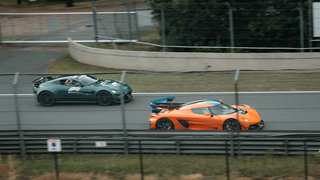
Lamborghini Revuelto: The new benchmark for V12 hybrid supercars, balancing wild theater with surprising usability.
McLaren F1: The legend that started it all, proving that simplicity and driver focus trump raw numbers.
Rimac Nevera R: The electric juggernaut that has redefined the very definition of acceleration.
Pagani Utopia: A masterclass in craftsmanship and driving purity, proving analogue isn’t dead.
Let’s delve into the specifics of these automotive marvels.
Aston Martin Valkyrie
When Aston Martin, in collaboration with the legendary Adrian Newey of Red Bull Racing fame, unveiled the Valkyrie concept, the automotive world collectively gasped. It wasn’t just a new car; it was a statement that the boundaries between road car and Le Mans prototype had officially dissolved.
The Engineering Philosophy
The Valkyrie’s design is dictated entirely by physics. Adrian Newey’s objective was simple yet audacious: to create a road-legal car with downforce figures approaching those of an LMP1 race car. The result is a car that looks less designed and more grown, with a skeletal, shrink-wrapped body that channels air with surgical precision. The cockpit is a snug two-seater, barely larger than a fighter jet canopy, emphasizing the car’s singular focus on the driving experience.
Performance Metrics
Beneath the carbon fiber skin lies a Cosworth-derived 6.5-liter naturally aspirated V12 engine. This is a masterpiece of high-revving engineering, capable of spinning to an astronomical 11,000 rpm. In hybrid guise, it produces a combined 1,139 bhp. While early projections of 1,800 kg of downforce have been slightly tempered for production reality (now a still-astonishing 600 kg), the effect on the track is nothing short of supernatural.
The Driving Experience
Driving the Valkyrie is a visceral, almost spiritual experience. As evo editor-at-large Dickie Meaden noted, “At first, everything feels like it’s happening too fast.” The sheer rate of acceleration combined with the V12’s banshee wail requires a complete recalibration of the senses. There are no electronic safety nets to catch you; the car demands your full attention, rewarding focus with an agility and precision that feels utterly alien to conventional automobiles. It is, without doubt, one of the most uncompromising and exhilarating machines ever conceived.
Key Specifications:
Power: 1,139 bhp
0-62 mph: <3 seconds
Top Speed: 220 mph
Price (New): Approx. $3.5 million
---\n\n## 2. Bugatti Mistral
The Bugatti W16 engine has been the heartbeat of the hypercar world for nearly two decades. From the Veyron’s groundbreaking 1001 horsepower to the Chiron’s 1,500 bhp, this quad-turbocharged leviathan has defined the upper echelon of automotive performance. With the Chiron’s production winding down, Bugatti-Rimac CEO Mate Rimac made a bold decision: to give this legendary engine one final, spectacular hurrah. Enter the Mistral, the open-top roadster that combines Bugatti’s engineering prowess with artistic elegance.
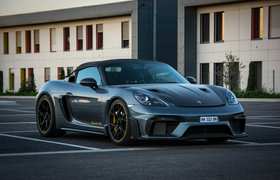
Design and Craftsmanship
The Mistral is a visual masterpiece. Built on the Chiron platform, it eschews the fixed roof of its siblings for a sweeping, handcrafted body that pays homage to Bugatti’s open-top heritage. The ‘Mistral’ name itself evokes the famous warm, dry wind that sweeps down the Rhône Valley in France, mirroring the car’s intended purpose as a grand touring roadster. The attention to detail is staggering, with every curve and vent optimized for both aerodynamic efficiency and aesthetic beauty. It is, quite simply, automotive jewelry.
The Powerhouse
At the heart of the Mistral beats the final iteration of the W16 engine, upgraded to produce a staggering 1,578 bhp. This immense power is sent to all four wheels through Bugatti’s advanced all-wheel-drive system, ensuring that the car remains planted despite its prodigious output. The torque delivery is relentless, a seemingly endless wave of force that pins you to your seat from any speed.
Setting Records
In true Bugatti fashion, the Mistral wasn’t just designed to be fast; it was designed to break records. During testing, the roadster achieved a verified top speed of 282.1 mph, making it the fastest production open-top car in the world. This achievement is even more remarkable considering the compromises often necessary in convertible design, such as increased weight and aerodynamic instability. The Mistral proves that with sufficient engineering talent and budget, these limitations can be overcome.
Driving Dynamics
Despite its record-breaking performance, the Mistral remains a Bugatti at heart—comfortable, refined, and surprisingly docile when driven normally. However, when the throttle is opened, the beast awakens. The engine note is a thunderous symphony of mechanical fury, a sound that will echo in your memory long after the drive is over. The handling is precise, aided by advanced active aerodynamics that adapt to the car’s speed and driving conditions. It strikes the perfect balance between brutal power and sophisticated control, offering a driving experience that is both exhilarating and deeply satisfying.
Key Specifications:
Power: 1,578 bhp
0-62 mph: 2.4 seconds
Top Speed: 282.1 mph
Price (New): Approx. $6 million
—\n\n## 3. Ferrari F80
Ferrari’s 80th anniversary is marked not just by celebration, but by a radical reimagining of what a front-engined Ferrari can be. The F80 is a bold departure from tradition, blending Formula 1 aerodynamics with cutting-edge hybrid technology to create the most potent road-legal Ferrari ever conceived. This is not just a successor to the SF90 Stradale; it is a statement of intent about the future direction of the Prancing Horse.
A New Heart
Perhaps the most surprising element of the F80 is its powerplant. In a move that shocked many purists, Ferrari has eschewed the V12 for a new, in-house-developed 3.0-liter V6 engine. However, this is no ordinary six-cylinder. Employing hybrid technology derived from the company’s Formula 1 program, including both MGU-K and MGU-H systems, the V6 produces a colossal 888 bhp. When combined with the electric motors, the F80 generates a total output of 1,187 bhp, eclipsing all previous road-going Ferraris.
Aerodynamic Dominance

The F80’s design is a masterclass in aerodynamic efficiency. Lifting elements from Formula 1 and Le Mans prototypes, the bodywork is a symphony of wings, diffusers, and canards that generate over a ton of downforce at 15