
Title: The Definitive Guide to Hypercars: 2026 Edition and the Future of Automotive Extremes
The world of hypercars has never been more vibrant, or more complex. For automotive enthusiasts, this rarefied stratum of the market represents the zenith of engineering, design, and outright performance. What began as a niche category of exclusive, high-performance automobiles has evolved into a broad church of mechanical marvels, encompassing everything from screaming, naturally aspirated V12s to boundary-pushing, 2000-horsepower electric bruisers. The demand for these four-wheeled masterpieces continues to outstrip supply, cementing their status not just as vehicles, but as blue-chip assets and rolling sculptures.
Whether you’re an aficionado seeking the ultimate track weapon or an investor eyeing the next blue-chip automotive stock, the 2026 landscape offers a dizzying array of choices. The era of the hypercar is defined by audacious engineering and a relentless pursuit of the absolute. Here, we delve into the icons of today and the trailblazers of tomorrow, exploring the machines that are redrawing the very definition of automotive performance.
The Pantheon of Hypercar Excellence: Current Icons and Benchmark Machines
The hypercar landscape is currently dominated by a select group of manufacturers who have consistently pushed the envelope of what is possible on four wheels. These are the machines that grace bedroom walls and fuel the aspirations of a generation.
Bugatti: The Epitome of Unbridled Power and Luxury
No discussion of hypercars is complete without mentioning Bugatti, a brand synonymous with setting and shattering speed records. The legacy of the Veyron, with its revolutionary 1001-horsepower W16 engine, fundamentally altered the industry’s perception of speed and performance. It was a technological tour de force that proved a road-legal car could achieve speeds previously reserved for the Bonneville Salt Flats. Its successor, the Chiron, took this formula and amplified it, boasting up to 1500 horsepower and a top speed that flirted with the 300 mph barrier. The Chiron represents the apogee of the internal combustion hypercar, a symphony of engineering that combines brutal acceleration with unexpected civility.
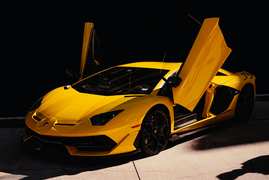
The latest iteration, the Mistral, signals the end of the W16 era. As Bugatti’s final hyper-GT roadster, the Mistral pays homage to the brand’s heritage while embracing electrification. It retains the staggering 1578-horsepower output of the Chiron Super Sport but adds an element of bespoke craftsmanship and a top speed of 282.1 mph, making it the fastest roadster ever built. This machine is a testament to Bugatti’s philosophy: performance should never come at the expense of luxury.
Aston Martin: Where Artistry Meets Aerodynamic Mastery
Aston Martin has always occupied a unique space in the hypercar hierarchy, blending exquisite British design with Formula 1-derived technology. The Valkyrie, born from a collaboration with Red Bull Racing’s Adrian Newey, is a perfect example of this synergy. This mid-engined marvel features a naturally aspirated 6.5-liter V12 engine, derived from Cosworth’s racing program, augmented by a hybrid system to produce over 1100 horsepower. Its design is a masterclass in aerodynamics, with a skeletal, shrink-wrapped body that generates LMP1-level downforce. The Valkyrie is not merely a fast car; it is a visceral, race-bred machine that redefines the driving experience.
Ferrari: The Evolution of the Prancing Horse
Ferrari’s hypercar lineage is legendary, from the F40 to the Enzo. The LaFerrari, the third member of the “holy trinity” of hybrid hypercars, exemplified the brand’s ability to integrate electrification seamlessly. With its screaming 6.3-liter V12 engine and KERS-style hybrid system, it delivered a combined 950 horsepower and a driving experience that was both exhilarating and remarkably accessible.
Looking forward, the Ferrari F80 represents the next chapter. This V12-powered hybrid super-GT is the most powerful road-going Ferrari ever created, capable of lapping Fiorano significantly faster than the LaFerrari. It features a 3.0-liter V6 augmented by electric motors, a carbon fiber chassis, and aerodynamic elements derived from Formula 1. The F80 is a bold statement about Ferrari’s commitment to performance while navigating the evolving regulatory landscape.
McLaren: Lightweight Dynamics and Driver Focus
McLaren has carved its niche by prioritizing lightweight construction and driver engagement. The original McLaren F1 remains an icon, a benchmark for automotive purity with its naturally aspirated V12 and central driving position. Its philosophy of minimalism and driver focus continues to influence the brand today.
The P1, the first of the hybrid hypercars, combined a twin-turbocharged V8 with an electric motor to produce over 900 horsepower. It was a masterclass in active aerodynamics and chassis control, offering a driving experience that was both savage and refined. The upcoming McLaren W1 promises to continue this legacy, featuring a bespoke 4.0-liter V8 hybrid powertrain with over 1200 horsepower. It represents a clean-sheet design, free from the constraints of existing platforms, promising a new benchmark in hybrid hypercar performance.
Pagani: The Art of Automotive Exotica
For Horacio Pagani, the hypercar is an opportunity to blend art with engineering. The Utopia, the successor to the Huayra, is a testament to this philosophy. Powered by a Mercedes-AMG twin-turbo V12 and mated to a seven-speed manual gearbox, the Utopia delivers 852 horsepower in a package of breathtaking beauty. Its advanced composites and exotic alloys belie a remarkably supple and involving driving experience. The Utopia is a reminder that in the world of hypercars, the connection between driver and machine is as important as the raw numbers.
Lamborghini: The Reign of the Naturally Aspirated V12
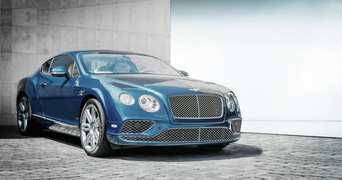
Lamborghini’s contribution to the hypercar canon is defined by its audacious, naturally aspirated V12 engines. The Revuelto, the spiritual successor to the Aventador, represents the brand’s bold step into hybridization. With over 1000 horsepower from its V12 and electric motors, it delivers performance that rivals the best in the world. Yet, it remains a quintessentially Lamborghini experience—dramatic, visceral, and utterly captivating. Its success in our Car of the Year awards underscores its position as a true hypercar icon.
Koenigsegg: Engineering Extremes from Sweden
Christian von Koenigsegg has built a reputation for producing some of the most extreme and innovative hypercars on the planet. The Agera RS, for a time, held the title of the world’s fastest production car, a testament to Koenigsegg’s relentless pursuit of speed. The Jesko and the CC850 showcase the brand’s engineering prowess, featuring multi-clutch transmissions that allow for near-instantaneous gear changes and a level of driver engagement rarely found in such high-performance machines. These cars are not just fast; they are mechanical marvels that challenge conventional automotive wisdom.
Porsche: The Rational Approach to the Extreme
The Porsche 918 Spyder, part of the “holy trinity,” demonstrated that Porsche’s approach to hybridization could yield a supremely balanced and usable hypercar. Its combination of a naturally aspirated V8, electric motors, and all-wheel drive provided a level of dynamic control and accessibility that made it a benchmark for the era. While the brand has since pivoted to electric sports cars with the Taycan, the 918 remains a testament to Porsche’s engineering excellence.
Rimac: The Electric Revolution
Rimac Automobili has emerged as the vanguard of the electric hypercar movement. The Nevera, with its quad-motor setup delivering over 2000 horsepower, is the fastest-accelerating production car in the world. It boasts performance metrics that render its combustion-engined counterparts obsolete. But what truly sets the Nevera apart is its driving dynamics. Despite its staggering power output, it is remarkably exploitable, a testament to Rimac’s expertise in electric vehicle technology and chassis tuning. The Nevera R, in its higher-spec form, pushes these boundaries even further, solidifying its position as the benchmark for electric hypercars.
The Future of Hypercars: What’s on the Horizon?
The hypercar landscape is in a state of flux, with electrification and new entrants reshaping the market. Here are some of the most exciting developments to watch.
Aston Martin Valhalla: The F1-Inspired Hybrid
The Valhalla represents Aston Martin’s evolution of the hybrid hypercar concept. Building on the learnings from the Valkyrie, the Valhalla pairs a mid-mounted turbocharged V8 with a hybrid system to produce over 1000 horsepower. Its focus on aerodynamics and driver engagement promises a visceral experience that bridges the gap between road car and race car. With a planned production run of 999 examples, it offers a more accessible (though still exclusive) entry into the world of Aston Martin hypercars.
Bugatti Tourbillon: The Hybrid Future of Bugatti
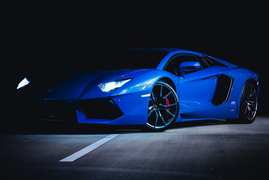
The Tourbillon marks a new era for Bugatti. Replacing the quad-turbo W16 with a Cosworth-developed V16 engine and a robust hybrid system, it delivers 1775 horsepower. This new powertrain is not only more powerful but