
The Evolution of the Modern Hypercar: A Deep Dive into the World’s Most Extreme Machines
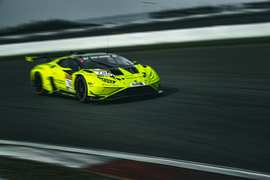
The automotive landscape of 2025 is defined by the relentless pursuit of the ultimate driving machine. While the term “sports car” once denoted the pinnacle of performance, it is the “hypercar” that now commands the highest echelon of automotive engineering, design, and sheer audacity. These are not mere vehicles; they are rolling sculptures, technological marvels, and rolling testaments to what is possible when engineering constraints are pushed to their absolute breaking point. This guide delves into the world’s most exclusive and powerful machines, exploring the innovation, the legacy, and the jaw-dropping performance that define the modern hypercar.
A Brief History: From Supercar to Hypercar
The journey to the modern hypercar began with the supercar. Born from the post-war boom in the mid-20th century, Italian manufacturers like Ferrari and Lamborghini began crafting low-slung, mid-engined vehicles that prioritized speed and style over practicality. These machines, characterized by their V12 engines and dramatic styling, captured the imagination of a generation. However, as technology advanced and global competition intensified, the definition of the ultimate car began to shift.
By the late 20th century, cars like the McLaren F1 blurred the lines between road-legal and race-bred machinery. With its carbon fiber monocoque chassis and naturally aspirated V12 engine producing a then-astonishing 618 horsepower, the F1 was a game-changer. It proved that a car could be both luxurious and brutally fast, setting a benchmark that subsequent manufacturers would spend decades trying to surpass.
The true dawn of the hypercar era, however, came with the 21st century. The advent of hybrid technology, coupled with advancements in materials science and aerodynamics, opened up a new realm of performance possibilities. Manufacturers realized that combining the raw power of internal combustion engines with the instant torque of electric motors could produce a synergy that neither technology could achieve alone. This realization gave birth to a new breed of vehicle: the hypercar.
What Defines a Hypercar in 2025?
While the term “supercar” generally refers to high-performance sports cars with limited production runs, the hypercar occupies a rarified stratosphere. Several key metrics distinguish these machines:
Power Output: A modern hypercar must produce at least 1,000 horsepower. Many push well beyond this, with flagship models from Bugatti and Rimac exceeding 1,500 horsepower. This power is not merely for show; it is required to propel these often-heavy machines to speeds that challenge the very limits of tire adhesion and aerodynamics.
Advanced Aerodynamics: Unlike their predecessors, which relied on brute force, modern hypercars are works of aerodynamic art. Every curve, vent, and wing is meticulously sculpted to manage airflow, generate downforce, and keep the car stable at speeds exceeding 200 mph. Active aerodynamics, which can adjust the car’s shape in real-time, are now commonplace.
Exotic Materials: To achieve their performance goals, hypercar manufacturers rely on the most advanced materials available. Carbon fiber is the material of choice for chassis and bodywork, offering incredible strength at a fraction of the weight of steel. Lightweight alloys, titanium, and even graphene are used in various components to shed every possible pound.
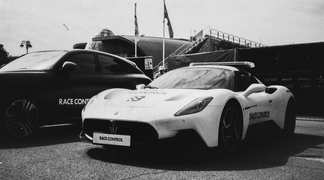
Limited Production: Hypercars are, by definition, exclusive. Production is typically limited to a few hundred units worldwide, often with specific variants or specifications reserved for VIP clients. This exclusivity is a significant part of their appeal, making them as much a collector’s item as a mode of transportation.
Pricetag: This exclusivity comes at a staggering cost. A modern hypercar typically starts at around $1.5 million USD and can easily climb to $3 million or more, depending on the manufacturer and bespoke options. This price reflects the immense research and development costs, the hand-built nature of the vehicles, and the cutting-edge technology packed into every machine.
The Contenders: A Look at the Elite
The world of hypercars is a competitive arena where only the best can survive. Here are some of the most significant players in this elite field:
Bugatti: The French marque, now under the Volkswagen Group umbrella, has long been synonymous with ultimate automotive luxury and performance. Following the groundbreaking Veyron, Bugatti introduced the Chiron in 2016. This behemoth retains the iconic 8-liter quad-turbocharged W16 engine, but with significant upgrades. In its standard form, the Chiron produces 1,500 horsepower, launching the car from 0 to 62 mph in under 2.5 seconds. Subsequent variants, such as the Super Sport 300+, have pushed the boundaries even further, achieving speeds in excess of 300 mph. The Chiron is the embodiment of “comfortable speed,” offering a level of refinement and luxury rarely found in such a high-performance machine. Its interior is a testament to French craftsmanship, with hand-stitched leather and milled aluminum adorning every surface.
Koenigsegg: The Swedish manufacturer, led by the visionary Christian von Koenigsegg, has carved out a niche as the ultimate disruptor in the hypercar world. Koenigsegg vehicles are known for their radical engineering solutions and mind-bending performance figures. The Regera, meaning “to reign” in Swedish, is a prime example. It eschews a traditional multi-speed gearbox for the Koenigsegg Direct Drive (KDD) system, which uses a hydraulic coupling to deliver power directly to the wheels. This results in a seamless and brutal surge of acceleration. With its combined output of 1,500 horsepower from its twin-turbocharged V8 and electric motors, the Regera can rocket from 0 to 62 mph in a scarcely believable 2.8 seconds. Beyond its performance, the Regera showcases Koenigsegg’s commitment to innovation with features like a wrap-around windshield made from a single piece of glass and an automated wing system that adjusts itself based on driving conditions.
Rimac: Representing the new guard of hypercar manufacturers, Rimac Automobili has proven that electric powertrains can deliver performance that rivals or exceeds that of traditional internal combustion engines. The Croatian company’s flagship model, the Nevera, is a testament to this fact. Powered by four independent electric motors, one for each wheel, the Nevera produces a staggering 1,914 horsepower. This electric drivetrain allows for instantaneous torque delivery, resulting in a 0-60 mph time of just 1.85 seconds. The Nevera is also a technological tour de force, equipped with an advanced torque vectoring system that can adjust the power to each wheel independently, providing unparalleled agility and control. Its lightweight carbon fiber monocoque chassis and sophisticated aerodynamics ensure that it remains composed even at its top speed of 258 mph.
Aston Martin: The British marque has long been associated with elegance and refinement, but with the Valkyrie, they have entered the realm of extreme hypercar performance. Developed in collaboration with Red Bull Racing’s Adrian Newey, the Valkyrie is essentially a Formula 1 car for the road. Its design is dictated by aerodynamics, with a dramatic underbody tunnel that generates massive downforce. Power comes from a naturally aspirated 6.5-liter V12 engine, developed by Cosworth, producing 1,000 horsepower, supplemented by a Rimac-built KERS (Kinetic Energy Recovery System) that adds another 160 horsepower. This combination results in a power-to-weight ratio of 1:1, a feat rarely achieved in production vehicles. The Valkyrie is a purebred track weapon that just happens to be street-legal, offering a raw and visceral driving experience that is increasingly rare in the modern automotive landscape.
McLaren: Building on the legacy of the legendary F1, McLaren Automotive has established itself as a dominant force in the hypercar market. The McLaren P1, introduced in 2013, was a landmark vehicle that ushered in the era of the hybrid hypercar. It combined a twin-turbocharged V8 engine with an electric motor to produce a combined output of 903 horsepower. This hybrid system, which McLaren termed “Instant Power Hybrid,” provided not only immense power but also improved efficiency and throttle response. The P1’s aerodynamics were equally impressive, with active rear wing and DRS (Drag Reduction System) technology borrowed from Formula 1. While the P1 has since been succeeded by models like the Speedtail and the Senna, it remains an icon of the modern hypercar era, demonstrating that McLaren understands the delicate balance between performance, technology, and driver engagement.
Ferrari: No discussion of high-performance automobiles is complete without mentioning Ferrari. The Italian marque has a long and storied history of producing some of the world’s most desirable sports cars. Their foray into the hypercar segment began with the F40 in the late 1980s, followed by the F50 and the Enzo. In 2013, Ferrari introduced the LaFerrari, which translates to “The Ferrari,” signaling its importance. This hybrid hypercar combines a 6.3-liter V12 engine with a KERS system to produce a combined output of 950 horsepower. The LaFerrari’s design is a stunning example of Ferrari’s aesthetic prowess, with flowing lines and aggressive aerodynamics that are both beautiful and functional. Like the P1, the LaFerrari helped to establish the hybrid powertrain as the standard for hypercars, demonstrating that electrification could enhance performance rather than detract from it.
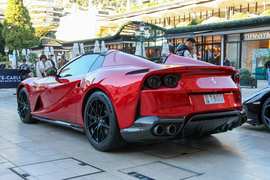
Pagani: Horacio Pagani’s creations are more than just cars; they are works of art. The Pagani Huayra, named after the Andean god