
The 2025 Guide to the World’s Most Exclusive Hypercars
The quest for automotive perfection has led engineers and designers to the absolute zenith of performance engineering: the hypercar. These are not merely fast cars; they are rolling statements of intent, blending Formula 1-level technology with bespoke craftsmanship. As a veteran of this industry with a decade of experience tracking the evolution of speed, I can attest that the hypercar landscape in 2025 is more breathtaking and technologically advanced than ever before. While the concept of a “hypercar” (a term that signifies a level of performance significantly beyond even a supercar) was once confined to the realms of science fiction, it is now a tangible reality, albeit one reserved for the most discerning collectors.
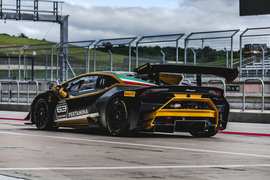
This guide delves into the elite echelon of automotive engineering, exploring the machines that redefine the very limits of what is possible on four wheels. We move beyond mere horsepower figures to examine the innovation, design philosophy, and exclusivity that define these multi-million dollar masterpieces.
The Aston Martin Valkyrie: A Formula 1 Car for the Road
When Aston Martin partnered with Adrian Newey, the legendary Chief Technical Officer of Red Bull Racing, the result was always going to be something extraordinary. The Aston Martin Valkyrie is perhaps the purest distillation of this collaboration, a vehicle born from the singular goal of achieving a 1:1 power-to-weight ratio. This isn’t just a car; it’s a rolling aerodynamic laboratory.
At its heart lies a Cosworth-developed 6.5-litre naturally aspirated V12 engine. While this might seem anachronistic in an era dominated by turbocharging and electrification, the engine’s design is a masterclass in efficiency and power delivery. It revs to a dizzying 11,100 rpm, producing a staggering 1,000 horsepower on its own. This is supplemented by a Rimac-sourced Kinetic Energy Recovery System (KERS), borrowed directly from Formula 1 technology, which adds another 160 horsepower. The combined output of 1,160 horsepower is channeled through a lightweight, race-bred transmission, pushing the Valkyrie to speeds that blur the line between road legality and track dominance.
Visually, the Valkyrie is a work of brutalist art. Its bodywork is sculpted by air, with massive venturi tunnels running beneath the car to generate immense downforce without the need for a conventional rear wing. This design philosophy is not merely aesthetic; it is functional, allowing the Valkyrie to generate more downforce than its own weight at speed. Inside, the cockpit is a sparse, functional space, clad in carbon fiber and Alcantara, with a central driving position that mirrors that of a Formula 1 car. The attention to detail is astonishing, with every component designed to minimize weight and maximize driver engagement. The result is a car that feels less like a road car and more like a race car that has been granted a license to roam the public highways.
The Bugatti Chiron: The Evolution of the Hyper-Grand-Tourer
Following the monumental success of the Veyron, a car widely credited with popularizing the modern hypercar segment, Bugatti faced an almost impossible task: how to improve upon perfection. The answer was the Chiron. While the Veyron was a technical marvel, the Chiron is a refinement, an elevation of the concept to new heights of luxury, speed, and engineering prowess.
The heart of the Chiron is its legendary 8.0-litre quad-turbocharged W16 engine. In the Chiron, this behemoth produces a staggering 1,500 horsepower and 1,600 Nm of torque. This immense power is delivered through a seven-speed dual-clutch transmission to an all-wheel-drive system, ensuring that the car remains planted and controllable despite its prodigious output. The 0-60 mph sprint is dispatched in a scarcely believable 2.4 seconds, while the 0-124 mph mark is passed in just 6.5 seconds. The top speed is electronically limited to 261 mph, a figure that most drivers will never approach, but one that serves as a testament to the car’s capabilities.
Beyond the raw numbers, the Chiron is a triumph of design and engineering. The bodywork is a perfect marriage of form and function, with flowing lines that are both aggressive and elegant. The iconic Bugatti horseshoe grille remains, but it is now larger and more integrated into the overall design. The interior is a symphony of luxury, with hand-stitched leather, polished aluminum accents, and a digital instrument cluster that displays information in a clear, concise manner. The Chiron is a car that can be driven fast on a racetrack, but it is equally at home on a grand tour across continents, combining blistering performance with the comfort and refinement expected of a Bugatti.
The Koenigsegg Regera: The Masterclass in Hybrid Performance

Christian von Koenigsegg has always marched to the beat of his own drum, and the Regera is perhaps his most audacious creation yet. Instead of simply bolting on an electric motor to an existing engine, Koenigsegg set out to create a new type of hybrid powertrain, one that would redefine the concept of acceleration.
The Regera’s most radical feature is its lack of a conventional gearbox. Koenigsegg developed a revolutionary “Direct Drive” system that uses a hydraulic coupling to transfer power from the V8 engine to the wheels. This allows for infinite gear ratios, eliminating the need for traditional gear shifts and providing a seamless, unbroken surge of acceleration. The car is powered by a 5.0-litre twin-turbocharged V8 engine, producing around 1,100 horsepower, which is supplemented by three electric motors. The combined output is a staggering 1,500 horsepower and 2,000 Nm of torque, but it is the way this power is delivered that sets the Regera apart.
The acceleration is relentless. 0-60 mph takes just 2.8 seconds, but the 0-124 mph sprint is completed in a mind-bending 6.6 seconds. This is a car that simply refuses to let up, pulling harder and harder the faster it goes. The Regera is also a marvel of engineering innovation. It features active aerodynamic elements that adjust to optimize downforce and cooling, and the interior is a showcase of luxury and technology, with features like Wi-Fi connectivity and Apple CarPlay that are rarely found in such extreme performance machines.
The McLaren P1: The Benchmark for Hybrid Hypercars
The McLaren P1 was a game-changer, a car that proved that hybrid powertrains could be the future of the hypercar. While its predecessors, the F1 and the 650S, were exceptional machines in their own right, the P1 took the formula to a new level, blending the raw excitement of a race car with the efficiency and technology of a hybrid.
At the heart of the P1 is a 3.8-litre twin-turbocharged V8 engine, which produces around 727 horsepower. This is augmented by a 177-horsepower electric motor, which is integrated into the powertrain to provide an instant surge of torque and improve efficiency. The combined output is a stunning 903 horsepower and 900 Nm of torque, which is sent to the rear wheels through a seven-speed dual-clutch transmission. The 0-60 mph sprint is completed in a blistering 2.8 seconds, and the car can reach 124 mph in just 6.8 seconds. The P1 is also a masterclass in aerodynamics, with active rear wing and brake cooling systems that adapt to driving conditions to optimize performance.
The interior of the P1 is a driver-focused environment, with a low seating position and a cockpit that wraps around the driver. The dashboard is dominated by a digital display that provides vital driving information, and the car features a range of driving modes that allow the driver to tailor the car’s performance to their preferences. The P1 is a car that demands respect, but it rewards the driver with an exhilarating and deeply engaging experience.
The Ferrari LaFerrari: The Pinnacle of Italian Engineering
When Ferrari builds a car that bears the name LaFerrari, it signifies something special. This is not just another model in their lineup; it is a statement of intent, a showcase of their most advanced technology and design philosophy. The LaFerrari is the embodiment of Ferrari’s racing heritage, adapted for the road in a package that is both breathtakingly beautiful and ferociously fast.
The LaFerrari is powered by a 6.3-litre naturally aspirated V12 engine, which produces a staggering 789 horsepower. This is supplemented by a 160-horsepower electric motor, which is integrated into the powertrain to provide an instant surge of torque and improve efficiency. The combined output is a stunning 949 horsepower and 900 Nm of torque, which is sent to the rear wheels through a seven-speed dual-clutch transmission. The 0-60 mph sprint is completed in a mere 2.9 seconds, and the car can reach 124 mph in just 7.1 seconds. The LaFerrari is also a masterclass in aerodynamics, with active rear wing and brake cooling systems that adapt to driving conditions to optimize performance.

The interior of the LaFerrari is a driver-focused environment, with a low seating position and a cockpit that wraps around the driver. The dashboard is dominated by a digital display that provides vital driving information, and the car features a range of driving modes that allow the driver to tailor the car’s performance to their preferences. The LaFerrari is a car that demands