
The Anatomy of the Modern Hypercar: Power, Prestige, and the Future of Automotive Excellence
In the rarefied air of the automotive world, where ‘supercar’ denotes the pinnacle of performance, ‘hypercar’ represents something else entirely. It is a category defined not just by speed, but by the audacious fusion of cutting-edge technology, bespoke craftsmanship, and engineering that borders on the fantastical. For the past decade, the very definition of a hypercar has been in flux, constantly redefined by marques unwilling to accept the status quo. This evolution is a thrilling narrative of human ingenuity, where the lines between road car and Le Mans prototype blur, and where the price of admission is often measured in millions, yet the experience is truly priceless.
We are living in a golden age for automotive enthusiasts. A decade ago, the notion of a road-legal car with over 1,000 horsepower was largely theoretical, confined to niche builders or Formula 1 race cars. Today, such figures are not just achievable, they are becoming the benchmark. The rise of electrification has been the single most disruptive force in this segment, injecting brutal electric torque into the mechanical hearts of these machines. This seismic shift has forced established titans like Bugatti and Ferrari to re-evaluate their strategies, while simultaneously empowering new players like Rimac to challenge the established order.
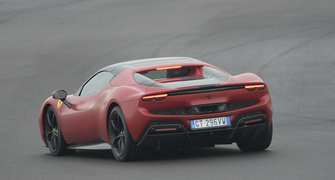
This article serves as the definitive guide to the world’s most extraordinary vehicles. We will delve into the engineering marvels that make these cars tick, the design philosophies that set them apart, and the cultural impact they wield. From the track-derived aerodynamics of the Aston Martin Valkyrie to the refined brute force of the Bugatti Chiron, each machine tells a unique story of ambition and engineering prowess. Join us as we explore the anatomy of the modern hypercar.
The Valkyrie’s Symphony of Aerodynamics: Aston Martin’s Track Weapon
When you hear the name Aston Martin, you might picture the suave, sophisticated GT cars favored by James Bond. But with the Valkyrie, Aston Martin tapped into a different lineage—one of brutal, uncompromised racing performance. This wasn’t just about building a fast car; it was about leveraging a partnership with Adrian Newey, the legendary Formula 1 aerodynamicist behind Red Bull Racing’s championship-winning machines. The result is a vehicle that looks less like it was designed in a studio and more like it was sculpted by the wind itself.
The defining characteristic of the Valkyrie is its extraordinary aerodynamic efficiency. Newey’s philosophy is simple: downforce is king. To achieve this without the drag penalty of massive wings, the Valkyrie utilizes a radical underbody design. Enormous tunnels run the length of the car, sucking air from the front and expelling it at high velocity through the rear diffuser. This creates a ‘ground effect’ that generates immense downforce, effectively gluing the car to the road. At speeds exceeding 200 mph, the Valkyrie produces enough downforce to theoretically drive upside down.
Powering this aerodynamic marvel is a Cosworth-developed 6.5-liter naturally aspirated V12 engine. This is not a forced-induction unit, but a screaming, high-revving masterpiece capable of reaching 11,100 rpm. In partnership with Rimac’s electric hybrid system, the Valkyrie produces a combined output exceeding 1,100 horsepower. This raw, visceral power delivery, combined with the feather-light carbon fiber construction, results in a power-to-weight ratio that is simply staggering. The driving experience is often described as gladiatorial—intense, demanding, and utterly exhilarating. It is a car that demands respect and rewards the skilled driver with an unparalleled connection to the machine and the road.
The Bugatti Chiron: A Masterclass in Refined Power
If the Aston Martin Valkyrie represents the raw, untamed spirit of the hypercar, the Bugatti Chiron represents its most refined and luxurious iteration. Born from the legacy of the Veyron, the Chiron faced the monumental task of exceeding its predecessor’s legendary status. Bugatti’s approach was not to chase a single lap time, but to create the most complete, luxurious, and devastatingly fast road car ever conceived.
At the heart of the Chiron lies the monstrous 8.0-liter quad-turbocharged W16 engine. This mechanical marvel, a testament to engineering excess, produces a staggering 1,500 horsepower in its standard configuration. Bugatti engineers employed a two-stage turbocharging system to ensure that power delivery was smooth and linear, rather than a sudden, violent jolt. This ensures that even with its mind-bending performance, the Chiron remains tractable and comfortable for grand touring.
However, the Chiron is far more than just a straight-line speed demon. Its chassis is a sophisticated symphony of carbon fiber and advanced suspension technology, designed to handle the immense forces generated by its power. Inside, the cabin is a sanctuary of luxury, trimmed in the finest leathers and metals. It is this duality—the ability to effortlessly cruise the boulevards of Paris one moment and decimate the world’s most prestigious drag strips the next—that defines the Chiron’s genius. It is the ultimate statement of automotive power and prestige, a true icon of the 21st century.
The Electric Revolution: Rimac Nevera and the Future
The automotive landscape is undergoing a seismic shift, and nowhere is this more evident than in the hypercar segment. The traditional reliance on internal combustion engines is being challenged by the sheer, unadulterated performance of electric powertrains. Leading this charge is Rimac, a Croatian startup that has rapidly ascended to the forefront of hypercar engineering. Their flagship creation, the Nevera, is not just an electric car; it is a statement of intent that redefines the limits of automotive performance.
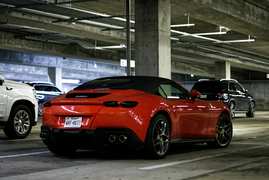
What sets the Nevera apart is its revolutionary electric architecture. Instead of relying on a single electric motor, the Nevera utilizes four independent motors, one for each wheel. This allows for unprecedented levels of torque vectoring and control, enabling the car to execute maneuvers that would be impossible in a conventional vehicle. The result is a car that can accelerate from 0 to 60 mph in under two seconds, and achieve a top speed exceeding 250 mph.
Beyond its raw performance metrics, the Nevera represents a new philosophy of hypercar design. It is a testament to the idea that sustainability and extreme performance can coexist. The car’s lightweight carbon fiber monocoque and advanced battery technology ensure that it delivers an exhilarating driving experience without the environmental guilt associated with traditional hypercars. As the automotive world continues to evolve, the Rimac Nevera stands as a beacon of innovation, demonstrating that the future of high performance is electric.
The Hybrid Masterpiece: Ferrari’s Formula 1 Legacy
For a century, Ferrari has been synonymous with motorsport glory. The brand’s identity is forged in the heat of competition, and its road cars have always served as conduits for this racing DNA. The LaFerrari, and its spiritual successor the SF90 Stradale, represent the pinnacle of this philosophy, showcasing how the lessons learned on the track can be translated to the road in spectacular fashion.
At the heart of these machines lies a sophisticated hybrid powertrain that combines a high-revving internal combustion engine with electric motors. This technology is not an afterthought but a core component of the car’s performance. The electric motors provide instant torque, filling the gaps in the powerband and ensuring that the car accelerates with relentless ferocity. This hybrid approach allows Ferrari to achieve performance levels that would be impossible with a traditional engine alone, while simultaneously improving efficiency and reducing emissions.
The design of these cars is equally impressive. Drawing inspiration from Formula 1 aerodynamics, the bodies are sculpted to manage airflow with precision, generating downforce while minimizing drag. The cabins are driver-focused, eschewing unnecessary distractions in favor of essential controls and information. This commitment to the driving experience, combined with the brand’s legendary heritage, makes Ferrari’s hybrid hypercars some of the most desirable vehicles on the planet.
The Track-Day Icon: McLaren’s Pursuit of Purity
McLaren’s journey back to the forefront of the automotive world has been defined by a relentless pursuit of engineering purity and track-focused performance. Unlike some of their rivals who prioritize luxury and comfort, McLaren has remained true to its racing roots, creating machines that are optimized for the ultimate driving experience.
The McLaren P1, and its spiritual successor the Senna, exemplify this philosophy. These cars are lightweight, aerodynamically efficient, and equipped with hybrid powertrains that deliver blistering performance. The P1, in particular, was a game-changer, demonstrating that a hybrid system could be used to enhance, rather than compromise, the driving experience. Its Active Aero system, which could adjust the rear wing in real-time, allowed the car to optimize its downforce and drag characteristics on the fly.
The Senna takes this concept even further, stripping away excess weight and focusing on pure, unadulterated track performance. With its aggressive aerodynamics and high-revving V8 engine, the Senna is a car that demands skill and rewards it with an unparalleled driving experience. For the true driving enthusiast, McLaren’s track-day icons represent the pinnacle of automotive engineering and the ultimate expression of the hypercar philosophy.
The Hyper-Luxe Statement: Koenigsegg and the Art of Exclusivity
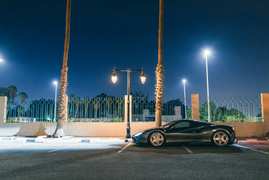
In the world of hypercars, there is a distinction between a high-performance supercar and a true hypercar. The latter is defined not just by its speed, but by its exclusivity, its innovative engineering, and its artistic expression. Christian von Koenigsegg has built his empire on this very principle, creating vehicles that are as much works of art as they are machines