
The Quest for Automotive Perfection: A Deep Dive into the World’s 10 Most Elite Hypercars
In the rarefied atmosphere where engineering prowess meets artistic expression, a select group of machines transcends the definition of mere transportation. These are the hypercars—automotive marvels that push the very boundaries of physics, design, and luxury. For over a decade, the automotive landscape has been continuously reshaped by these titans of speed and technology, each model a testament to human ingenuity and the relentless pursuit of perfection. Join us as we explore the pinnacle of automotive achievement, dissecting the features, innovation, and sheer desirability that define the world’s top 10 hypercars.
The Evolution of the Hypercar: From Supercar Aspirations to Engineering Masterpieces
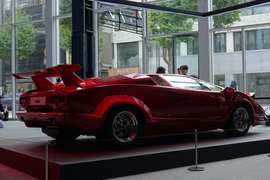
The journey to the modern hypercar began with its predecessor, the supercar. For decades, supercars like the Ferrari F40 and the Lamborghini Countach represented the zenith of automotive performance—limited-production, hand-built machines characterized by exotic materials, race-derived powertrains, and design aesthetics that defied convention. However, as technology advanced and the demands of the modern driver evolved, the definition of “ultimate” began to shift.
The advent of hybrid technology, advanced aerodynamics, and carbon-fiber monocoque construction ushered in a new era. Manufacturers realized that simply increasing engine size was no longer the path to dominance. True leadership required a holistic approach—a seamless integration of electric power, aerodynamic efficiency, and driver-focused technology. This paradigm shift gave birth to the hypercar as we know it today: a machine that combines the raw power of a Formula 1 car with the comfort and sophistication of a luxury GT, all wrapped in a body that seems sculpted by the wind itself.
For industry insiders and enthusiasts alike, the allure of the hypercar lies not just in its breathtaking performance metrics—though these are certainly a major draw—but in the stories behind their creation. Each hypercar represents the culmination of years of research, millions of dollars in development, and the unwavering vision of a dedicated team of engineers and designers. It is this blend of technical excellence and artistic vision that sets these machines apart from the rest of the automotive world.
Understanding the Core DNA of a Hypercar
Before diving into specific models, it is crucial to understand what truly defines a hypercar. While the lines between high-end supercars and entry-level hypercars can sometimes blur, several key characteristics consistently emerge.
Extreme Performance Metrics:
At the heart of every hypercar is an engine capable of delivering staggering power output, often exceeding 1,000 horsepower. This power is rarely delivered through a single source; modern hypercars frequently employ sophisticated hybrid systems that combine the raw force of a traditional internal combustion engine with the instant torque of electric motors. This synergy allows for acceleration figures that defy belief, with 0-60 mph times often dipping below the 2.5-second mark.
Advanced Aerodynamics:
In the quest for ultimate speed, aerodynamics play a critical role. Hypercar designers are not just styling cars; they are engineering airflow. Active aerodynamic elements—such as deployable spoilers, adjustable diffusers, and complex underbody channels—work in concert to optimize downforce, reduce drag, and enhance stability at triple-digit speeds. Every curve, vent, and wing is meticulously sculpted to manage the air that flows over, under, and around the vehicle.
Exotic Materials and Construction:
Weight is the enemy of performance, and hypercar manufacturers spare no expense in their quest for lightness. Carbon fiber is the material of choice, used extensively for the chassis, body panels, and structural components. In some cases, even more exotic materials like titanium, magnesium alloys, and advanced composites are employed to shave every possible gram. This obsessive attention to detail in material selection ensures that the vehicle remains rigid, responsive, and agile, even at its limits.
Limited Production and Exclusivity:
By definition, hypercars are rare. Production runs are typically limited to a few hundred units, and in some cases, even fewer. This exclusivity is a deliberate choice, ensuring that each vehicle remains a highly desirable collector’s item. The waiting lists for these machines often stretch for years, and the opportunity to purchase one is usually reserved for existing clients or those with a proven track record of acquiring such high-value automobiles.
Cutting-Edge Technology and Innovation:
Hypercars are often the testbeds for the latest automotive technologies. From advanced driver-assistance systems to bespoke infotainment solutions and dynamic suspension setups, manufacturers use these flagship models to showcase what is possible. The innovations developed for a hypercar often trickle down to more mainstream models in the future, making these exclusive machines unwitting catalysts for automotive progress.
A Deep Dive into the World’s Top 10 Hypercars

Based on current market trends, technological innovation, and overall impact on the automotive landscape, here are 10 hypercars that stand out as the best in the world.
Bugatti Chiron Super Sport 300+
When Bugatti announced their intention to break the 300 mph barrier, the automotive world held its breath. The Chiron Super Sport 300+, a long-tail variant of the already formidable Chiron, was specifically engineered for this singular purpose. With its extended bodywork for reduced drag and a more powerful version of the iconic 8.0-liter quad-turbocharged W16 engine, this machine achieved what many thought impossible, becoming the first production-based car to surpass 300 mph. While only 30 examples were produced, the Super Sport 300+ cemented Bugatti’s legacy as the master of the grand hyper-tourer. Its blend of extreme top speed, luxurious interior, and the sheer audacity of its engineering makes it a true icon.
Koenigsegg Jesko Absolute
Swedish manufacturer Koenigsegg has long been a thorn in the side of established automotive giants, consistently delivering vehicles that challenge the status quo. The Jesko Absolute represents the culmination of this philosophy. Named after the father of founder Christian von Koenigsegg, the Jesko is designed to be the ultimate track weapon. Its revolutionary 5.0-liter twin-supercharged V8 engine, combined with a revolutionary nine-speed Light Speed Transmission, produces a staggering 1,600 horsepower on E85 biofuel. The car’s aerodynamics are equally extreme, with a massive rear wing and active aero elements that generate significant downforce. While the top speed remains officially unverified, projections suggest the Jesko Absolute is capable of exceeding 330 mph, making it a serious contender for the title of the fastest production car in the world.
Rimac Nevera
In the realm of electric hypercars, the Rimac Nevera stands alone. Developed by Croatian startup Rimac Automobili, the Nevera is a testament to the potential of electric propulsion. This all-electric hypercar boasts four independent electric motors, one for each wheel, providing all-wheel drive and torque vectoring capabilities that would be impossible with a traditional powertrain. The Nevera produces a mind-bending 1,914 horsepower and 1,741 lb-ft of torque, allowing it to rocket from 0-60 mph in a scarcely believable 1.85 seconds. Its top speed of 258 mph may seem modest compared to some of its internal combustion counterparts, but the sheer acceleration and handling prowess of the Nevera are in a league of their own. With its advanced battery technology and lightweight carbon-fiber construction, the Nevera is not just a car; it is a technological statement.
Mercedes-AMG ONE
The Mercedes-AMG ONE represents the most direct link between Formula 1 racing and a road-legal production car ever created. This mid-engine hypercar utilizes a hybrid powertrain derived directly from the championship-winning Mercedes-AMG Formula 1 car. At its heart is a 1.6-liter turbocharged V6 engine, augmented by four electric motors. This complex system produces over 1,000 horsepower and revs to an astonishing 11,000 rpm. The ONE’s aerodynamics are equally impressive, featuring active elements that adjust to optimize downforce and drag depending on the driving situation. With its race-bred technology and limited production run, the Mercedes-AMG ONE offers an experience that is virtually indistinguishable from driving a Formula 1 car, albeit with a significantly more comfortable interior.
Aston Martin Valkyrie
The Aston Martin Valkyrie is the result of an audacious collaboration between British luxury automaker Aston Martin and legendary Formula 1 aerodynamicist Adrian Newey. The name itself evokes the Norse mythology of the Valkyries, who chose the bravest warriors for Valhalla—a fitting metaphor for a car that pushes the boundaries of what is possible. The Valkyrie’s design is radical, with a teardrop shape and exposed carbon-fiber structure that prioritize aerodynamic efficiency above all else. Its powertrain is equally remarkable, featuring a Cosworth-developed naturally aspirated V12 engine combined with a Rimac-built electric motor. This hybrid system produces over 1,160 horsepower, all while maintaining a dry weight of just over 1,000 kg. The result is a car that offers an unparalleled driving experience, combining the visceral thrill of a race car with the refinement of an Aston Martin.
Pagani Huayra R
Horacio Pagani has always believed that cars should be works of art, and the Huayra R is perhaps his most stunning creation yet. This track-only hypercar eschews hybrid technology in favor of a naturally aspirated V12 engine developed by AMG specifically for this application. With 850 horsepower and a redline of 9,0