
From the Batcave to the racetrack, hypercars represent the absolute pinnacle of automotive engineering and design. These are not just cars; they are rolling sculptures, technological marvels, and statements of ultimate ambition. With eye-watering price tags and performance metrics that redefine what’s possible on four wheels, they sit in a league of their own—far above even the most exotic supercars.
In 2025, the game has shifted. Where once brute force reigned supreme, now it’s about the seamless integration of electric power, advanced aerodynamics, and sustainable materials. The pursuit of the 1:1 power-to-weight ratio is no longer a distant dream but a benchmark. If you’ve ever wondered what happens when the world’s greatest designers and engineers are given unlimited budgets and carte blanche to push every conceivable boundary, you’re about to find out.
While the keys to these machines remain firmly in the hands of the world’s elite, understanding what makes them tick is a fascinating journey into the future of performance. Let’s dive into the definitive list of the top 10 hypercars that are currently redefining the automotive landscape.
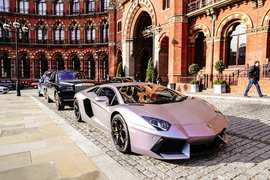
Aston Martin Valkyrie: The F1 Car for the Road
When you hear the name Aston Martin, you think James Bond. But when you hear “Aston Martin Valkyrie,” you think F1 cockpit. This isn’t just a car; it’s a collaboration between the legendary British marque and Adrian Newey, the aerodynamic genius behind Red Bull Racing’s Formula 1 dominance. The result is a machine that looks like it escaped from a sci-fi movie set and landed on the streets.
The Valkyrie’s design is dictated entirely by airflow. Every curve, vent, and wing exists to cheat the wind, generating an astonishing amount of downforce that effectively glues the car to the road. Inside, the cockpit is a snug, minimalist affair, prioritizing the driving experience above all else. You sit bolt upright, just like in a race car, surrounded by carbon fiber and Alcantara.
Under the dramatic carbon fiber bodywork lies a naturally aspirated 6.5-liter V12 engine, co-developed with Cosworth. This isn’t just any V12; it’s a high-revving masterpiece that screams to 11,100 rpm, producing a spine-tingling soundtrack that needs no amplification. Bolstered by a Rimac-built Kinetic Energy Recovery System (KERS), the Valkyrie produces a staggering 1,160 horsepower. This near-perfect 1:1 power-to-weight ratio means acceleration isn’t just fast; it’s instantaneous, disorienting, and utterly addictive. For those in the know, the Valkyrie represents the purest distillation of racing technology made street-legal.
Bugatti Chiron Super Sport 300+: Breaking the 300 MPH Barrier
Bugatti has always been synonymous with ultimate speed, and the Chiron Super Sport 300+ is the embodiment of that legacy. Building on the already formidable Chiron platform, this limited-edition model was engineered with one singular goal: to be the first production car to officially break the 300 mph barrier. And it did, clocking in at an astounding 304.77 mph in 2019.
To achieve this monumental feat, Bugatti engineers pushed the quad-turbocharged 8.0-liter W16 engine to its absolute limit. With upgraded turbochargers, reinforced internals, and a revised exhaust system, the Super Sport 300+ produces a colossal 1,600 horsepower. But power alone isn’t enough to conquer the air at such speeds. The car features a lengthened body with an extended tail section to reduce drag and improve stability. The front bumper was redesigned with massive air intakes to feed the beast, and the iconic horseshoe grille was widened to optimize cooling.
Inside, the Chiron Super Sport 300+ remains a sanctuary of luxury, albeit with a sportier focus. The cabin is trimmed in black carbon fiber and leather, with contrasting orange stitching that pays homage to the prototype that achieved the record. While its top speed is electronically limited in production form for safety reasons, the very knowledge that this car can break 300 mph places it in a rarefied echelon of automotive achievement. It’s a rolling monument to engineering audacity.
Koenigsegg Jesko: The Swedish Speed Demon
Christian von Koenigsegg has always marched to the beat of his own drum, and the Jesko is perhaps his most audacious creation yet. Named after his father, the Jesko is a testament to Swedish ingenuity and a relentless pursuit of performance perfection. It represents a significant evolution from previous Koenigsegg models, pushing the boundaries of what’s possible in terms of power, efficiency, and technological innovation.
At the heart of the Jesko lies a revolutionary 5.0-liter twin-turbocharged V8 engine. This isn’t just a beefed-up engine; it’s a work of art, featuring a flat-plane crankshaft that allows it to rev to a dizzying 8,500 rpm. When fed with E85 biofuel, this mechanical marvel produces a staggering 1,600 horsepower and an earth-shattering 1,106 lb-ft of torque.
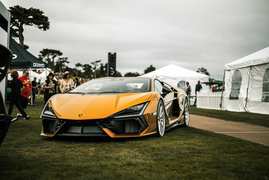
But the true magic of the Jesko lies in its transmission. Koenigsegg developed a unique 9-speed multi-clutch gearbox (LST) that eliminates traditional clutches, allowing for lightning-fast shifts in any direction. The “Light Speed Transmission” is a marvel of engineering, capable of skipping gears to find the perfect ratio instantly. Complementing this is the Jesko’s advanced aerodynamics, featuring a massive active rear wing and innovative Triplex suspension system that generates over 3,000 pounds of downforce at high speeds. With a theoretical top speed approaching 330 mph, the Jesko is a purebred performance machine built to challenge the very definition of fast.
McLaren P1: The Electric-Hybrid Pioneer
The McLaren P1 holds a special place in hypercar history. It was one of the first three cars—along with the Ferrari LaFerrari and Porsche 918 Spyder—to usher in the hybrid hypercar era. While it may not have the outright top speed of some of its competitors, the P1 redefined what’s possible when electric power meets internal combustion.
At its core, the P1 combines a lightweight 3.8-liter twin-turbocharged V8 engine with an electric motor. This powertrain produces a combined output of 903 horsepower and 664 lb-ft of torque, allowing the P1 to rocket from 0 to 60 mph in a mere 2.8 seconds. But the P1’s true genius lies in its hybrid system’s integration with McLaren’s advanced aerodynamics.
The car features an innovative active rear wing that adjusts its angle of attack to optimize downforce or reduce drag, depending on the driving situation. The underbody is also aerodynamically sculpted to channel air, creating a ground-effect vacuum that sucks the car to the road. In Race Mode, the P1 deploys its DRS (Drag Reduction System), mirroring Formula 1 technology, allowing the driver to manually reduce drag for a burst of extra speed on the straights. The P1 also introduced “IPAS” (Instant Power Assist System), which delivers an electric boost when the driver demands maximum acceleration. It was a masterclass in driver-focused engineering, proving that hybrid technology could enhance, rather than detract from, the driving experience.
Ferrari LaFerrari: The Ultimate Expression of Ferrari DNA
When Ferrari sets out to build its ultimate hypercar, the result is something truly special. LaFerrari, which translates to “The Ferrari,” is exactly that—the ultimate expression of the Prancing Horse’s engineering prowess and design philosophy. It was the successor to the legendary Enzo and represented a bold step into the future of performance.
The LaFerrari combines a screaming naturally aspirated 6.3-liter V12 engine with an electric HY-KERS system. The V12 alone produces a phenomenal 789 horsepower, while the electric motor adds an additional 160 horsepower, bringing the total output to a staggering 949 horsepower. This potent combination allows the LaFerrari to reach 60 mph in just 2.4 seconds and achieve a top speed of over 217 mph.
What sets the LaFerrari apart is its driving experience. The car feels alive, with the V12 engine revving with an immediacy and linearity that only a naturally aspirated motor can provide. The electric boost fills in the torque gaps, making the acceleration relentless. The chassis is a masterpiece of carbon fiber construction, providing exceptional stiffness and feedback. The aerodynamic design is pure Ferrari, with flowing lines that are both beautiful and functional. The LaFerrari is more than just a fast car; it’s an emotional connection to the very essence of what makes Ferrari special—a perfect blend of art, engineering, and passion.
Pagani Huayra: A Masterpiece of Craftsmanship and Performance
Horacio Pagani is not just a car designer; he’s an artist who happens to work with carbon fiber and titanium instead of clay and marble. The Pagani Huayra is the embodiment of his philosophy: to create hypercars that are as beautiful as they are fast, with an obsessive attention to detail that borders on the spiritual.
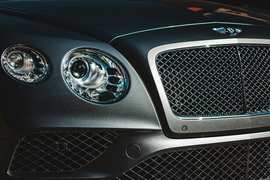
The Huayra is powered by a handcrafted twin-turbocharged 6.0-liter V12 engine developed by Mercedes-AMG. This powerplant produces around 720