
The 10 Most Expensive Cars in the World: A Journey into the Apex of Automotive Opulence

For most people, a car is a practical necessity—a reliable tool for commuting, running errands, and navigating the daily grind. But for a select few at the zenith of global wealth, the automobile transcends mere transportation. It becomes a statement piece, a rolling sculpture, and an emblem of status so potent it borders on performance art. In this rarefied stratum of the automotive world, engineers and designers are freed from the constraints of mass-market compromise. They operate in a realm where horsepower is measured in the thousands, materials are sourced from aerospace research labs, and the price tag reads like a small nation’s GDP.
Welcome to the exclusive club of the world’s most expensive cars. These are not just vehicles; they are mechanical marvels that push the boundaries of physics, engineering, and aesthetics. They represent the pinnacle of human ingenuity, often with production numbers so low they make collector watches look common. While the average driver is calculating miles per gallon, the billionaires commissioning these machines are debating whether matte black carbon fiber or naked forged carbon offers a more aggressive visual statement.
This isn’t just about speed, though speed is certainly on the menu. It’s about exclusivity, craftsmanship, and the sheer audacity of creation. A $100,000 sports car might be fast, but a $10 million hypercar is a legend in the making, often built with a level of bespoke detail that would make a Savile Row tailor blush. Join us as we embark on a comprehensive journey through the current pantheon of automotive excess. We’ll delve into the engineering that makes these machines defy logic, the design philosophies that make them breathtaking, and the market dynamics that determine their astronomical values. From the bespoke ateliers of Italy to the high-tech laboratories of Sweden, these are the 10 most expensive cars in the world today, where the price of admission is simply “whatever it takes.”
Zenvo ST1: The Danish Beast Unleashed
Our countdown begins with a car that embodies raw, untamed power. Hailing from Zealand, Denmark, the Zenvo ST1 is less a refined luxury vehicle and more a primal force of nature cloaked in carbon fiber. This is a machine built for one purpose: to shock and awe. The very heart of the ST1 is a 6.8-liter V8 engine, but this is no ordinary powerplant. Zenvo engineers have augmented this muscular displacement with a dual-aspiration system, employing both a supercharger and a turbocharger.
The resulting synergy produces an eye-watering output of 1,104 horsepower and a staggering 1,054 pound-feet of torque. To put this into perspective, that’s enough power to shame a fleet of Formula 1 cars from just a decade ago. All this fury is channeled exclusively to the rear wheels through a specialized seven-speed transmission, ensuring that every ounce of power is felt with visceral intensity. The acceleration is brutal, pinning the driver to the seat with a force that borders on the physiological. While its top speed is electronically limited, its 0-60 mph time is firmly in the hypercar realm. Yet, the ST1’s true allure isn’t just its numbers; it’s the audacious spirit of its creation. In a world increasingly dominated by electric efficiency, the Zenvo is a defiant roar of internal combustion, a testament to the fact that sometimes, more power really is just more fun. Its limited production run ensures that only a select few will ever experience this Danish powerhouse, cementing its status as a modern collector’s item for those who appreciate the art of the mechanical brute.
Ferrari LaFerrari: The Hybrid Icon
When the Prancing Horse decides to build something special, the entire automotive world stops and listens. The LaFerrari, whose name fittingly translates to “The Ferrari,” is not merely a successor to the legendary Enzo; it is a declaration of intent. It represents the pinnacle of Ferrari’s road-car engineering, seamlessly blending cutting-edge hybridization with the brand’s timeless passion for performance. At its core lies a magnificent 6.3-liter V12 engine, a naturally aspirated marvel that sings a high-revving symphony as it approaches its redline.
But in a nod to the future—and a bid for ultimate lap times—Ferrari has augmented this V12 with a Kinetic Energy Recovery System (KERS), technology borrowed directly from Formula 1. This hybrid system doesn’t just add power; it redefines the concept of responsiveness. The combined output pushes well over 900 horsepower, but the true magic lies in the delivery. The electric motor fills in the torque gaps, providing instantaneous thrust the moment the throttle is pressed. This results in acceleration figures that blur the line between reality and science fiction. The LaFerrari doesn’t just accelerate; it teleports. Its dry weight, kept under a lean 2,800 pounds, ensures that every ounce of power translates into forward motion. The car grips the tarmac with an tenacity that borders on the supernatural, allowing drivers to explore the limits of physics with confidence. Visually, it is a masterpiece of aerodynamic sculpture, with lines that seem to writhe with energy. Owning a LaFerrari isn’t just about driving; it’s about being part of an exclusive lineage, a guardian of automotive history that continues to shape the future.
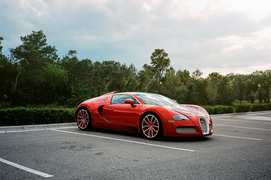
Pagani Huayra: The Lord of the Winds
Hailing from the bespoke workshops of San Cesario sul Panaro, Italy, the Pagani Huayra is a testament to the belief that hypercars should be works of art as much as they are machines of speed. Named after the Incan god of wind, the Huayra (pronounced why-rah) embodies a philosophy where exotic materials meet obsessive craftsmanship. Its exterior is a flowing sculpture of carbon fiber and titanium, shaped by countless hours in the wind tunnel to achieve a level of aerodynamic purity rarely seen outside of nature.
But the beauty of the Huayra is far from skin deep. Beneath the artistry lies a heart sourced from AMG, Mercedes-Benz’s legendary performance division. This is a 6.0-liter V12 engine, augmented with twin turbochargers that provide a surge of power that feels both immense and incredibly refined. The resulting 620 horsepower and 740 pound-feet of torque are delivered through a lightning-fast seven-speed sequential transmission, ensuring that gear changes are virtually imperceptible. The Huayra’s performance is electrifying, but its cabin is where the true magic happens. Open the dihedral doors and you are greeted by an interior that redefines luxury. Hand-stitched leather, exposed carbon fiber weave, and precisely machined aluminum components create an atmosphere that feels both intimate and awe-inspiring. Every switch, every dial, every surface has been crafted with an obsessive attention to detail that makes the car feel alive. In a world of increasingly homogenous supercars, the Huayra stands apart as a testament to the vision of its creator, Horacio Pagani, who proved that true automotive art knows no compromise.
Aston Martin One-77: The Elegant Predator
Aston Martin has always occupied a unique space in the automotive landscape. While its rivals often prioritize raw track numbers, Aston Martin has consistently championed the marriage of performance and elegance. The One-77 is the ultimate expression of this philosophy—a car so rare and so refined that it redefines what a supercar can be. As the name suggests, only 77 examples were ever produced, making it an instant legend the moment it was unveiled.
The heart of this British masterpiece is a naturally aspirated 7.3-liter V12 engine, one of the largest and most potent ever fitted to a road-legal car. Developed in collaboration with Cosworth, this engine is a marvel of engineering, producing a staggering 750 horsepower and 553 pound-feet of torque. These figures, combined with the car’s lightweight carbon fiber chassis, enable the One-77 to achieve speeds well over 220 mph. Yet, despite its brutal capability, the car maintains the poise and grace that has become Aston Martin’s hallmark. The design is simply breathtaking, with a flowing silhouette that seems to stretch and writhe with barely contained energy. The long hood houses the magnificent V12, while the cockpit sits low and purposeful, offering panoramic views through the sweeping windshield. Inside, the luxury is every bit as exceptional as the performance. Hand-finished leather, polished aluminum trim, and bespoke details abound, creating an environment that feels both exclusive and inviting. The One-77 is more than just a fast car; it is a rolling sculpture, a testament to the art of British automotive craftsmanship, and a symbol of automotive perfection.
Koenigsegg One:1: The Megacar Revolution
In the world of hypercars, the numbers rarely tell the whole story. But in the case of the Koenigsegg One:1, the numbers are the story. Developed by the Swedish manufacturer Koenigsegg, this is a machine that shatters conventional thinking. The name “One:1” refers to its extraordinary power-to-weight ratio: one horsepower for every one kilogram of mass. This is a level of engineering precision that was previously unthinkable, a feat that places the car in a league of its own.

To achieve this extraordinary balance, Koenigsegg employed a proprietary 5.0-liter twin-turbocharged V8 engine that produces a mind-bending 1,360 horsepower. This power is delivered through a lightweight, single-clutch automated manual transmission that ensures lightning-fast shifts. The car’s chassis is constructed almost entirely from carbon fiber, including the wheels, resulting