
The Evolution of the Elite: A Deep Dive into the World’s Most Expensive Cars
The automotive landscape is a dynamic realm where engineering prowess constantly pushes the boundaries of possibility. While the average commuter navigates the daily grind in reliable sedans and SUVs, a select few exist in a stratosphere of automotive opulence. The most expensive cars in the world transcend mere transportation; they are rolling sculptures, technological marvels, and potent symbols of wealth and status. For automotive enthusiasts and industry analysts alike, these hyper-exclusive machines offer a fascinating window into the priorities of the ultra-wealthy, where performance metrics are often secondary to exclusivity, craftsmanship, and audacious design.
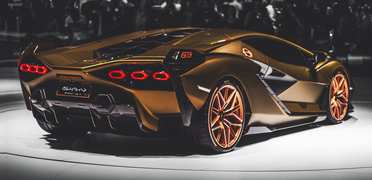
In today’s market, the benchmark for automotive excellence has shifted dramatically. Gone are the days when a high-end sports car was simply about speed. Modern hypercars are multi-faceted creations that blend Formula 1-derived technology with bespoke luxury appointments. This report delves into the current landscape of the world’s most expensive automobiles, analyzing the engineering feats, market dynamics, and cultural significance of these automotive titans. We will explore the key factors that drive their astronomical valuations and provide an in-depth look at the vehicles currently defining the pinnacle of automotive engineering and design.
Understanding the Value Proposition in Today’s Market
The valuation of these elite vehicles is a complex equation that goes far beyond production costs. In the 2025 market, several factors converge to inflate prices to unprecedented levels. Primary among these is the concept of “provenance.” A car with a significant racing history, a connection to a legendary driver, or a unique design story commands a premium that dwarfs its mechanical specifications. The restoration and certification of these vehicles by specialist firms add millions to their value, transforming them from mere objects into tangible pieces of history.
Furthermore, the rise of the \”neo-luxury\” segment has redefined exclusivity. Traditional manufacturers are now competing with bespoke ateliers that create one-off or limited-edition vehicles for individual clients. These commissions often involve months of collaboration between the owner and the manufacturer, resulting in a vehicle that is truly unique. This level of personalization is a key driver of value, as it caters to the desire of the ultra-wealthy to own something that no one else possesses.
Technological Innovation as a Status Symbol
The relentless pursuit of performance in the hypercar segment continues to drive innovation across the entire automotive industry. The most expensive cars on the market today are laboratories on wheels, testing grounds for technologies that will eventually trickle down to more mainstream vehicles. This technological supremacy is a significant factor in their valuation.
Hybrid and electric powertrains are no longer just about efficiency; they are about achieving performance metrics that were previously unimaginable. The instant torque delivery of electric motors, combined with the raw power of internal combustion engines, creates a synergy that results in breathtaking acceleration. The engineering required to integrate these complex systems into a lightweight, aerodynamically optimized chassis is a feat of modern engineering that justifies the premium price tags.
The Role of Legacy Brands vs. New Entrants
The market for expensive cars is a fascinating battleground between established legacy brands and ambitious newcomers. Iconic names like Ferrari, Lamborghini, and Bugatti leverage decades of racing heritage and brand recognition to command top dollar. Their limited-production models often sell out before they are even officially unveiled, with waiting lists stretching for years. This built-in demand ensures their continued dominance in the market.
However, new players are increasingly making their mark. Brands like Rimac and Pininfarina are challenging the status quo with ground-breaking electric hypercars that redefine performance expectations. These companies often partner with established luxury brands to leverage their manufacturing expertise and distribution networks, creating hybrid entities that benefit from the best of both worlds. This dynamic interplay between old and new is shaping the future of the hypercar market.
The Most Expensive Cars Defining the 2025 Landscape
To provide a comprehensive overview of the current market, we have compiled a list of the most expensive cars in the world as of 2025. It is important to note that the prices of these vehicles are often estimates, as many are sold through private transactions where the final price is not publicly disclosed. Additionally, the market is highly fluid, with new models being introduced and prices fluctuating based on demand and availability.
The Zenith of Exclusivity: The 1931 Bugatti Royale Kellner Coupe ($40M+)
While modern hypercars dominate the headlines, the true apex of automotive value lies in the realm of vintage classics. The 1931 Bugatti Royale Kellner Coupe stands as a testament to a bygone era of automotive opulence. Originally commissioned by Ettore Bugatti for his personal collection, this masterpiece of pre-war engineering represents the pinnacle of bespoke craftsmanship.

The Royale was Bugatti’s answer to the Rolls-Royce Phantom, a vehicle designed for royalty and heads of state. Only six were ever produced, and this particular Kellner Coupe is one of the most exquisitely preserved examples in existence. Its 12.7-liter inline-eight engine, producing an astonishing 300 horsepower, was the largest passenger car engine ever built. The car’s bodywork, crafted by the legendary Kellner coachbuilders, is a work of art, featuring flowing lines and luxurious appointments that are simply breathtaking.
The valuation of this vehicle is driven by a confluence of factors. Its rarity, with only one Kellner Coupe in existence, makes it a unique artifact of automotive history. Its provenance, tied directly to Ettore Bugatti himself, adds immeasurable historical significance. Furthermore, the meticulous restoration process, which involved sourcing period-correct materials and employing the same techniques used by the original craftsmen, has elevated its status to that of a museum-quality exhibit. In 2025, this Bugatti is not just a car; it is a tangible connection to the golden age of automotive design and a symbol of ultimate luxury.
The Modern Icon: The Rolls-Royce La Rose Noire Droptail ($30M+)
In the contemporary market, the Rolls-Royce Droptail series represents the zenith of bespoke automotive luxury. The La Rose Noire, the first in this ultra-exclusive series of four individually commissioned vehicles, is a breathtaking example of what happens when heritage craftsmanship meets avant-garde design. The name itself, inspired by the Black Baccara rose, evokes a sense of dark romance and sophisticated elegance.
The design of the La Rose Noire is a departure from traditional Rolls-Royce styling, yet it retains the brand’s unmistakable air of luxury. The car’s silhouette is a study in flowing lines, with a dramatically raked rear deck that tapers to a point, reminiscent of a yacht’s hull. This ” Droptail\” design language creates a sense of movement and grace, even when the car is stationary. The exterior is finished in a stunning deep red hue, achieved through a meticulous multi-layer paint process that took over two years to perfect.
Inside, the La Rose Noire is a sanctuary of luxury. The cabin is adorned with a breathtaking marquetry panel, comprising 1,603 pieces of black-dyed sycamore wood veneer. This intricate mosaic depicts the petals of a rose in various stages of bloom, creating a visually stunning centerpiece for the interior. The craftsmanship is simply extraordinary, with each piece of veneer cut and placed by hand to achieve the desired effect. The level of detail extends to every element of the interior, from the hand-stitched leather to the bespoke timepieces integrated into the dashboard.
Powering the La Rose Noire is a formidable 6.75-liter twin-turbocharged V12 engine, the same powerplant found in the Rolls-Royce Phantom. While the performance figures are impressive, they are secondary to the overall experience of the vehicle. The Droptail is designed to be a statement of ultimate luxury and exclusivity, a vehicle that offers a driving experience unlike any other. The price tag of over $30 million reflects the years of development, the bespoke craftsmanship, and the unparalleled exclusivity of this automotive masterpiece.
The Performance Benchmark: The Bugatti Chiron Super Sport 300+ ($3.9M+)
The Bugatti Chiron Super Sport 300+ represents the absolute pinnacle of performance engineering in the modern era. This limited-production hypercar, restricted to just 30 units worldwide, is a testament to Bugatti’s relentless pursuit of speed and aerodynamic excellence. Its designation as a \”Super Sport\” signifies its focus on high-speed performance, a lineage that dates back to the legendary Bugatti Type 57 SC Atlantic.
The defining characteristic of the Chiron Super Sport 300+ is its groundbreaking performance. In 2019, a pre-production prototype of this exceptional vehicle achieved a verified top speed of 304.77 mph (490.48 km/h), making it the first production car to break the mythical 300 mph barrier. This monumental achievement was the culmination of years of research and development, pushing the boundaries of automotive engineering to their absolute limit.
To achieve this extraordinary speed, Bugatti engineers made significant modifications to the already formidable Chiron platform. The car’s iconic 8.0-liter quad-turbocharged W16 engine was further optimized to produce a staggering 1,578 horsepower, approximately 100 horsepower more than the standard Chiron. This power is delivered through a modified seven-speed dual-clutch transmission, engineered to withstand the immense forces generated at such high velocities.

Aerodynamics play a crucial role in the Chiron Super Sport 300+’s performance. The car features an extended rear body, optimized to reduce drag and improve stability at extreme speeds. The front fascia has also been redesigned, with larger air intakes to cool the powerful engine and brakes. The chassis has been stiffened and the suspension lowered to enhance handling and provide a more planted