
The 10 Most Expensive Cars in the World: A Look at Billionaire Automotive Dreams
For the average consumer, a new car purchase is a significant financial decision, often involving careful consideration of monthly payments, insurance costs, and long-term value. However, for the world’s ultra-wealthy elite, the automotive landscape looks dramatically different. These individuals operate on a different financial plane, where a standard Rolls-Royce Phantom or Ferrari 12Cilindri is considered common. Their desire is for something truly unique, bespoke, and strictly limited in production, regardless of the eye-watering price tag.
These are not merely cars; they are rolling sculptures, engineering marvels, and statements of unparalleled wealth and taste. They represent the pinnacle of automotive design and performance, often costing many times more than the marque’s standard production models. This exclusive category of hypercars is typically beyond the reach of even lottery winners, reserved solely for the billionaire class who can commission these masterpieces directly from manufacturers.
Here is an in-depth look at the 10 most expensive cars in the world, exploring the history, design philosophy, engineering prowess, and the sheer exclusivity that commands these astronomical figures.
Bugatti Divo – Approximately $5.8 million (£4.4 million)
The Bugatti Divo takes the already extraordinary Bugatti Chiron and elevates it into a track-focused, coachbuilt masterpiece. Named after the French-Italian racing driver Albert Divo, a Bugatti works driver who secured two victories at the legendary Targa Florio in 1928 and 1929, this hypercar pays homage to the brand’s rich racing heritage. While it utilizes the same formidable 8.0-litre, quad-turbocharged W16 engine as the Chiron, producing 1,479 brake horsepower, the Divo is engineered for a different purpose.
Unlike the Chiron, which prioritizes outright top speed, the Divo is optimized for agility and cornering performance. This is achieved through a combination of reduced weight, enhanced aerodynamics, and a retuned suspension system. The Divo’s top speed is electronically limited to 236 mph, significantly lower than the Chiron’s top speed of 261 mph. This limitation is a deliberate trade-off to accommodate the massive 1.8-meter wide fixed rear wing, which generates substantial downforce, pressing the car firmly onto the road surface during high-speed cornering.
Beyond its performance credentials, the Divo boasts distinct visual cues that set it apart from the standard Chiron. The front fascia features a redesigned, wider version of Bugatti’s iconic ‘horseshoe’ grille, flanked by striking, narrow headlamps that create a more aggressive stance. At the rear, the quad exhaust system is a visual focal point, while the intricate taillight design adds another layer of bespoke craftsmanship.
Production of the Divo was strictly limited to just 40 units, and the entire allocation was reportedly sold out on the very first day of ordering. Potential owners were given near-infinite personalization options, allowing each car to be uniquely tailored to its owner’s preferences. This extreme exclusivity, combined with its track-ready performance and historical significance, solidifies the Divo’s position as one of the most sought-after and expensive vehicles ever created. For those seeking the ultimate Bugatti experience, one that prioritizes driving thrills over straight-line speed records, the Divo represents the zenith of coachbuilding artistry.
Pagani Huayra Imola Roadster – Approximately $6.2 million (£4.7 million)
Pagani Automotive, the Italian manufacturer founded by Horacio Pagani, operates at the very apex of automotive exclusivity. Their ‘Grand Complications’ division is dedicated to crafting extraordinary, bespoke projects for the world’s most discerning collectors. The Huayra Imola Roadster is a prime example of this philosophy, with only eight examples ever produced, each meticulously tailored to the specific desires of its owner.
Named after the historic Autodromo Enzo e Dino Ferrari circuit in Imola, Italy, where the chassis was rigorously fine-tuned, the Imola Roadster represents the ultimate expression of the Huayra platform. Underneath its stunning carbon-fiber bodywork lies a modified version of Pagani’s AMG-sourced twin-turbocharged V12 engine. This powerplant delivers a staggering 838 brake horsepower to the rear wheels through a seven-speed sequential gearbox. The top speed is electronically limited to 217 mph, a figure that, while lower than some hypercars, is more than sufficient for the car’s intended purpose.

Perhaps the most remarkable aspect of the Imola Roadster is its feather-light construction. Weighing in at a mere 1,260 kilograms (approximately 2,778 pounds), it is lighter than many compact sports cars, such as an Audi TT. This incredible weight saving is achieved through the extensive use of advanced composite materials, including Pagani’s proprietary Carbo-Titanium HP62-G2 and Carbo-Triax HP62. These materials offer exceptional stiffness and strength while keeping weight to an absolute minimum, contributing to the car’s razor-sharp handling dynamics.
The aerodynamic package is equally impressive, generating an estimated 900 kilograms (nearly 2,000 pounds) of downforce at track speeds. This massive downforce ensures that the Imola Roadster remains glued to the road surface, allowing for breathtaking cornering speeds and unprecedented levels of grip. The visual design is a masterclass in automotive sculpture, with flowing lines, intricate details, and a presence that demands attention. For the ultimate Pagani enthusiast, the Huayra Imola Roadster represents the perfect synthesis of art, engineering, and exclusivity, a true collector’s item that embodies the very essence of automotive passion.
Pagani Huayra Codalunga – Approximately $7.8 million (£5.9 million)
The Pagani Huayra Codalunga is a testament to the power of client collaboration and the art of automotive design. The genesis of this extraordinary hypercar lies with two discerning Pagani collectors who approached Horacio Pagani with a unique request: to create a ‘long-tail’ version of the Huayra Coupé. Their inspiration stemmed from the legendary Le Mans-winning sports-prototypes of the 1960s, cars renowned for their elegant, elongated silhouettes and aerodynamic efficiency.
After two years of close collaboration with the clients, Pagani unveiled the Huayra Codalunga, a masterpiece that pays homage to this golden era of motorsport while incorporating contemporary engineering and design. The most striking feature of the Codalunga is its dramatically extended rear deck, which tapers gracefully towards the tail, creating a profile reminiscent of its vintage predecessors. This elongated design is not merely aesthetic; it is a carefully sculpted aerodynamic form that optimizes airflow and reduces drag, contributing to the car’s exceptional performance.
The interior of the Codalunga is a study in refined luxury, with each car finished in a selection of neutral color palettes and matte paint finishes. The cabin is appointed with sumptuously trimmed seats, often featuring woven leather upholstery, surrounded by intricately machined aluminum components that showcase Pagani’s obsessive attention to detail. The quad-pipe exhaust system, a signature element of the Codalunga’s design, is ceramic-coated, adding a unique visual and auditory character to the car.
Powering this automotive marvel is the same AMG-built twin-turbocharged 6.0-litre V12 engine found in other high-performance Huayra models, tuned to produce an impressive 829 brake horsepower. This prodigious power is channeled through a seven-speed sequential gearbox to the rear wheels, enabling a top speed of 217 mph. Initially conceived for just two clients, Pagani ultimately produced five examples of the Huayra Codalunga, all fully homologated for road use. This limited production run, combined with its unique design lineage and breathtaking performance, ensures the Codalunga’s status as one of the most exclusive and desirable hypercars ever created.
Mercedes-Maybach Exelero – Approximately $8.2 million (£6.2 million)
The Mercedes-Maybach Exelero is a one-off automotive legend, born from a very specific and rather unusual request. In 2004, Fulda, the German tire subsidiary of Goodyear, sought a vehicle that could showcase the performance capabilities of its new range of high-speed tires. Rather than commissioning a standard production model, Fulda partnered with Maybach to create a completely bespoke, high-performance coupe. This commission echoed a similar collaboration from 1938, which resulted in the Maybach SW38, a streamlined coupe capable of exceeding 125 mph. Although the SW38 was tragically destroyed during World War II, its spirit of innovation and aerodynamic excellence lives on in the Exelero.
The Exelero is a truly imposing machine, stretching an astonishing 5,834 millimeters (nearly 19.2 feet) in length—longer than a Rolls-Royce Phantom—despite seating only two occupants. This substantial wheelbase allowed for the creation of a dramatically elongated bonnet, providing ample space for the powerful powertrain that resides beneath. The heart of the Exelero is a formidable V12 engine, enlarged from a standard Maybach’s 5.6-liters to 5.9-liters and fitted with twin turbochargers. This potent combination generates an impressive 691 brake horsepower, propelling the massive, two-ton-plus car to a claimed top speed of 217 mph.
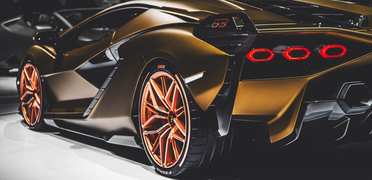
Visually, the Exelero is a striking example of ‘streamliner’ automotive design, with flowing lines, a dramatically raked windshield, and a sleek, aerodynamic profile. The car has transcended