
US English
Title: The World’s Most Exclusive Machines: A Deep Dive into the 10 Most Expensive Cars Ever Sold
The automotive landscape is a fascinating dichotomy. On one hand, we have the pragmatic, efficient vehicles that ferry us to work, school, and the grocery store—cars designed for the masses. Then, we have the polar opposite: hyper-exclusive, custom-built machines that push the boundaries of engineering, artistry, and, most notably, price. For the vast majority of us, a five-figure price tag is a significant financial commitment. But for a select global elite, the cost of a standard luxury car is akin to pocket change. These individuals don’t just buy cars; they commission rolling sculptures, bespoke marvels of engineering that redefine what a personal automobile can be.
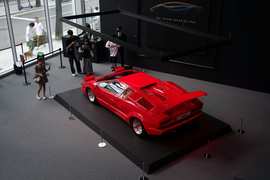
The vehicles on this list aren’t simply “expensive” in the conventional sense. They are multi-million dollar artifacts, often built in single digits or even unique one-off commissions, reserved for billionaires who demand exclusivity above all else. When the likes of a Rolls-Royce Phantom or a Ferrari 12Cilindri is considered too common, the automotive world’s most revered marques step up to deliver the extraordinary. These are the ultimate expressions of automotive excess, where performance meets unparalleled luxury, and the price tag reflects the years of artisanal labor and bespoke engineering involved.
Join us as we explore the ten most expensive cars ever sold, delving into the history, the engineering, and the sheer audacity of these automotive masterpieces. This isn’t just a list of cars; it’s a glimpse into a world where imagination is the only limit, and the price is simply a footnote to the exclusivity.
The Pantheon of Automotive Exclusivity: 2025’s Definitive Ranking
While the order and exact valuations of these hyper-luxury vehicles can fluctuate based on private sales and market demand, the following represents the definitive list of the world’s most expensive cars as of 2025.
Bugatti Divo – Approximately $5.8 Million
When the standard Bugatti Chiron—already a benchmark in hypercar performance—is deemed insufficient, the French marque offers the Divo. Named in honor of Albert Divo, the legendary French-Italian racer who secured two victories for Bugatti at the grueling Targa Florio circuit in the late 1920s, the Divo is a testament to Bugatti’s racing heritage.
While it shares the Chiron’s formidable 8.0-liter quad-turbocharged W16 engine, producing a staggering 1,479 horsepower, the Divo is not merely a Chiron with a new badge. Bugatti engineers took the opportunity to completely re-engineer the car for enhanced agility and downforce. The result is a car that sacrifices some of the Chiron’s top speed—limited to 236 mph compared to the Chiron’s 261 mph—in exchange for superior cornering capabilities. This trade-off is thanks to a dramatic aerodynamic overhaul, featuring a massive 1.8-meter wide fixed rear wing, an aggressive front splitter, enlarged side skirts, and significantly wider air intakes. These enhancements generate an additional 198 pounds of downforce at speed, effectively pinning the Divo to the tarmac.
Cosmetically, the Divo eschews the Chiron’s relative subtlety for a more aggressive and distinctive aesthetic. A redesigned front fascia features slimmer LED headlights and a widened, more angular version of Bugatti’s iconic horseshoe grille. The bodywork is a symphony of carbon fiber, meticulously sculpted to optimize airflow and reduce weight.
Production of the Divo was strictly limited to just 40 units, and with a price tag of around $5.8 million, every example was sold out on the first day of the ordering window. The level of personalization offered to these elite clients is virtually limitless, ensuring that each Divo is a unique expression of its owner’s taste. For the discerning collector who views the Chiron as pedestrian, the Divo represents the perfect synthesis of Bugatti’s legendary performance and bespoke coachbuilding artistry.
Pagani Huayra Imola Roadster – Approximately $6.2 Million
Pagani Automobili is synonymous with automotive artistry. Under the leadership of Horacio Pagani, the Italian marque has elevated the concept of the hypercar to an art form, where every nut, bolt, and carbon fiber weave is considered part of a larger aesthetic and mechanical composition. For Pagani’s most discerning clientele, the company offers a ‘Grand Complications’ division, dedicated to producing ultra-exclusive, bespoke projects. The Huayra Imola Roadster is one such masterpiece.
Named in homage to the historic Autodromo Internazionale Enzo e Dino Ferrari in Imola, Italy—the very circuit where the car’s chassis was meticulously fine-tuned—the Imola Roadster represents the pinnacle of Pagani’s engineering prowess. Limited to a scant eight units worldwide, each vehicle is tailored to the specific desires of its owner.
At its heart lies a powerplant that is both familiar and exalted. It utilizes a modified version of the AMG-sourced 6.0-liter twin-turbocharged V12 engine, coaxed to produce an extraordinary 838 horsepower. This immense power is channeled exclusively to the rear wheels through a seven-speed sequential gearbox, delivering a driving experience that is both visceral and refined. While the top speed is electronically limited to 217 mph, the true focus of the Imola Roadster is not outright velocity, but rather its dynamic prowess on the track.
In this regard, the car is a triumph of lightweight construction. Weighing in at a mere 1,260 kilograms (approximately 2,778 pounds)—less than a contemporary Audi TT—it is a testament to the innovative use of advanced composite materials. The Imola Roadster incorporates Pagani’s latest creations, including Carbo-Titanium HP62-G2 and Carbo-Triax HP62. These materials are not merely light; they possess exceptional torsional rigidity, providing the chassis with a level of feedback and responsiveness that borders on telepathic. The extensive aerodynamic package, featuring massive spoilers and diffusers, generates an additional 900 kilograms of downforce at track speeds, effectively gluing the car to the road surface during high-speed cornering. The Huayra Imola Roadster is not just a car; it is a rolling laboratory of advanced materials and aerodynamic perfection, delivered with Pagani’s signature artistic flair.
Pagani Huayra Codalunga – Approximately $7.4 Million
The pursuit of automotive excellence often involves looking to the past to inspire the future. This philosophy is at the core of the Pagani Huayra Codalunga, a breathtaking machine that pays homage to the legendary long-tail racers that dominated the 24 Hours of Le Mans in the 1960s. The name itself, “Codalunga,” translates to “long tail” in Italian, a direct reference to the elongated, flowing rear bodywork characteristic of these iconic endurance racers.
The genesis of the Codalunga lies with two of Pagani’s most ardent collectors. These connoisseurs approached Horacio Pagani with a specific vision: a bespoke, long-tail version of the Huayra Coupé that would capture the elegance and aerodynamic purity of the vintage racers that graced the Circuit de la Sarthe. After two years of close collaboration with these visionary clients, the Codalunga was born.
The design is a masterful exercise in automotive sculpture. The rear deck extends dramatically backward, creating a sweeping, uninterrupted surface that terminates in a series of functional aerodynamic elements. This elongated tail is not merely for aesthetic effect; it is a carefully engineered feature designed to optimize airflow and reduce drag at high speeds. The car’s silhouette is both dramatic and graceful, a testament to Pagani’s ability to blend high-performance engineering with timeless artistic expression.
Underpinning this stunning bodywork is the familiar, yet potent, AMG-built twin-turbocharged 6.0-liter V12 engine. In this configuration, the engine produces 829 horsepower, delivering a top speed of 217 mph. While this figure might seem modest compared to some hypercars, it is more than sufficient for a vehicle of this caliber, especially one designed for high-speed stability rather than outright acceleration.
The interior of the Codalunga is a symphony of luxury and craftsmanship. Each car features a meticulously appointed cabin with a color palette and material selection chosen by the commissioning clients. The upholstery often incorporates the distinctive woven leather that has become a Pagani hallmark, paired with exposed carbon fiber and machined aluminum components. The quad-pipe exhaust system, a nod to the classic Le Mans racers, is finished in ceramic coating, adding a touch of visual and aural drama.
Initially conceived as a commission for just two clients, the demand for the Codalunga was so overwhelming that Pagani eventually produced a total of five units. Each car is fully homologated for road use, making them among the most exclusive and desirable road-legal hypercars in the world. The Huayra Codalunga is a living tribute to a golden era of motorsport, reimagined for the 21st century with Pagani’s unparalleled blend of performance, luxury, and artistic vision.
Mercedes-Maybach Exelero – Approximately $8 Million
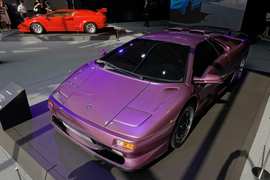
In the rarefied world of automotive exclusivity, sometimes the most extraordinary creations are born not from a desire for ultimate speed, but from a very specific, high-stakes engineering requirement. This is precisely the case with the Mercedes-Maybach Exelero, a one-off, high-performance coupe commissioned in 2004 by Fulda, the