
US
The 10 Most Expensive Cars in the World: A Definitive Guide for 2025
For the vast majority of us, purchasing a new vehicle involves carefully weighing the pros and cons of a standard hatchback, perhaps stretching to a premium sedan. However, for the world’s elite, the decision-making process involves a different stratosphere of finance entirely. These ultra-high-net-worth individuals (UHNWIs) view vehicles like the Rolls-Royce Phantom or Ferrari 12Cilindri as commonplace. Their desire is for the bespoke, the unique, and the strictly limited—automobiles that command prices that dwarf the GDP of small nations.
This realm of hypercars is accessible only to the billionaire elite. It is a world where automotive engineering becomes performance art, and where exclusivity is the ultimate luxury. For 2025, the landscape of the world’s most expensive cars continues to be dominated by a select group of manufacturers known for their coachbuilding prowess and engineering might.
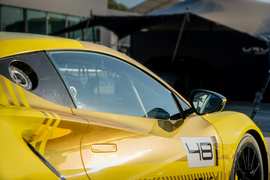
Here is an in-depth look at the ten most expensive cars in the world, exploring the engineering marvels, design philosophies, and sheer exclusivity that justify their astronomical price tags.
Bugatti Divo – $5.8 Million
When the standard Bugatti Chiron, already a pinnacle of automotive achievement, is not exclusive enough, the French marque offers the Divo. Named in honor of Albert Divo, a legendary French-Italian racing driver who secured two victories for Bugatti at the Targa Florio in the late 1920s, the Divo is a testament to the brand’s racing heritage.
Unlike the Chiron, which prioritizes ultimate top speed, the Divo is engineered for a different kind of thrill: track performance. It retains the Chiron’s formidable 8.0-liter, quad-turbocharged W16 engine, producing a staggering 1,479 horsepower. However, the Divo’s top speed is electronically limited to 236 mph, significantly lower than the Chiron’s 300+ mph capability. This deliberate de-tuning is a trade-off for enhanced agility and downforce.
The Divo’s chassis is significantly reworked, featuring a revised suspension system that lowers the car by 35mm at the front and 10mm at the rear compared to the standard Chiron. Aerodynamics play a crucial role, with a massive 1.8-meter wide fixed rear wing, a more aggressive front spoiler, enlarged side skirts, and larger air intakes contributing to a 198-pound increase in downforce at speed.
Visually, the Divo is a departure from its sibling. It sports a completely redesigned front fascia with slimmer headlights, a more compact version of Bugatti’s iconic horseshoe grille, and a distinctive Y-shaped rear light signature. Inside, the cabin is a masterpiece of bespoke craftsmanship, with Alcantara-heavy trim, contrasting color accents, and personalization options that ensure no two Divos are identical.
Production of the Bugatti Divo was strictly limited to just 40 units, each allocated to pre-selected clients before the official unveiling. The initial asking price of €5 million (approximately $5.8 million at the time of release) was immediately overshadowed by the bidding wars that ensued, with the final transaction prices reportedly reaching even higher figures. The Divo represents Bugatti’s commitment to exclusivity and driver-focused performance, a true collector’s item for the discerning automotive connoisseur.
Pagani Huayra Imola Roadster – $5.9 Million
Horacio Pagani, the visionary founder of Pagani Automobili, has built a reputation for creating hypercars that blur the line between automotive engineering and fine art. His ‘Grand Complications’ division is reserved for the marque’s most exclusive creations, and the Huayra Imola Roadster is a prime example of this dedication to ultimate performance and bespoke craftsmanship.
Named after the legendary Imola circuit in Italy, where the chassis was meticulously fine-tuned, the Imola Roadster is a track-focused iteration of the already potent Huayra platform. Production is incredibly limited, with just eight examples slated for creation, each tailored to the specific preferences of its owner.
Under the hood lies a beastly AMG-sourced twin-turbocharged 6.0-liter V12 engine, enhanced to produce a breathtaking 838 horsepower and 811 lb-ft of torque. This immense power is channeled exclusively to the rear wheels through a sophisticated seven-speed sequential transmission. While the top speed is electronically capped at 217 mph, the focus here is not on outright velocity but on cornering prowess and track capability.
The Imola Roadster is a featherweight champion, tipping the scales at a mere 1,260 kg (approximately 2,778 lbs)—less than a modern-day Audi TT. This remarkable feat is achieved through the extensive use of advanced composite materials, including Carbo-Titanium HP62-G2 and Carbo-Triax HP62. These materials offer exceptional stiffness-to-weight ratios, providing the car with razor-sharp handling dynamics.

Aerodynamics are taken to an extreme, with massive front and rear spoilers, diffusers, and bodywork designed to generate over 900 kg (nearly 2,000 lbs) of downforce at track speeds. This allows the Imola Roadster to stick to the road with incredible tenacity, enabling drivers to carry immense speed through corners.
Inside, the cabin is a symphony of carbon fiber, exotic leathers, and brushed aluminum accents. The craftsmanship is simply breathtaking, with every surface showcasing Pagani’s obsessive attention to detail. The asking price for this automotive masterpiece is reported to be around €5.2 million (approximately $5.9 million), a figure that reflects the years of development, the use of exotic materials, and the exclusivity of owning one of only eight examples.
Pagani Huayra Codalunga – $7.4 Million
The automotive world is filled with ‘what if’ scenarios, and sometimes, clients come to manufacturers with requests that spark entirely new visions. Such was the case with the Pagani Huayra Codalunga. Initially conceived as a long-tail version of the Huayra Coupé requested by two collectors, the project evolved into a stunning homage to the aerodynamic prototypes that raced at Le Mans in the 1960s.
The term ‘Codalunga’ translates to ‘long tail’ in Italian, and the car’s design certainly lives up to its name. Horacio Pagani and his team spent two years honing the design with the initial clients, resulting in a breathtakingly elegant and aerodynamically optimized machine. The flowing lines and extended rear deck are not merely for aesthetics; they are engineered to slice through the air with minimal resistance, creating a visually stunning and dynamically superior vehicle.
Underneath the bespoke bodywork lies the same beating heart as other high-performance Paganis: an AMG-sourced twin-turbocharged 6.0-liter V12 engine. In this iteration, the engine produces a formidable 829 horsepower and 811 lb-ft of torque, propelling the Codalunga to a top speed of 217 mph. While this figure may seem modest compared to other hypercars, the Codalunga’s performance is optimized for its unique aerodynamic profile and track capability.
The interior is a testament to Pagani’s signature blend of artistry and engineering. The cabin is finished in neutral colors with matte paints, creating a sophisticated and understated atmosphere. Woven leather upholstery adorns the seats, armrests, and dashboard, while aluminum components are machined from solid blocks of metal, showcasing the marque’s commitment to craftsmanship. A distinctive four-pipe exhaust, also inspired by classic Le Mans racers, features a unique ceramic coating for a premium finish.
Originally, the Codalunga was planned as a limited run of just two vehicles. However, the overwhelming interest from collectors led Pagani to expand production to a total of five units. Each car is fully homologated for road use, allowing owners to experience the thrill of this automotive masterpiece on public roads. The asking price for the Huayra Codalunga is reported to be around €6.4 million (approximately $7.4 million), a price tag that reflects the years of development, the use of exotic materials, and the exclusivity of owning one of the most beautiful Pagani creations to date.
Mercedes-Maybach Exelero – $8 Million
The Mercedes-Maybach Exelero is a one-off automotive anomaly, a high-speed testbed that transcends its utilitarian origins to become one of the most iconic and valuable cars ever created. Its story begins not with a desire for a luxury coupe, but with a practical need for a high-performance tire testing vehicle.
In 2004, Fulda, the German tire subsidiary of Goodyear, commissioned Maybach to create a unique vehicle capable of testing its new line of high-performance tires at speeds exceeding 300 km/h (186 mph). The company sought a modern interpretation of the Maybach SW38, a legendary streamlined coupe from 1938 that was capable of reaching 200 km/h (124 mph)—an astonishing feat for its time.
The result was the Exelero, a breathtakingly dramatic coupe that stretches an incredible 5,834 mm (230 inches) in length, making it longer than a Rolls-Royce Phantom. This substantial size accommodates a luxurious two-seat cabin and a powerful powertrain designed to deliver sustained high-speed performance.
Under the bonnet lies a Maybach-sourced 5.9-liter V12 engine, significantly enlarged from the standard model’s