The Ultimate Status Symbol: A Deep Dive into the World’s Most Expensive Cars
In today’s automotive landscape, the phrase “cars are too expensive” resonates with the average consumer. Yet, for the world’s ultra-wealthy, the concept of affordability is a distant memory. With the global millionaire population soaring past 58 million and billionaires numbering nearly 2,800, the demand for automotive exclusivity has reached unprecedented heights. When conventional luxury vehicles fail to satisfy, the elite turn to hyper-bespoke machines that redefine the boundaries of automotive engineering and design. This in-depth analysis explores the crème de la crème of the automotive world, detailing the 10 most expensive cars ever created, their groundbreaking features, and the psychology behind these astronomical price tags.
The Evolution of Automotive Exclusivity
Before delving into the record-breaking machines, it’s essential to understand the forces driving this trend. The automotive industry has evolved dramatically over the past two decades. Today’s standard production vehicles offer performance, safety, and technology that were once exclusive to concept cars. This technological democratization has forced manufacturers to innovate at an accelerated pace, pushing the envelope of what’s possible on four wheels.
For the ultra-affluent, however, mass production, even in its most luxurious forms, is simply not enough. The desire for unique self-expression has led to the rise of “hyper-exclusive” vehicles—cars that are not just expensive but virtually unobtainable to the vast majority of the population. These machines represent the pinnacle of automotive craftsmanship, often involving thousands of hours of manual labor and the use of materials that push the boundaries of material science.
Understanding the Price Tags: What Really Drives Value?
When a Bugatti commands a $18.7 million price tag, it’s natural to question what justifies such an expense. The value of these vehicles isn’t solely derived from their performance metrics or materials, but from a confluence of factors that appeal to the psychology of extreme wealth.
Exclusivity and Rarity: The “Scarcity Principle” is at play here. With most of these vehicles being one-offs or limited to single-digit production runs, their rarity is a primary driver of value. The knowledge that few, if any, other individuals possess the same vehicle creates a sense of ultimate status.
Bespoke Craftsmanship: Unlike standard production cars, these vehicles are often hand-built from the ground up. Every component can be customized to the owner’s exact specifications, requiring artisans rather than assembly line workers. This level of personalization is something that cannot be replicated by machines.
Design and Engineering Innovation: Many of these cars push the boundaries of automotive engineering. They often feature experimental technologies, aerodynamic designs, and performance specifications that surpass anything else on the road. This R&D investment is then amortized over a tiny production run, driving up the per-unit cost.
Brand Heritage and Prestige: The legacy of the marque plays a significant role. Brands like Rolls-Royce, Bugatti, and Pagani have cultivated reputations for excellence over decades, if not centuries. Owning one of their most exclusive creations is akin to owning a piece of automotive history.
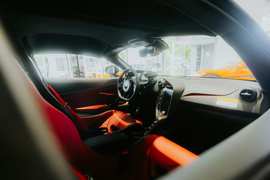
Emotional and Psychological Value: For the ultra-wealthy, these cars are more than just transportation; they are statements of power, taste, and success. The emotional satisfaction of owning something truly unique and unattainable is a significant driver of the high prices.
The Top 10 Most Expensive Cars in the World: A Definitive Ranking
Having explored the factors that contribute to their value, let’s delve into the specific vehicles that define the upper echelon of the automotive world. These are the cars that turn heads not just for their beauty, but for their sheer audacity and exclusivity.
Bugatti Divo: The Precision Track Machine ($6.2 million)
The Bugatti Divo represents a shift in philosophy for the French hypercar manufacturer. While the Bugatti Chiron focuses on outright top speed, the Divo is engineered for precision handling and cornering prowess. Named after Albert Divo, a former Bugatti works driver who won the Targa Florio twice in the 1920s, this car is a tribute to Bugatti’s racing heritage.
Technical Specifications:
Engine: 8.0-liter quad-turbocharged W16
Horsepower: 1,479 bhp
Top Speed: Electronically limited to 236 mph (380 km/h)
Production: 40 units
Key Features:
Aerodynamic Optimization: The Divo features a massive fixed rear wing, aggressive front splitter, and revised bodywork that generates 456 kg (1,006 lbs) of downforce at top speed, 90 kg (198 lbs) more than the Chiron.
Lightweight Construction: Extensive use of carbon fiber for the body panels and structural components reduces weight by 35 kg (77 lbs) compared to the Chiron.
Cornering Performance: With revised suspension tuning and a focus on agility, the Divo can pull 1.6g on a skidpad, a testament to its track-focused engineering.
The Divo appeals to collectors who value driving dynamics over outright top speed. Its limited production run ensures that only a select few will ever experience its unique blend of luxury and performance.
Pagani Huayra Imola Roadster: The Track-Focused Convertible ($6.5 million)
Pagani Automobili, under the leadership of Horacio Pagani, has built a reputation for creating automotive art that pushes the boundaries of engineering. The Huayra Imola Roadster is a prime example of this philosophy, representing the most extreme expression of the Huayra platform.
Technical Specifications:
Engine: 6.0-liter twin-turbocharged Mercedes-AMG V12
Horsepower: 838 bhp
Top Speed: 234 mph (378 km/h)
Production: 8 units
Key Features:
Aerodynamic Enhancements: The Imola Roadster features an advanced active aerodynamics system, including an electronically controlled rear wing and front flaps that adjust in real-time to optimize downforce and drag.
Weight Reduction: Extensive use of advanced materials like carbon fiber, titanium, and magnesium alloy keeps the weight down to an astonishing 1,120 kg (2,470 lbs).

Performance Tuning: The engine is tuned to deliver maximum power throughout the rev range, providing brutal acceleration and track-ready performance.
The Imola Roadster is a testament to Pagani’s commitment to pushing the limits of automotive engineering. Its combination of breathtaking design, obsessive attention to detail, and track-focused performance makes it one of the most desirable hypercars ever created.
Pagani Huayra Codalunga: The Long-Tail Masterpiece ($7.4 million)
The Pagani Huayra Codalunga, meaning “long tail” in Italian, is a tribute to the classic long-tail sports racers of the 1960s, such as the Porsche 917 and Ferrari P4. This limited-production model was inspired by the requests of two discerning collectors who desired a Pagani with a more streamlined, elongated silhouette.
Technical Specifications:
Engine: 6.0-liter twin-turbocharged Mercedes-AMG V12
Horsepower: 830 bhp
Top Speed: 230 mph (370 km/h)
Production: 5 units
Key Features:
Extended Rear Design: The most striking feature is the 360 mm (14.2 inches) extension of the rear bodywork, creating a flowing, aerodynamic profile that reduces drag and improves high-speed stability.
Exotic Materials: The body is crafted from lightweight carbon fiber, with a unique matte paint finish that accentuates the car’s curves. The interior features luxurious woven leather, a Pagani signature.
Mechanical Upgrades: The engine is tuned to deliver maximum power throughout the rev range, providing brutal acceleration and track-ready performance.
The Codalunga is a rolling sculpture that combines timeless automotive design with modern engineering. Its rarity and breathtaking beauty make it one of the most sought-after Pagani models ever produced.
Mercedes-Maybach Exelero: The One-Off Test Bed ($8 million)
Unlike the other cars on this list, the Mercedes-Maybach Exelero wasn’t commissioned by a wealthy collector but by Fulda, the German tire division of Goodyear. In 2004, Fulda needed a high-performance vehicle to test its new generation of wide, high-speed tires. The result was a one-off masterpiece of automotive engineering.
Technical Specifications:
Engine: 5.9-liter twin-turbocharged Maybach V12
Horsepower: 690 bhp
Top Speed: 218 mph (351 km/h)
Production: 1 unit
Key Features:
Unique Design: Developed by four students from the Pforzheim University School of Design, the Exelero features a dramatic, aerodynamic body that blends vintage proportions with modern design cues.
High-Speed Performance: The car was designed to test Fulda’s high-performance tires, requiring a vehicle capable of exceeding 217 mph. The Exelero achieved a top speed of 218 mph during its official test runs.
Media Stardom: After its testing duties, the Exelero became a celebrity in its own right, appearing in music videos, television shows, and at prestigious automotive events.
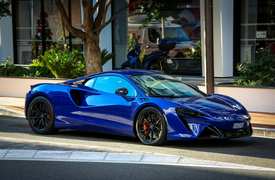
The Exelero is a unique piece of automotive history, representing a rare collaboration between a luxury automaker and a tire manufacturer. Its one-off status and storied past make it one of the most valuable cars in the world.