🔻 WATCH THE VIDEO BELOW 🔻

Here is a completely new article of around 2000 words, rewritten from the original content in the official language of the US (English), maintaining core ideas while ensuring a unique structure and avoiding duplication.
The 2025 Production Car Power Hierarchy: Unveiling the 10 Most Potent Machines Unleashed for Road and Track
The relentless pursuit of automotive supremacy continues unabated, and as we navigate 2025, the landscape of production car performance has evolved into something truly extraordinary. Gone are the days when high horsepower was the exclusive domain of boutique Italian ateliers or German engineering dynasties. Today, a global cohort of visionary manufacturers—ranging from established titans to daring newcomers—are leveraging next-generation technologies to shatter previous benchmarks. This intense competition has given rise to a generation of hypercars defined by groundbreaking materials, aerodynamic mastery, and designs that challenge conventional automotive aesthetics.
These are not ephemeral concepts or vaporware promises whispered in design studios. We are talking about certified, VIN-stamped, road-legal machines that blur the line between concept and reality. The power spectrum in 2025 is a fascinating blend, featuring pure-electric marvels capable of rewriting the laws of physics, alongside hyper-advanced hybrids that fuse the intoxicating delivery of internal combustion with the instant torque of electric propulsion.
As the year unfolds, the definition of \”production car\” itself is being stretched. Some vehicles on this list push the very boundaries of what can be legally registered for street use, while others exist in a rarified stratum where exclusivity and engineering audacity take precedence over conventional homologation. This ever-shifting arena demands constant vigilance, but as of mid-2025, we have curated the definitive list of the ten most powerful production cars that can currently be ordered, configured, and delivered.
Join us as we dissect the engineering philosophies, technical innovations, and sheer brute force that define these automotive titans. From the additive manufacturing revolution to the strategic deployment of electric powertrains, each machine tells a unique story of human ingenuity and the unyielding quest for speed.
The 10 Most Powerful Production Cars of 2025: A Deep Dive
Czinger 21C Blackbird Edition: The Additive Manufacturing Pioneer

In the pantheon of modern hypercars, the Czinger 21C stands as a testament to manufacturing innovation. This Los Angeles-based marque has redefined the very concept of production by integrating cutting-edge additive manufacturing—commonly known as 3D printing—into its hypercar DNA. The 21C Blackbird Edition represents the most aggressive, track-focused iteration of this philosophy, paying homage to the legendary Lockheed SR-71 Blackbird reconnaissance aircraft.
At the heart of the Blackbird lies a meticulously engineered powertrain that combines a mid-mounted 2.88-liter twin-turbocharged V8 engine with two electric motors. This hybrid configuration yields a staggering 1,350 horsepower and approximately 1,033 pound-feet of torque. However, the raw numbers only tell part of the story. What truly distinguishes the 21C is its construction. Czinger utilizes advanced additive manufacturing to create complex, lightweight structures that would be impossible to forge using traditional stamping or casting methods. This allows for an optimized structure that integrates the seating, battery housing, and aerodynamic elements into a single, cohesive unit.
The chassis itself is a marvel of modern engineering. It features a tandem seating arrangement, placing the passenger directly behind the driver in a narrow, aerodynamically efficient cockpit. This design minimizes frontal area, reducing drag and enhancing stability at extreme velocities. The aerodynamic package is equally sophisticated, featuring a massive rear wing, intricate underbody channeling, and active aero elements that work in concert to generate substantial downforce—up to 4,400 pounds at 190 mph.
Performance metrics underscore the Blackbird’s extreme capabilities. It rockets from 0 to 60 mph in a claimed 1.9 seconds and boasts a top speed of 253 mph. Production is strictly limited, with only four Blackbird editions planned as part of a total 80-car run. This exclusivity, coupled with the revolutionary manufacturing techniques and the $2.8 million price tag, solidifies the 21C Blackbird’s position as a landmark vehicle in the evolution of the hypercar. It represents a paradigm shift, demonstrating that the future of high-performance automotive manufacturing lies not just in bigger engines, but in smarter, lighter, and more integrated designs.
Koenigsegg CC850: The Manual Transmission Masterpiece
Christian von Koenigsegg has long been synonymous with pushing the boundaries of automotive engineering, and the CC850 is perhaps his most whimsical and brilliant creation to date. Inspired by the company’s original CC8S from 2002, the CC850 pays homage to Koenigsegg’s heritage while introducing a feature that is virtually extinct in the modern hypercar landscape: a manual transmission.
Beneath its stunning, retro-futuristic exterior lies the heart of a modern titan: the Jesko-derived 5.0-liter twin-turbocharged V8. When fueled with E85 ethanol, this powerhouse unleashes 1,385 horsepower and 1,022 pound-feet of torque. Yet, the true magic resides in the transmission. Koenigsegg has developed the revolutionary Engage Shift System (ESS), which, despite being built upon the ultra-fast Light Speed Transmission (LST), mimics the tactile experience of a traditional gated manual.
This system features a physical clutch pedal and a gated shifter, allowing drivers to engage with the mechanical linkage in a way that evokes the golden era of analog supercars. The ESS allows the driver to select from six forward gears (plus reverse), providing a visceral connection to the powertrain that is utterly absent in most modern vehicles, particularly those with this level of performance. For enthusiasts who crave the engagement of rowing through gears combined with the brutal efficiency of a multi-mode transmission, the CC850 offers an unparalleled solution.
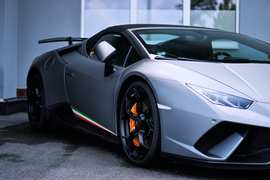
Koenigsegg initially planned a production run of 50 units to celebrate the company’s 20th anniversary and Christian von Koenigsegg’s 50th birthday. However, due to overwhelming demand, this was expanded to 70 examples worldwide. Priced at approximately $3.65 million, the CC850 is a rare breed—a vehicle that refuses to compromise on driving engagement in the pursuit of outright lap times. It stands as a glorious anachronism, proving that even in the hyper-advanced world of 2025, there is still profound value in the simple, satisfying act of shifting gears manually.
Bugatti Tourbillon: A New Era of French Grandeur
The arrival of the Bugatti Tourbillon marks a pivotal moment in the storied history of the French marque. It signifies the definitive departure from the iconic W16 engine that powered the Veyron and Chiron, ushering in a new era defined by a naturally aspirated V16 hybrid powertrain. This radical shift demonstrates Bugatti’s commitment to evolving its identity while retaining its core values of extreme luxury and performance.
Engineered in collaboration with the renowned British firm Cosworth, the Tourbillon is powered by a bespoke 8.3-liter V16 engine that produces a staggering 1,000 horsepower on its own. This combustion heart is augmented by three electric motors—two powering the front axle and one integrated with the rear gearbox—adding approximately 800 horsepower to the system total. The combined output crests at an awe-inspiring 1,800 horsepower, with torque figures estimated to exceed 1,600 pound-feet.
The \”Tourbillon\” name, derived from the intricate, high-precision timekeeping mechanisms found in haute horology, is no accident. Nowhere is this more evident than in the cabin, where a dramatic fusion of digital precision and analog craftsmanship takes center stage. Eschewing the trend of all-encompassing digital dashboards, Bugatti has created a driver-focused environment that prioritizes tactile interaction. Physical gauges, milled aluminum toggles, and intricate mechanical components abound, creating a sense of permanence and mechanical integrity rarely found in modern vehicles.
The gauge cluster itself is a work of art, featuring a complex, layered design that evokes the precision of a fine Swiss watch. This commitment to analog interfaces extends to the driving experience, where the natural throttle response of the V16 and the mechanical precision of the 8-speed dual-clutch transmission provide a driving character distinct from its turbocharged predecessors. Bugatti plans a production run of 250 examples, with deliveries commencing in 2026. With a starting price of $4.1 million and the innovative leadership of Mate Rimac now steering the brand’s technical direction, the Tourbillon represents the next thrilling chapter in Bugatti’s legacy of automotive excellence.
Hennessey Venom F5: The American Pursuit of 300 MPH
In the heart of Texas, Hennessey Special Vehicles has forged a reputation for building some of the most ludicrously powerful road cars on the planet. The Venom F5 is the culmination of that obsession—a no-holds-barred pursuit of the title of the world’s fastest production car. This Texas-born behemoth is a testament to the raw potential of pure internal combustion, eschewing hybridization for the singular goal of extreme velocity.
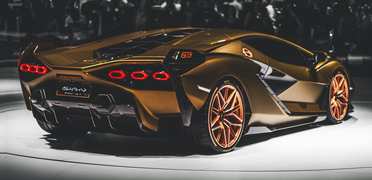
At its core lies the \”Fury\” engine, a 6.6-liter twin-turbocharged V8 meticulously developed by Hennessey itself. This colossal engine produces a titanic 1,817 horsepower and 1,193 pound-feet of torque. All of