
The Pinnacle of Automotive Engineering: A Deep Dive into the 2026 Hypercar Landscape
The world of hypercars is experiencing a renaissance unlike any seen before. What was once the exclusive domain of gentlemen racers with bottomless pockets has evolved into a dynamic, multi-faceted market segment where cutting-edge electric innovation vies with the soulful roar of naturally aspirated V12s. As we navigate the complexities of the mid-2020s, the definition of a “hypercar” has expanded, welcoming plug-in hybrids, all-electric titans, andアナログ purist machines that challenge the very notion of what a road car can be.
For automotive enthusiasts and high-net-worth collectors, this era represents a golden age of opportunity. The convergence of F1-derived aerodynamics, Le Mans-winning hybrid technology, and AI-accelerated material science has birthed machines that blur the line between road car and spaceship. Whether you seek the spine-tingling visceral connection of a manual gearbox or the mind-bending acceleration of an electric drivetrain, the 2026 hypercar market offers a bespoke solution for the most discerning tastes.
This in-depth analysis will explore the defining machines of the current era, dissecting the engineering philosophies that drive them, the technological innovations that set them apart, and the driving experiences that make them the stuff of legend. We will delve into the high-performance metrics that matter—power-to-weight ratios, downforce generation, and acceleration figures—while also examining the intangible qualities that elevate a car from merely “fast” to truly iconic.
The Kings of Speed: Defining the Modern Hypercar
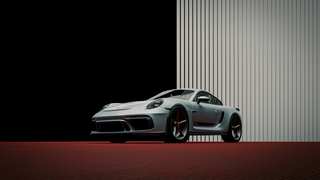
At the apex of the automotive hierarchy sits the hypercar, a vehicle that exists to push the absolute limits of performance, engineering, and design. Unlike their supercar cousins, which prioritize a blend of performance and usability, hypercars are single-minded in their pursuit of the ultimate driving experience, often at the expense of comfort, practicality, and cost.
The 2026 landscape is dominated by a select group of marques that have consistently redefined the parameters of automotive excellence. These brands—Bugatti, Ferrari, Lamborghini, McLaren, and Koenigsegg—are not merely manufacturers; they are arbiters of automotive culture, their every release scrutinized by a global community of enthusiasts and industry insiders.
Bugatti: The Reigning Monarch of Speed
When one speaks of hypercars, the name Bugatti inevitably surfaces. For over a century, the Alsatian marque has been synonymous with automotive opulence and engineering prowess. The Bugatti Veyron, introduced in 2005, shattered preconceived notions of production car performance, proving that a road-legal vehicle could achieve speeds previously reserved for land speed record cars. Its successor, the Chiron, took this formula and amplified it, creating a machine that combines brutal acceleration with unexpected levels of refinement.
The Bugatti Chiron Super Sport, in particular, represents the zenith of the company’s W16 engine era. With its quad-turbocharged, 8.0-liter W16 engine producing a staggering 1,578 horsepower, the Super Sport is capable of catapulting its occupants from 0 to 60 mph in a mere 2.4 seconds. This level of performance is not merely about straight-line speed; it is about the psychological impact of acceleration so intense that it redefines one’s perception of reality. The sheer physics of the forces at play—the G-forces pressing you into the seat, the sound of the engine echoing off the chassis, the blur of the world outside the cockpit—create an experience that is both terrifying and exhilarating.
However, Bugatti’s latest offering, the Mistral, signals a poignant farewell to the legendary W16. This open-top roadster is not merely a stripped-down Chiron; it is a masterclass in design and engineering, showcasing the company’s ability to innovate even as it honors its heritage. With a top speed of 282 mph, the Mistral stands as a testament to the enduring legacy of the quad-turbo W16, a powerplant that has defined the modern hypercar era.
Ferrari: The Art of Performance
The Prancing Horse of Maranello needs little introduction. For over 75 years, Ferrari has been crafting automobiles that are as much works of art as they are machines of speed. The marque’s hypercar lineage is a sacred lineage, marked by milestones such as the F40, the F50, the Enzo, and the LaFerrari. These cars are not just fast; they possess an emotional resonance, a soul that connects with drivers on a profound level.
The Ferrari 849 Testarossa, the company’s latest flagship, represents a bold evolution of this legacy. While it pays homage to the iconic Testarossa of the 1980s with its sleek lines and mid-engine proportions, the 849 is a thoroughly modern machine, incorporating plug-in hybrid technology and advanced aerodynamics to achieve a level of performance that eclipses its predecessors. With a combined output of 1,036 horsepower, it combines the visceral thrill of a turbocharged V8 with the instant torque of electric motors, creating a driving experience that is both electrifying and intuitive.
The LaFerrari, though several years old, remains a benchmark in the hybrid hypercar space. Its 6.3-liter naturally aspirated V12, augmented by an electric motor, produces a combined 950 horsepower. What sets the LaFerrari apart, however, is its F1-derived technology and its sublime handling characteristics. It is a car that rewards precision and commitment, offering a level of driver engagement that is increasingly rare in the age of autonomous driving systems.
Lamborghini: The Embodiment of Excess
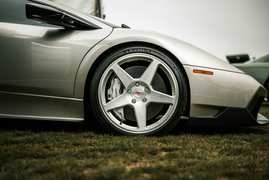
If Ferrari represents the art of performance, Lamborghini embodies its raw, untamed spirit. The Raging Bull of Sant’Agata Bolognese has always prioritized drama, spectacle, and visceral impact. Its cars are not designed to be subtle; they are designed to be noticed, to be admired, to be feared.
The Lamborghini Revuelto, the successor to the iconic Murciélago, is a testament to this philosophy. With its angular, aggressive styling and its thunderous V12 engine, the Revuelto is a hypercar in every sense of the word. It combines the traditional Lamborghini V12 with a tri-motor hybrid system, resulting in a combined output of 1,001 horsepower. This electrifying combination allows the Revuelto to sprint from 0 to 60 mph in a mere 2.5 seconds, with a top speed of over 217 mph.
What makes the Revuelto truly special, however, is its chassis. Lamborghini’s engineers have managed to package this immense power in a chassis that is surprisingly agile and communicative. The rear-steering system and advanced torque vectoring ensure that the Revuelto remains composed even when driven at its limit, offering a level of handling precision that belies its aggressive appearance.
McLaren: The Purity of Speed
The name McLaren evokes images of Formula 1 success and pioneering automotive engineering. The company’s hypercar lineage is marked by the legendary F1, a car that remains a benchmark for driver-focused performance even today, and the P1, a groundbreaking hybrid hypercar that redefined the segment.
The latest offering from Woking, the McLaren W1, promises to continue this tradition. With a completely new chassis and a revolutionary powertrain, the W1 represents a bold step forward for the company. It features a brand-new 4.0-liter twin-turbocharged V8 engine, augmented by a hybrid system, producing a combined 1,257 horsepower. This electrifying combination allows for a 0-60 mph time of 2.7 seconds and a top speed of 217 mph.
What truly sets McLaren apart, however, is its commitment to driver engagement. Unlike some of its rivals, which prioritize outright speed over the driving experience, McLaren engineers focus on creating a car that feels connected to the driver. The W1 promises to be a car that rewards precision and commitment, a machine that allows the driver to feel every nuance of the road and every shift of the gears.
The Electric Revolution: Redefining Hypercar Performance
While the V12-powered behemoths continue to dominate the headlines, the most significant shift in the hypercar landscape has been the rise of electric propulsion. Battery technology has advanced to a point where electric hypercars can now match, and in some cases surpass, their gasoline-powered counterparts in terms of acceleration and overall performance.
Rimac: The Electric Vanguard
Leading this charge is Rimac Automobili, a Croatian firm that has quickly established itself as the undisputed leader in electric hypercar technology. The Rimac Nevera, the company’s second production car, is a marvel of engineering. With four independent electric motors, one for each wheel, the Nevera produces a staggering 2,078 horsepower and 1,740 lb-ft of torque.
The performance figures are nothing short of astronomical. The Nevera can accelerate from 0 to 60 mph in a mere 1.7 seconds, making it the fastest-accelerating production car in the world. Its quarter-mile time of 8.25 seconds is equally staggering. But the Nevera is not just about straight-line speed; it is also a remarkably capable track car, with advanced torque vectoring and stability control systems that allow drivers to exploit its immense power with confidence.
What makes the Nevera truly special, however, is its accessibility. Despite its 2,150 kg weight, the car feels surprisingly nimble and responsive. Senior staff writer Yousuf Ashraf experienced this firsthand on the Goodwood hill, demonstrating that the Nevera