
US”## The Definitive 2026 Hypercar Buyer’s Guide: From 2,000 BHP Electric Monsters to Analogue V12 Masterpieces
The world of the hypercar is undergoing its most profound transformation since the dawn of the supercar era. For decades, these elite machines—defined by their six-figure price tags, exotic materials, and stratospheric performance metrics—were the exclusive domain of the internal combustion engine. But as we hurtle into 2026, the landscape has shifted dramatically. Today’s hypercar market offers a breathtaking duality: the raw, visceral engagement of naturally aspirated V12s and the mind-bending acceleration of electric powertrains that dwarf their gasoline predecessors.
This isn’t just an evolution; it’s a revolution. The stringent emissions regulations and technological leaps in battery density and electric motor efficiency have birthed a new breed of hypercar—machines that blur the lines between road car and Le Mans prototype, between mechanical sculpture and digital weapon. Whether you seek the symphonic wail of a Cosworth V12 revving to 11,000 RPM or the instant, violent thrust of 2,000 horsepower delivered through four electric motors, the 2026 selection caters to every conceivable automotive fantasy.
For the seasoned collector, the market presents an unprecedented confluence of opportunities. The established titans—Bugatti, Ferrari, Lamborghini—are pushing their gasoline-powered legends to the brink of possibility, while newcomers like Rimac and Czinger are rewriting the physics of acceleration. Simultaneously, the collector’s market is seeing a surge in value for the analogue icons of the past, with McLaren F1s and Porsche Carrera GTs commanding prices that dwarf their original MSRPs.
Yet, navigating this glittering, high-stakes arena requires more than a seven-figure bank account. It demands an understanding of the engineering philosophies, the production realities, and the intangible qualities that elevate a hypercar from a mere exotic to a blue-chip asset. This comprehensive guide delves into the definitive hypercars of 2026, dissecting the technology, the driving dynamics, and the cultural impact of the most desirable machines on four wheels.
The Reigning Monarchs: Gasoline Titans Refined
While the electric revolution gathers momentum, the established Italian and French marques continue to refine their gasoline-powered masterpieces, pushing the boundaries of what internal combustion can achieve. These are not mere facelifts; they are the culmination of decades of racing heritage and engineering expertise, representing the apex of the V12 and W16 eras.
Bugatti Chiron Successors: The W16 Swan Song
Bugatti, under the stewardship of Rimac, has long defined the hypercar genre through sheer brute force and engineering excess. The Chiron, with its legendary 8.0-liter quad-turbocharged W16 engine, set benchmarks for top speed and straight-line acceleration that remain largely unchallenged. However, as emissions regulations tighten and the industry pivots toward electrification, Bugatti is bidding farewell to its iconic sixteen-cylinder powerhouse.
The Bugatti Mistral represents the final iteration of the W16 era. This open-top roadster, limited to just 99 units, marries the staggering 1,578 horsepower output of the Chiron Super Sport 300+ with the artistry and craftsmanship that define the Bugatti brand. Unlike the track-focused Chiron variants, the Mistral is designed for the grand tourer—a machine capable of traversing continents in ultimate luxury and speed. Its performance figures are astronomical: 0-60 mph in under 2.5 seconds and a verified top speed of 282 mph, making it the fastest roadster in the world. Yet, its true genius lies in the driving experience. The W16 engine, a symphony of mechanical complexity, delivers torque with a linearity that modern turbo-hybrids can only dream of. For the collector, the Mistral is more than a car; it is a historical artifact, the last of its kind from a marque that has defined automotive excess for over a century.
Looking ahead, the whispers from Molsheim center on the Bugatti Tourbillon. This upcoming model promises a radical departure from the Chiron’s formula, signaling Bugatti’s entry into the hybrid hypercar domain. Early prototypes suggest a new, naturally aspirated V16 engine, likely augmented by electric motors to produce upwards of 1,700 horsepower. The name “Tourbillon,” inspired by the intricate mechanical watch escapement, hints at a renewed focus on precision engineering and driver engagement. If the rumors hold true, the Tourbillon will blend Bugatti’s signature performance with the sophistication and responsiveness of electrification, setting the stage for the marque’s next chapter.
Ferrari: The Evolution of the Prancing Horse
Ferrari has always occupied a unique position in the hypercar pantheon. While its F1 success often dictates its road car development, the Prancing Horse has consistently delivered machines that prioritize driver involvement and aesthetic beauty alongside raw speed. In 2026, Ferrari stands at a crossroads, balancing its V12 heritage with the demands of electrification.

The Ferrari LaFerrari, though no longer in production, remains a benchmark for hybrid hypercars. Part of the celebrated “holy trinity” alongside the McLaren P1 and Porsche 918 Spyder, the LaFerrari combined a 950-horsepower V12-hybrid powertrain with advanced aerodynamics and F1-derived technology. Its value has only appreciated since its debut, with pristine examples fetching prices well north of $5 million on the secondary market. This enduring demand underscores the market’s desire for balanced, driver-focused hybrid hypercars that eschew excessive weight for sublime handling.
Looking to the future, the Ferrari F80 represents the pinnacle of Ferrari’s current hypercar thinking. This V6-powered hybrid, revealed in late 2025, eschews the traditional V12 for a high-revving, twin-turbocharged 3.0-liter V6 augmented by a sophisticated hybrid system. The combined output of 1,187 horsepower enables a 0-60 mph time of just 2.4 seconds, while active aerodynamics generate over 2,700 pounds of downforce. What distinguishes the F80 is its philosophical approach. Ferrari has weaponized Formula 1 technology—including F1-derived energy recovery systems and advanced torque vectoring—to create a machine that is both ferociously fast and surprisingly intuitive. The F80 demonstrates that hybrid hypercars need not be ponderous; through intelligent packaging and software calibration, they can deliver a driving experience that is as engaging as it is electrifying.
Further down the Ferrari spectrum, the Ferrari 849 Testarossa (codenamed F89) is poised to become the benchmark for junior hypercars. Replacing the SF90 Stradale, the 849 combines a twin-turbo V8 with three electric motors to produce over 1,000 horsepower. Its significance lies not just in its performance, but in its accessibility. While still commanding a premium price tag (estimated around $400,000), the 849 offers a taste of hypercar performance with a level of usability that makes it viable for more frequent driving. This trend toward “affordable hypercars” is a critical development in the 2026 market, democratizing performance without compromising the core values of the marque.
Lamborghini: The Raging Bull Enters the Electric Age
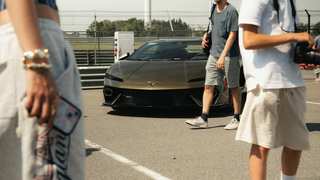
Lamborghini, the purveyor of flamboyant design and V12 theater, has embraced electrification with characteristic boldness. The Lamborghini Revuelto, the successor to the iconic Murciélago, represents the brand’s first production plug-in hybrid hypercar. It retains the dramatic, angular styling that has become synonymous with the Raging Bull, but beneath the carbon-fiber skin lies a powertrain that redefines Lamborghini performance.
The Revuelto combines a howling 6.5-liter naturally aspirated V12—the heart of every flagship Lamborghini since the Miura—with three electric motors. This configuration yields a combined output of 1,001 horsepower, enabling a 0-60 mph time of just 2.5 seconds. However, the Revuelto’s genius extends beyond its headline figures. It features an advanced torque-vectoring system that distributes power precisely to each wheel, enhancing agility and cornering grip. The result is a car that is both savagely fast and remarkably composed, a testament to Lamborghini’s ability to merge V12 passion with electric precision.
For the 2026 market, the Revuelto is arguably the most desirable hybrid hypercar available. Its blend of dramatic styling, V12 soundtrack, and cutting-edge technology makes it a compelling alternative to the more clinical approach of some European rivals. The market has responded enthusiastically, with initial allocations quickly spoken for and secondary market values remaining robust.
The New Guard: Electric and Hybrid Innovators
While the established players refine their internal combustion formulas, a new generation of manufacturers is exploiting the transformative potential of electric powertrains. These innovators are not merely electrifying existing chassis; they are designing vehicles from the ground up to exploit the unique advantages of electric propulsion—instant torque, precise torque vectoring, and the ability to package high-density batteries in ways that optimize weight distribution.
Rimac: The Benchmark for Electric Performance
The Croatian firm Rimac Automobili has emerged as the undisputed leader in the electric hypercar space. Founded by Mate Rimac with a vision of electric performance beyond conventional limits, the company has delivered the Rimac Nevera R, a machine that has shattered virtually every existing performance benchmark.
The Nevera R is a technological tour de force. Powered