
The 2026 Hypercar Landscape: From 2,000bhp Electric Beasts to Analogue Masterpieces
The world of hypercars has never been more vibrant, complex, or exhilarating. Gone are the days when a 700bhp naturally aspirated V12 was the definition of automotive excess. Today, we stand at the precipice of a technological revolution, where the very definition of a hypercar is being rewritten with every new release. From the raw, unfiltered violence of a methanol-burning V8 to the silent, stratospheric thrust of an electric powertrain, the modern hypercar is a testament to human ingenuity—and perhaps, a symptom of our insatiable desire for speed.
In 2026, the market is a dizzying mosaic of electrification, forced induction, and aerodynamic obsession. Whether you’re looking for a four-wheeled mechanical watch, a road-legal Le Mans prototype, or a digital missile capable of rewriting physics, the choice has never been more profound. This is the era where the line between road car and race car has all but dissolved, where manufacturers are pushing the boundaries of what’s possible, often with little regard for the planet or the price tag.
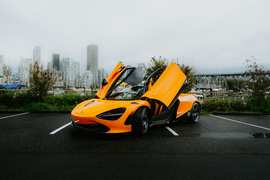
The currency of this realm is not merely horsepower, but a complex alchemy of performance metrics: downforce figures that rival fighter jets, 0-60mph times that blur the line between imagination and reality, and price tags that would make a sovereign nation blush. As an industry veteran who has had the privilege of piloting some of these mechanical marvels, I can attest that the experience transcends the numbers. It is a visceral, sensory overload—a symphony of screeching tires, compressed air, and G-forces that recalibrate your very perception of velocity.
For the discerning collector, the hypercar is the ultimate blue-chip stock, an investment that appreciates not just in monetary value, but in automotive legend. For the purist, it is the final bastion of the internal combustion engine, a defiant roar against the encroaching silence of electrification. And for the few who dare to venture beyond the showroom floor, it is a portal to a dimension of performance that few will ever experience.
Join us as we navigate the glittering, gas-guzzling, and frankly terrifying world of the 2026 hypercar elite. From the established titans of Maranello and Sant’Agata to the insurgent disruptors from Sweden and Croatia, these are the machines that define the apex of automotive engineering.
The 2026 Hypercar Pantheon: A Definitive Ranking
Compiling a definitive list of the “best” hypercars is an exercise in controlled chaos. The criteria are subjective, the performance metrics often unattainable on public roads, and the emotional resonance a matter of personal preference. However, by analyzing a combination of historical significance, technological innovation, driving dynamics, and market impact, we can curate a list that represents the pinnacle of the 2026 landscape.
It is crucial to note that the hypercar category itself is undergoing a seismic shift. The traditional definition—a low-volume, road-legal sports car with race-car-level performance—is being challenged by a new breed of electric-first machines that dwarf their petrol-powered predecessors in raw acceleration. Yet, the soul of the hypercar, that intangible blend of drama, exclusivity, and engineering audacity, remains the constant.
Here are the hypercars that have defined the 2026 conversation, pushing the envelope of what we thought possible.
Koenigsegg Jesko Absolute: The Physics Defier
When Christian von Koenigsegg sets his mind to a goal, the automotive world braces itself. The Jesko, named after the founder’s father, is not merely a car; it is a manifesto. Named as the best hypercar of 2026 by evo magazine, the Jesko represents the apotheosis of the internal combustion engine—a machine engineered to shatter the 300mph barrier and beyond.
The Core Philosophy: At its heart lies the terrifyingly beautiful 5.0-liter twin-supercharged V8, a masterpiece of Swedish engineering. This engine, capable of revving to a stratospheric 8,500 rpm, produces a staggering 1,600 horsepower when fed with E85 biofuel. But the raw numbers, as impressive as they are, tell only half the story.
The Transmission Innovation: The true genius of the Jesko lies in its revolutionary “Light Speed Transmission” (LST). Unlike conventional dual-clutch systems that require sequential gear changes, the LST utilizes a complex system of clutches that allows the driver to shift to any gear at any time. This results in gear changes that are virtually instantaneous, creating a seamless surge of acceleration that feels more akin to a continuous wave of power than a series of discrete steps. For the driver, this translates to an experience of relentless forward momentum—a sensation of being shot from a cannon rather than simply accelerating.

Aerodynamic Perfection: The Jesko Absolute is a lesson in aerodynamic optimization. Its sleek, elongated body is sculpted through thousands of hours of computational fluid dynamics (CFD) simulation and wind tunnel testing. The massive rear wing, active diffusers, and meticulously crafted bodywork generate downforce levels that would make a Formula 1 car blush, all while maintaining a drag coefficient of just 0.278. This delicate balance between grip and efficiency is what allows the Jesko to achieve its theoretical top speed of over 330 mph.
The Driving Experience: Piloting the Jesko is an exercise in controlled exhilaration. The steering is telepathic, the chassis feedback sublime, and the sound—oh, the sound. It is a high-frequency banshee wail that intensifies with every rotation of the crankshaft, a mechanical siren song that borders on the abusive. In a world increasingly dominated by silent EVs, the Jesko is a defiant, glorious noise—a reminder of the visceral thrill that only a combustion engine can provide. It is, without question, the benchmark for the modern hypercar.
Rimac Nevera: The Electric Apex Predator
If the Koenigsegg Jesko represents the zenith of the internal combustion engine, the Rimac Nevera is the harbinger of the electric future. Developed by the Croatian wunderkind Mate Rimac, the Nevera is not just a fast electric car; it is a technological tour de force that has redefined the parameters of automotive performance.
The Powertrain Revolution: The Nevera is powered by four independent electric motors, one for each wheel. This revolutionary all-wheel-drive system, managed by a proprietary traction control system, allows for an unprecedented level of torque vectoring and stability control. The combined output is a mind-boggling 1,914 horsepower and 1,741 lb-ft of torque. The result? A 0-60 mph time of 1.74 seconds—faster than the human brain can fully process the sensation. It is a launch that feels less like driving and more like teleportation.
The Carbon Fiber Monocoque: At the core of the Nevera is a bespoke carbon fiber monocoque, a structure so rigid and lightweight that it serves as the car’s structural backbone. This chassis technology, derived from Formula 1 engineering, allows the car to handle its immense power with precision and grace. The car weighs in at a relatively svelte 2,150 kg (4,860 lbs), a testament to Rimac’s obsessive attention to detail.
The Technology Hub: The Nevera is as much a piece of software as it is hardware. Its advanced AI-powered driving modes, known as “Driver Coach,” analyze driving style and provide real-time feedback to help the driver extract the maximum performance from the car. This system, combined with the car’s four-stage regenerative braking, makes the Nevera not just brutally fast, but also surprisingly manageable.
The Driving Experience: On the road, the Nevera is a paradox. It is whisper-quiet, offering a serene driving experience that belies its capabilities. Yet, when the throttle is depressed, the car erupts with a force that is both terrifying and exhilarating. The acceleration is relentless, the cornering grip immense, and the braking power supernatural. It is a car that shrinks the world around you, making the most challenging roads feel effortlessly conquerable. The Nevera is the benchmark against which all future electric hypercars will be measured.
Aston Martin Valkyrie: The Track Weapon for the Road
When Aston Martin partnered with Adrian Newey, the legendary aerodynamicist behind Red Bull Racing’s Formula 1 dominance, the automotive world knew something extraordinary was coming. The Aston Martin Valkyrie is the realization of that partnership—a road-legal car that blurs the line between hypercar and LMP1 race car.
The Newey Philosophy: Adrian Newey’s design ethos is legendary: create the most aerodynamically efficient shape possible, and the performance will follow. The Valkyrie is a testament to this philosophy. Its body is a radical, shrink-wrapped sculpture of carbon fiber, designed to generate an astonishing 1,800 kg (4,000 lbs) of downforce at speed. The underbody airflow management is so sophisticated that it effectively creates a low-pressure zone beneath the car, sucking it to the tarmac with a force that defies conventional engineering.
The Cosworth V12 Heartbeat: Powering this aerodynamic marvel is a bespoke, naturally aspirated 6.5-liter V12 engine developed by Cosworth. This masterpiece of engineering revs to a stratospheric 11,000 rpm, producing a spine-tingling 1