
The Ultimate Guide to the Best Hypercars of 2026: From 2000bhp Electric Marvels to Analogue V12 Masterpieces
The realm of the hypercar is experiencing a golden age, a dizzying confluence of electrification, boutique craftsmanship, and boundary-pushing engineering. Once the exclusive domain of marquees like Ferrari, McLaren, and Bugatti, the definition of the hypercar has expanded dramatically. Today, it encompasses everything from 2000-horsepower electric tyrants capable of vaporizing their rear tires with a mere thought, to featherlight, naturally aspirated V12 machines that feel like four-wheeled mechanical watches. For the discerning collector, the investment-minded connoisseur, or the driving enthusiast seeking the absolute zenith of automotive performance, the 2026 landscape offers more choice and spectacle than ever before.
This market, currently characterized by demand far outstripping supply, isn’t just about speed records on a digital speedometer; it’s about the visceral, the emotional, and the unforgettable. Whether you’re seeking the ultimate poster car for your bedroom wall, a blue-chip asset appreciating in value faster than a tech stock, or a machine that redefines the very essence of driving engagement, the best hypercars of 2026 deliver in spades. Prepare to explore a world where automotive engineering meets avant-garde art, where the soundtrack is a symphony of combustion, and where the acceleration feels less like driving and more like low-altitude flight.
The Contenders: A Pantheon of Performance
To navigate this exclusive echelon, we’ve curated a definitive list of the hypercars that matter most in 2026. These are the machines that are defining the era, blending raw power with sophistication, and heritage with innovation.
The Aston Martin Valkyrie: The Le Mans Car for the Road
When Aston Martin, under the visionary guidance of Adrian Newey, unveiled the Valkyrie concept in 2016, the automotive world didn’t just stop; it held its breath. This wasn’t merely a new supercar; it was a redefinition of what a road-legal car could be. Born from Formula 1 aerodynamics and a singular vision of track performance translated to public roads, the Valkyrie stands as a testament to the power of uncompromising engineering.
At its heart beats a Cosworth-derived 6.5-litre naturally aspirated V12. In a world increasingly dominated by turbochargers and hybrid complexity, the Valkyrie’s engine is a pure, mechanical marvel. It revs to a stratospheric 11,000 rpm, producing a spine-tingling 1,139bhp. This internal combustion masterpiece is augmented by a Rimac-supplied electric hybrid system, adding both power and torque, but its true magic lies in its integration.
The chassis is a masterclass in weight optimization. Constructed primarily from carbon fibre, the structure itself forms part of the aerodynamic package. Adrian Newey, renowned for his ability to sculpt airflow into performance, designed the car with an almost skeletal, shrink-wrapped body. The underbody generates massive ground effect, creating aerodynamic tunnels that suck the car to the tarmac. While the production reality has seen some figures slightly adjusted from the initial projections—the downforce is capped at 600kg rather than the astronomical 1,800kg initially discussed—the result is still a car that behaves like an LMP1 prototype.
Driving the Valkyrie is an experience that recalibrates the senses. The cabin is a snug, fighter-pilot affair, with a fixed central driving position and a harness that holds you firmly in place. The noise is simply overwhelming; a banshee wail that escalates with every upward tick of the rev counter, filling the cockpit with a visceral, raw energy that modern, insulated hypercars struggle to match. The steering is telepathic, the turn-in immediate, and the braking ferocious. It demands focus, mental stamina, and a willingness to engage on a level few road cars ever ask of their drivers. For those who believe the ultimate hypercar must be an analogue experience amplified by modern technology, the Aston Martin Valkyrie remains the benchmark.
The Bugatti Mistral: The Grand Finale of the W16 Era
For over two decades, the Bugatti W16 engine has been the very definition of hypercar power. From the revolutionary Veyron to the record-shattering Chiron, this quad-turbocharged behemoth has consistently redefined the upper limits of automotive performance. Now, as Bugatti transitions into a new era under the Bugatti-Rimac joint venture, the Mistral emerges as the emotional swansong for the W16—a fittingly dramatic farewell to an automotive legend.
Unveiled as the ultimate open-top Bugatti, the Mistral is built upon the advanced chassis of the Chiron Super Sport, but it is far more than a simple convertible. Visually, it is a triumph of design, eschewing the aggressive, angular lines of some modern hypercars for a more elegant, flowing silhouette. The rear features a distinctive X-shaped taillight treatment, a nod to the iconic Bugatti Type 57 SC Atlantic, while the front end maintains the unmistakable Bugatti horseshoe grille.
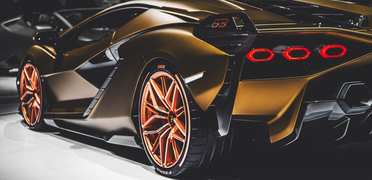
But the true star, as always, is the engine. The 8.0-litre quad-turbo W16 produces a staggering 1,578 horsepower. This colossal output is channelled through Bugatti’s advanced all-wheel-drive system, enabling the Mistral to achieve a verified top speed of 282.1 mph, making it the fastest roadster ever built. The acceleration is, predictably, brutal. It dispatches the 0-62 mph sprint in a mere 2.5 seconds, a figure that still feels surreal even in today’s context.
However, the Mistral’s brilliance lies beyond its raw numbers. It represents the pinnacle of Bugatti’s engineering philosophy: the marriage of extreme performance with unparalleled luxury and craftsmanship. The interior is a symphony of bespoke materials, featuring hand-stitched leather, anodized aluminium, and exposed carbon fibre. The famous Chequered Flag pattern, a Bugatti signature, is rendered in intricate detail on the door panels and gear selector.
Driving the Mistral is an immersive experience. With the roof panel removed, the sound of the W16 fills the cabin, a thunderous, mechanical symphony that is both terrifying and exhilarating. The car’s handling is remarkably refined for something with this level of power. The advanced suspension and torque vectoring systems work in harmony to deliver a surprisingly agile and confidence-inspiring drive, allowing the driver to exploit the car’s immense performance with a degree of accessibility that belies its specifications. The Bugatti Mistral is not just a hypercar; it is a rolling sculpture, a piece of automotive art, and the definitive conclusion to the W16 chapter of Bugatti’s storied history.
The Ferrari F80: Maranello’s Hybrid Pinnacle
Ferrari, the Prancing Horse of Maranello, has long been synonymous with the V12 engine—the very soul of its most iconic hypercars. Yet, in 2026, the company’s most extreme road-going creation, the F80, challenges this very notion. This limited-production marvel celebrates Ferrari’s upcoming 80th anniversary by blending Formula 1-derived hybrid technology with a compact, yet potent, V6 engine.
The F80’s powertrain is a technical tour de force. At its core is a 3.0-litre twin-turbocharged V6, the very same engine found in the contemporary SF90 Stradale. However, in the F80, this compact powerplant is augmented by a sophisticated hybrid system featuring both MGU-K (Kinetic Energy Recovery System) and MGU-H (Motor Generator Unit Heat) technologies. The result is a combined output of 1,187 horsepower, with the V6 itself producing a remarkable 888 horsepower. This electrification allows for instant torque delivery, providing the kind of throttle response that modern hybrid systems excel at.
The chassis is a pure carbon fibre monocoque, engineered to the same standards as Ferrari’s Le Mans Hypercar racers. Aerodynamics play a critical role, with active aero elements and advanced diffusers generating over a ton of downforce at 155 mph. This ensures that the F80 remains planted and stable at its formidable top speed, which is electronically limited to 217 mph—a figure that seems almost conservative given the power output, but one dictated by the need for road usability and stability.
What truly sets the F80 apart, however, is its driving character. Despite the immense technological complexity, Ferrari’s software calibration ensures a surprisingly intuitive and engaging experience. The transition between electric and combustion power is seamless, and the car feels remarkably cohesive from the driver’s seat. The steering is precise, the brakes razor-sharp, and the chassis responsive. It strikes a delicate balance between being a high-performance track weapon and a road-legal hypercar that can be enjoyed on public roads. The F80 is a bold statement from Ferrari, demonstrating that the future of the hypercar can be both electrifying and deeply rewarding from a driving perspective.
The Pagani Utopia: The Art of the Analogue Hypercar
In an era where hypercars are increasingly defined by their electric powertrains and digital interfaces, Horacio Pagani has remained a steadfast guardian of automotive artistry. With the Utopia, the successor to the legendary Huayra, Pagani has crafted a machine that is both technologically advanced and profoundly analogue, proving that mechanical purity can coexist with modern performance.
The Utopia is a visual masterpiece. Every curve, every