
The U.S. Hypercar Market in 2026: Evolution, Innovation, and the Electric Revolution
The landscape of the hypercar market in 2026 presents a fascinating paradox: a persistent demand for raw, mechanical engagement set against the inexorable rise of electric propulsion. This tension defines the segment, where the line between a track weapon and a road-legal marvel blurs with every new model. For enthusiasts, collectors, and investors, this era represents perhaps the most dynamic period in hypercar history, characterized by unprecedented technological ambition and a renewed focus on driver-centric experiences.
The U.S. market, in particular, has emerged as a critical nexus for this evolution. While European marques retain a dominant legacy, American innovators are increasingly dictating the pace of progress, particularly in the realm of electrification. As of 2026, the market is not merely a showcase of multi-million dollar curiosities; it is a proving ground for the next generation of automotive engineering, where performance metrics are being redefined by battery power and advanced aerodynamics.
Navigating this complex ecosystem requires a nuanced understanding of heritage brands, emerging disruptors, and the technological undercurrents shaping the future. This comprehensive analysis delves into the key players, defining trends, and investment dynamics that characterize the U.S. hypercar market in 2026.
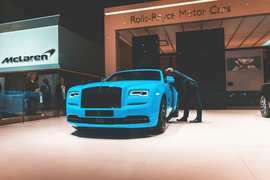
The Enduring Allure of Combustion: A Legacy Maintained
Despite the electric revolution, traditional hypercar manufacturers are fiercely defending their combustion-engined flagships. These vehicles represent the pinnacle of internal combustion engineering, often blending decades of racing heritage with cutting-edge materials science.
Bugatti, for instance, continues to command attention with its W16-powered lineage. While the Chiron era is drawing to a close, its successors, such as the Mistral roadster and the upcoming Tourbillon, represent the apotheosis of the quad-turbo V16 concept. These models, characterized by their astronomical price tags—often exceeding $5 million—and exclusivity, serve as blue-chip assets for collectors. The scarcity of these vehicles, coupled with their complex mechanical artistry, ensures their value retention in a market that increasingly prizes uniqueness.
Ferrari, the quintessential symbol of automotive passion, maintains its relevance through a strategic hybridization of its mid-engined V12 and V8 platforms. The LaFerrari, though aging by 2026 standards, remains a benchmark for hybrid hypercars. More contemporary offerings, such as the SF90-derived 849 Testarossa, demonstrate Ferrari’s ability to integrate electrification without sacrificing the visceral driving experience that defines the brand. These vehicles appeal to a demographic that values both track capability and road presence, often serving as the centerpiece of high-net-worth collections.
McLaren, a brand forged in Formula 1, continues to push the boundaries of lightweight construction and aerodynamic efficiency. The P1, a pioneer of the hybrid hypercar concept, has paved the way for newer models like the W1. These vehicles emphasize driver engagement through advanced chassis technology and minimalist interiors, appealing to purists who prioritize handling and feedback over outright straight-line speed. The U.S. market, with its demanding road conditions and track day culture, is a natural habitat for McLaren’s philosophy.
The Electric Uprising: Redefining the Hypercar Paradigm
While combustion-engined cars remain prestigious, the most significant shift in the 2026 hypercar landscape is the maturation of electric technology. American manufacturers, unburdened by decades of ICE legacy, have emerged as the vanguards of this revolution.
Rimac, the Croatian powerhouse now in partnership with Porsche, has set the benchmark for electric hypercars with the Nevera R. With over 2,000 horsepower and a 0-60 mph time under two seconds, the Nevera challenges the very definition of acceleration. Its appeal in the U.S. market is undeniable, where early adopters and tech-savvy collectors are drawn to its futuristic technology and record-breaking performance. The Nevera is not merely a car; it is a statement about the future of performance motoring, demonstrating that electric propulsion can offer an experience that is both exhilarating and refined.
Beyond Rimac, emerging American startups are leveraging additive manufacturing and software innovation to create bespoke hypercars. Czinger, with its 21C, exemplifies this trend. Featuring a tandem seating configuration and a high-revving V8 augmented by electric motors, the 21C pushes the envelope of design and engineering. Its record-breaking lap at Laguna Seca underscores the potential of American ingenuity to challenge established norms. For collectors seeking exclusivity and cutting-edge technology, brands like Czinger represent the frontier of hypercar development.
The Intersection of Heritage and Innovation: Hybrid Dominance
The most pragmatic and popular segment of the 2026 hypercar market lies at the intersection of combustion and electricity. These hybrid models offer the best of both worlds: the instant torque and efficiency of electric motors, combined with the emotional resonance and range of gasoline engines.
Lamborghini’s Revuelto stands out as a prime example of this trend. With its V12 engine augmented by three electric motors, the Revuelto delivers over 1,000 horsepower while maintaining the dramatic flair that defines the Lamborghini brand. Its success in the U.S. market is a testament to its accessibility relative to its European counterparts, offering a gateway into the world of multi-million dollar performance for those with more constrained, albeit still substantial, budgets.
Porsche’s 918 Spyder, though a few years old, continues to influence the market. Its success demonstrated that a hybrid hypercar could be both practical and thrilling. As manufacturers look to replace their halo models, the lessons learned from the 918—particularly regarding thermal management and power delivery—are proving invaluable.
Investment Dynamics and Market Valuations
The U.S. hypercar market in 2026 is characterized by robust appreciation, particularly for limited-production models. Unlike mass-market vehicles, which depreciate rapidly, certain hypercars appreciate due to rarity, provenance, and performance metrics.
Limited-run models from Bugatti, Pagani, and Koenigsegg are primary beneficiaries of this trend. These vehicles are often oversubscribed before production even begins, creating a thriving secondary market where premiums of 50% to 100% over original MSRP are not uncommon. For the savvy investor, acquiring a pre-allocation or a low-mileage example of these marques can yield significant returns, provided the owner can resist the temptation to drive the car.
Electric hypercars, while newer to the scene, are also showing strong appreciation. As battery technology evolves and charging infrastructure expands, early examples of electric hypercars like the Rimac Nevera are being viewed as historical artifacts of the transition period. Their value is tied not only to their performance but to their role in redefining the automotive landscape.
However, the market is not without risks. The rapid pace of technological change means that the most advanced electric hypercars of today may be surpassed by competitors within a few years. This rapid obsolescence cycle is a defining feature of the electric segment, making it a higher-stakes arena for investors compared to the more stable world of naturally aspirated V12s.
The Shifting Definition of a Hypercar
Perhaps the most profound trend in the 2026 U.S. market is the redefinition of what constitutes a “hypercar.” Historically, the term was reserved for vehicles with engine outputs exceeding 1,000 horsepower and top speeds north of 200 mph. Today, these metrics are increasingly commonplace, thanks to electrification.
The true differentiator in 2026 is becoming a synthesis of factors: extreme performance, bespoke craftsmanship, exclusivity, and a compelling narrative. A car that is merely fast is no longer sufficient. It must possess a unique identity, a story that resonates with collectors. This is why Pagani, with its artisanal approach and stunning aesthetics, continues to command respect even as its power figures are dwarfed by electric rivals. The Utopia, for example, is celebrated not just for its speed but for its marriage of modern engineering with classic design principles.
Furthermore, the U.S. market’s emphasis on track days and spirited driving has elevated the importance of driver engagement. Cars that feel digital and remote are increasingly being overlooked in favor of those that provide tactile feedback and a sense of connection. This trend favors marques like GMA (Gordon Murray Automotive), whose T.50 embodies the purest form of driving engagement with its manual transmission and naturally aspirated V12.
The Future Outlook: What to Watch For
Looking ahead, the U.S. hypercar market in 2026 is poised for further disruption. The rise of synthetic fuels may breathe new life into combustion engines, allowing traditional manufacturers to continue producing V12s with a cleaner conscience. This could temper the dominance of electric hypercars by offering a sustainable alternative that preserves the auditory and emotional experience of internal combustion.
Meanwhile, the U.S. government’s push for electrification will undoubtedly accelerate the development of battery technology. This will likely lead to lighter, more powerful electric hypercars that can challenge the weight penalties that currently plague the segment. As battery costs decrease, we may even see the emergence of a more accessible “super-hypercar” category, bridging the gap between high-end sports cars and ultra-exclusive hypercars.
For collectors and enthusiasts, the key to navigating this market is to balance passion with prudence. While the temptation to acquire the latest and fastest machine is strong, the most successful investments are often in vehicles that possess a unique character and a timeless design. The cars that will be remembered in 2036 are not necessarily the ones with the highest horsepower, but those that told the most compelling story.

In conclusion, the U.S. hypercar market in 202