
The Definitive Ranking of the World’s Most Exclusive Hypercars: A Deep Dive into Automotive Engineering Excellence
In the rarefied atmosphere of high-performance motoring, the term “hypercar” denotes a vehicle that transcends the already impressive capabilities of a supercar. These automotive marvels represent the zenith of engineering prowess, aerodynamic sophistication, and material science. For the discerning collector and the passionate enthusiast, the allure of these machines lies not only in their blistering performance metrics but also in their exclusivity and the sheer audacity of their design. This comprehensive exploration delves into the pantheon of the world’s most coveted hypercars, dissecting the innovations that set them apart and the legacy they are forging in the annals of automotive history.
The Evolution of the Hypercar Concept
The genesis of the hypercar can be traced back to the mid-20th century, with early pioneers like Ferrari and Lamborghini pushing the boundaries of what was considered possible on four wheels. However, the modern definition of a hypercar truly crystallized with the advent of the McLaren F1 in the 1990s. Gordon Murray’s masterpiece redefined the performance envelope, demonstrating that a road-legal car could achieve speeds previously reserved for race cars. This benchmark paved the way for a new breed of manufacturers who sought to eclipse these achievements, leading to the current landscape where manufacturers vie for the title of the fastest, most powerful, and most technologically advanced.

The defining characteristic of a contemporary hypercar is its hybrid powertrain. Recognizing the limitations of the internal combustion engine in meeting increasingly stringent emissions regulations, manufacturers have embraced electrification. This synergy of gasoline power and electric propulsion allows for unprecedented torque delivery and efficiency, enabling these behemoths to achieve performance figures that were once the exclusive domain of jet aircraft.
A Deep Dive into the Elite: Top Hypercars on the Market
Aston Martin Valkyrie: The Fusion of Race Technology and Road Luxury
The Aston Martin Valkyrie stands as a testament to the power of collaboration. Conceived through a partnership between Aston Martin and Red Bull Racing, the Valkyrie is, in essence, a Formula 1 car for the road. Its design, helmed by Adrian Newey, the aerodynamicist behind Red Bull’s championship-winning F1 cars, is a masterclass in downforce generation. The car’s silhouette is dictated by the need to manage airflow, with a massive central vent in the underbody that channels air to create a low-pressure zone, effectively sucking the car to the road.
Under the sculpted carbon fiber bodywork lies a Cosworth-developed naturally aspirated V12 engine, augmented by a Rimac-designed Kinetic Energy Recovery System (KERS). This KERS unit, borrowed directly from Formula 1 technology, provides a substantial electric boost, resulting in a combined output exceeding 1,100 horsepower. The driving experience is further enhanced by its featherlight construction, with extensive use of carbon fiber composite materials keeping the weight in check. The result is a car that offers the visceral feedback of a race car while retaining the creature comforts expected of a luxury marque.
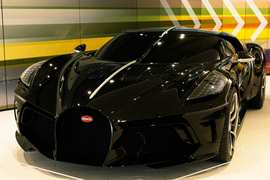
Bugatti Chiron: The Apex of Automotive Excess
Bugatti, a name synonymous with speed and luxury, continues to redefine the upper echelons of the automotive world with the Chiron. Building upon the legacy of the Veyron, the Chiron takes performance to an unprecedented level. At its heart is an enlarged 8.0-liter quad-turbocharged W16 engine, a mechanical marvel that produces a staggering 1,500 horsepower. This immense power is channeled through an advanced all-wheel-drive system, allowing the Chiron to accelerate from 0 to 60 mph in under 2.4 seconds.
The Chiron is not merely a straight-line speed demon; its chassis has been engineered to provide surprising agility for a car of its size and power. Adaptive suspension systems and torque vectoring ensure that the car remains composed through corners, while the luxurious interior cocoons occupants in a world of bespoke leather and polished metal. The design strikes a balance between aggressive aerodynamics and elegant styling, with the iconic C-line motif adorning the side profile, a nod to the Bugatti Atlantic of the 1930s.
Ferrari LaFerrari: The Epitome of Italian Passion
LaFerrari, meaning “The Ferrari,” is the quintessential expression of the brand’s engineering philosophy. This limited-production hybrid hypercar represents a seamless integration of performance and sustainability. The powertrain combines a high-revving 6.3-liter V12 engine with a KERS-style electric motor, producing a combined output of over 950 horsepower. This setup allows for instantaneous torque delivery, catapulting the car from a standstill to 60 mph in just under 3 seconds.
The design of the LaFerrari is a testament to the artistry of Ferrari’s Centro Stile. Aerodynamics play a crucial role, with active aero elements that adjust in real-time to optimize downforce and drag. The cockpit is driver-focused, with a fighter-jet inspired layout that places all essential controls within easy reach. As a symbol of Ferrari’s commitment to innovation, the LaFerrari has set a benchmark for hybrid performance in the hypercar segment.
McLaren P1: The Dawn of the Hybrid Hypercar Era

The McLaren P1 holds a significant place in automotive history as one of the first production cars to showcase the potential of hybrid technology in a high-performance application. Launched alongside the LaFerrari and Porsche 918 Spyder, the P1 spearheaded the “Pinnacle Project” that revitalized the hybrid hypercar segment. Its powertrain combines a twin-turbocharged V8 engine with an electric motor, producing a combined output of 903 horsepower.
What sets the P1 apart is its Active Aero system, which features a deployable rear wing and adaptive underbody flaps that adjust to optimize downforce and braking performance. This system, developed with input from McLaren’s Formula 1 engineers, allows the P1 to generate up to 600 kg of downforce at speed, enabling incredible cornering capabilities. The car’s lightweight construction, with a carbon fiber Monocage chassis, further enhances its agility and responsiveness. The P1 is a testament to McLaren’s engineering prowess and its ability to translate Formula 1 technology into a road-legal vehicle.
Porsche 918 Spyder: The Benchmark for Hybrid Performance
The Porsche 918 Spyder represents a significant milestone in the evolution of the hybrid hypercar. This mid-engine marvel combines a naturally aspirated V8 engine with two electric motors, one on each axle, to deliver a combined output of 887 horsepower. The strategic placement of the electric motors allows for advanced torque vectoring, providing exceptional handling and stability through corners.
The 918 Spyder offers a range of driving modes that allow drivers to tailor the car’s performance to their preference, from an efficient hybrid mode to a full-throttle “hot lap” mode that unleashes the car’s maximum performance. The interior is a blend of luxury and functionality, with high-quality materials and a driver-focused cockpit. The 918 Spyder’s success demonstrated that hybrid technology could enhance, rather than detract from, the driving experience, setting a new benchmark for performance and efficiency in the hypercar segment.
Pagani Huayra: The Art of Automotive Craftsmanship
The Pagani Huayra is a testament to the vision of its founder, Horacio Pagani, who believes that a car should be a work of art as much as a mode of transportation. Each Huayra is meticulously handcrafted, with an obsessive attention to detail that sets it apart from its competitors. The car’s exterior is a stunning display of carbon fiber artistry, with flowing lines and aerodynamic elements that are both beautiful and functional.
Under the hood lies a Mercedes-AMG-sourced twin-turbocharged V12 engine, producing around 700 horsepower. This power is delivered through a bespoke seven-speed sequential transmission, engineered by Pagani to provide a seamless and engaging driving experience. The interior is a luxurious oasis, with handcrafted leather and polished metal accents creating an atmosphere of opulence. The Huayra is a celebration of Italian craftsmanship and a testament to the idea that automotive excellence can be achieved through a harmonious blend of art and engineering.
Koenigsegg Regera: The Swedish Engineering Marvel
Koenigsegg, the Swedish manufacturer renowned for its innovative approach to hypercar design, continues to push the boundaries with the Regera. The name “Regera” translates to “to reign,” a fitting moniker for a car that redefines performance expectations. The Regera eschews a traditional gearbox in favor of a Koenigsegg Direct Drive (KDD) system, which uses a hydraulic coupling to deliver power directly to the wheels. This innovative setup allows for seamless acceleration and a unique driving experience.
The Regera is powered by a twin-turbocharged V8 engine augmented by three electric motors, producing a combined output of over 1,500 horsepower. This immense power is delivered through the KDD system, allowing for instant torque and breathtaking acceleration. The car’s interior is a blend of luxury and functionality, with advanced technology and premium materials. The Regera is a testament to Koenigsegg’s engineering prowess and its commitment to innovation.
McLaren Senna: The Track-Focused Hypercar
Named in honor of the legendary Formula 1 driver Ayrton Senna, the McLaren Senna is a hypercar designed with one purpose in mind: to be the fastest car on the track. Every aspect of the car’s design and engineering has been optimized for performance, with aerodynamics playing a crucial role. The Senna features an aggressive aerodynamic package, including a massive rear wing and active diffuser, that generates up to 800 kg of downforce, allowing