
The Evolution of Hypercars: From Concept to 1,100+ HP Street Legends
In the rarefied atmosphere of automotive excellence, a distinct category of vehicle exists that pushes the boundaries of engineering, design, and performance beyond the already stratospheric realm of supercars. These are the hypercars, machines born not merely of utility, but of audacious vision and the relentless pursuit of the impossible. For the dedicated enthusiast, the connoisseur of speed, and the student of automotive innovation, understanding the evolution of the hypercar offers a fascinating glimpse into the apex of human ingenuity. This exploration delves into the very essence of what defines a hypercar, traces its lineage from theoretical concepts to production realities, and examines the technological marvels that deliver outputs exceeding 1,000 horsepower.

Defining the Hypercar: A Distinction from the Supercar
To truly appreciate the hypercar, one must first understand its relationship to the supercar. The supercar, itself a potent symbol of automotive prowess, typically represents the pinnacle of a given manufacturer’s road-going performance capabilities. Characterized by exotic materials like carbon fiber, mid-engine layouts, and race-derived aerodynamics, supercars deliver performance that overwhelms the senses. Yet, even within this elite group, a hierarchy exists.
The hypercar emerges when these characteristics are amplified to their most extreme, often transcending conventional engineering wisdom. While a supercar might boast 600 or 700 horsepower, a hypercar routinely exceeds 1,000 horsepower, often through the integration of hybrid or electric propulsion systems. This leap in power is frequently accompanied by a corresponding increase in price, exclusivity, and technological sophistication. Perhaps the most defining characteristic of a true hypercar, however, is its role as a technological crucible. Manufacturers utilize these limited-production vehicles to test and refine innovations—such as advanced aerodynamics, lightweight composites, and hybrid energy recovery systems—that may eventually trickle down to more accessible models. In essence, the hypercar is where the bleeding edge of automotive science becomes reality.
The Genesis of the Hypercar: Conceptual Origins
The concept of a vehicle that shatters existing performance paradigms did not materialize overnight. Its roots lie in the mid-20th century, a period marked by rapid advancements in aerospace technology and materials science that began to influence automotive design. While the term “hypercar” itself is a relatively recent coinage, the spirit of the hypercar—the drive to create something faster, lighter, and more technologically advanced than anything preceding it—can be traced to several pivotal moments in automotive history.
One of the earliest precursors to the modern hypercar was the Mercedes-Benz 300 SLR Uhlenhaut Coupé, developed in the mid-1950s. Though primarily a race car, its engineering principles—including a lightweight tubular frame, advanced aerodynamics, and a powerful inline-eight engine—laid the conceptual groundwork for future road-legal performance machines. However, the true genesis of the modern hypercar can be pinpointed to the late 1980s and early 1990s, a period that witnessed the emergence of vehicles that fundamentally redefined what was thought possible on public roads.
The McLaren F1, introduced in 1992, is widely regarded as the first true hypercar. Designed by the legendary Gordon Murray, the F1 was a technical tour de force. It featured a monocoque chassis crafted entirely from carbon fiber, a revolutionary material for road cars at the time. Its powertrain, a bespoke V12 engine developed by BMW, produced 618 horsepower, making it the most powerful naturally aspirated engine ever fitted to a production car. With a top speed exceeding 240 mph, the F1 shattered existing records and established a new benchmark for performance. More importantly, the F1 demonstrated that race-winning technology could be translated into a road-legal vehicle without compromising usability, a philosophy that continues to define the hypercar segment.
Parallel to the F1’s development, other manufacturers were exploring similar concepts. The Jaguar XJ220, though ultimately hampered by production delays and revised performance expectations, represented a significant engineering effort to push the boundaries of speed and technology. These early pioneers proved that the market, albeit a niche one, existed for vehicles that transcended the traditional definition of a supercar.
The Hybrid Revolution: A New Paradigm in Hypercar Performance
For much of the late 1990s and early 2000s, the hypercar landscape was dominated by naturally aspirated and turbocharged internal combustion engines. However, the turn of the millennium marked the beginning of a technological shift that would fundamentally reshape the segment: the integration of hybrid powertrains. This evolution was driven by two converging forces: the desire to extract even greater performance levels and the growing imperative for improved fuel efficiency and reduced emissions.
The transition to hybrid technology in hypercars was not merely an exercise in optimization; it represented a radical rethinking of the powertrain architecture. Engineers realized that electric motors could provide instantaneous torque and supplemental power in a way that traditional engines could not, enabling performance levels previously unattainable.
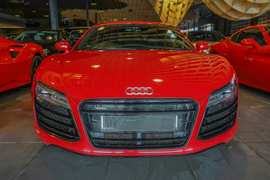
One of the first production vehicles to successfully integrate hybrid technology into a hypercar formula was the Ferrari LaFerrari, introduced in 2013. This groundbreaking vehicle combined a high-revving V12 engine with an electric motor and a sophisticated energy recovery system (ERS), drawing inspiration from Ferrari’s Formula 1 programs. The result was a combined output of 950 horsepower, delivered with a seamless blend of electric immediacy and combustion-engine power. The LaFerrari demonstrated that hybridization could enhance performance rather than compromise it, setting a new standard for the segment.
The Bugatti Veyron, while not a hybrid, played a crucial role in pushing the performance envelope in the mid-2000s. Its quad-turbocharged W16 engine produced 1,001 horsepower, making it the first production car to officially break the 1,000-horsepower barrier. The Veyron’s engineering challenges—including managing extreme heat and maintaining stability at speeds exceeding 250 mph—pushed the boundaries of automotive engineering and inspired a new generation of hypercar manufacturers to pursue similar levels of performance.
The Aston Martin Valkyrie, unveiled in 2017, represented another significant milestone in the evolution of the hypercar. Developed in collaboration with Adrian Newey, the legendary Formula 1 aerodynamicist, the Valkyrie was designed to deliver Formula 1-level performance on the road. Its naturally aspirated V12 engine, developed by Cosworth, produced 1,160 horsepower, achieving a remarkable 1:1 power-to-weight ratio. The Valkyrie’s extreme aerodynamic design, with its complex underbody aerodynamics and active aero elements, demonstrated the critical role that airflow management plays in achieving hypercar performance.
Technological Apex: The 1,100+ Horsepower Threshold
The pursuit of ever-increasing performance levels has led to a new benchmark in the hypercar segment: the 1,100 horsepower threshold. Several recent entrants have surpassed this figure, showcasing the latest advancements in powertrain technology and materials science. These vehicles represent the current apex of automotive engineering, combining raw power with sophisticated control systems to deliver an unparalleled driving experience.
The Koenigsegg Jesko, introduced in 2019, is a prime example of this pursuit. Developed by Swedish manufacturer Koenigsegg, the Jesko features a 5.0-liter twin-turbocharged V8 engine that can produce up to 1,600 horsepower on E85 biofuel. What sets the Jesko apart is its innovative transmission system, a multi-clutch unit that allows for lightning-fast gear changes and eliminates the need for traditional torque converters. This engineering marvel, combined with the car’s advanced aerodynamics and lightweight construction, enables the Jesko to achieve theoretical top speeds exceeding 300 mph.
Another contender in this elite category is the Rimac Nevera, an all-electric hypercar from Croatian manufacturer Rimac Automobili. The Nevera dispels any notion that electric vehicles cannot compete at the highest level of performance. It features four independent electric motors, one for each wheel, providing precise torque vectoring and all-wheel-drive control. With a combined output of 1,914 horsepower and 2,360 Nm of torque, the Nevera can accelerate from 0 to 60 mph in just 1.85 seconds, making it one of the fastest-accelerating production vehicles ever created. The Nevera’s achievement underscores the growing realization that electric propulsion offers unique advantages for hypercar performance, particularly in terms of instant torque delivery and precise control.
The Mercedes-AMG ONE represents another triumph of hybrid hypercar technology. This street-legal interpretation of a Formula 1 car combines a 1.6-liter turbocharged V6 engine with four electric motors, delivering a combined output of over 1,000 horsepower. The ONE’s powertrain is a testament to the synergy between Formula 1 and road car technology, showcasing how hybrid systems can be optimized for both performance and efficiency.
The Role of Carbon Fiber in Hypercar Construction
Underpinning the performance capabilities of every modern hypercar is the ubiquitous presence of carbon fiber. This advanced composite material has revolutionized automotive design and engineering, enabling manufacturers to achieve levels of lightweight construction previously thought impossible.
Carbon fiber’s primary advantage lies in its exceptional strength-to-weight ratio. It is significantly lighter than steel yet possesses superior tensile strength, allowing engineers to design structures that are both incredibly rigid and remarkably light. This characteristic is critical for hypercars, where minimizing weight is paramount to maximizing performance. Every kilogram saved translates directly to improved acceleration, braking, and handling.
The manufacturing of carbon fiber components for hypercars is a complex and labor-intensive process. Typically, sheets of carbon fiber fabric are impregnated