
The Quest for Automotive Perfection: Ranking the World’s Top 10 Hypercars
In the hallowed halls of automotive engineering, where the pursuit of speed intersects with the zenith of luxury, the hypercar reigns supreme. These aren’t mere vehicles; they are rolling masterpieces, symphonies of carbon fiber and cutting-edge technology that push the boundaries of what was once thought possible. For the discerning collector or the ardent enthusiast, the question isn’t just “which car is fastest?” but rather, “which machine represents the pinnacle of human ingenuity?”
For over a decade, I’ve navigated the dynamic landscape of the automotive industry, witnessing firsthand the evolution of the supercar into the hypercar. My journey has taken me from the hushed, exclusive garages of Monaco to the roaring test tracks of the Nürburgring, gathering insights that go beyond glossy brochures. It’s a world where million-dollar price tags are secondary to engineering prowess, and where the line between road car and race car blurs into near invisibility.
This year, the competition has never been fiercer. As manufacturers vie for the title of ‘the best,’ we’ve seen a surge in hybrid technology, electric hyper-sedans, and raw, track-focused machines that demand respect and skill. Gone are the days when a V12 engine alone guaranteed a spot on this list. Today, electrification, aerodynamics, and connectivity are the new arbiters of greatness.
Join me as we dissect the contenders, evaluate the specifications, and crown the definitive Top 10 Hypercars in the World for 2025. This isn’t just a list; it’s a roadmap to automotive nirvana.

The Valkyrie Ascendant: Aston Martin’s Featherweight Champion
When Aston Martin unveiled the Valkyrie, it wasn’t just a new car; it was a statement of intent. Developed in collaboration with Adrian Newey, the engineering mastermind behind Red Bull Racing’s Formula 1 dominance, the Valkyrie represents a radical departure from traditional automotive design. Its name, derived from Norse mythology, hints at its otherworldly capabilities, and stepping into the cockpit feels less like entering a car and more like donning a spacesuit.
The core philosophy behind the Valkyrie is simplicity itself: maximize power, minimize weight. The result is a car that weighs just 1,030 kg (2,270 lbs)—less than a typical family hatchback—yet produces a staggering 1,160 horsepower. This is achieved through a revolutionary Cosworth-developed 6.5-litre naturally aspirated V12 engine, capable of revving to an ear-splitting 11,100 rpm. This engine isn’t just a power source; it’s a mechanical marvel, integrated into the chassis as a stressed member to enhance rigidity.
But the Valkyrie’s true genius lies in its aerodynamics. The bodywork is a testament to the principle of “form follows function.” The underbody features a massive Venturi tunnel that sucks the car to the road, generating downforce equal to its own weight at speed. The cockpit is an exercise in minimalism, with Alcantara-wrapped carbon fiber seats molded directly to the driver’s form.
For the collector seeking the ultimate driving experience, the Valkyrie offers a visceral connection to the road that is increasingly rare in the age of digital assistance. It demands skill, rewards precision, and punishes mistakes with unforgiving finality. This raw, untamed nature is precisely why it sits atop our list.
The Bugatti Chiron Super Sport 300+: The Speed Demon Refined
Bugatti holds a unique position in the hypercar hierarchy. While other manufacturers chase lap times, Bugatti chases the horizon. The Chiron Super Sport 300+ is the ultimate expression of this philosophy—a car engineered to shatter the 300-mile-per-hour barrier, which it famously did in 2019.
What makes the Chiron Super Sport 300+ stand out isn’t just its monumental 1,600-horsepower quad-turbocharged W16 engine. It’s the meticulous engineering required to make such power usable. The car’s bodywork has been stretched and sculpted into a long-tail configuration, reducing aerodynamic drag by a critical 40%. The front fascia is redesigned with larger air intakes, and the wheels are crafted from magnesium alloys to reduce unsprung mass.
Inside, the cabin is a blend of Bugatti’s signature opulence and track-ready functionality. The iconic ‘EB’ logo is rendered in orange carbon fiber, a nod to the limited-edition nature of this 30-unit production run. While the standard Chiron is a grand tourer, the Super Sport 300+ is a dedicated speed machine, electronically limited to a still-mind-bending 273 mph (440 km/h) in road-legal guise, but capable of far more for those fortunate enough to have access to a private runway.
For the collector, the Chiron represents the ultimate statement of mechanical excess and engineering refinement. It is a reminder that sometimes, more truly is more.
The Ferrari LaFerrari Aperta: The Hybrid Masterpiece Unveiled
When Ferrari unveiled the LaFerrari, it was a watershed moment for the brand. It represented the first time the Prancing Horse had used hybrid technology in a production road car, proving that electrification could enhance, rather than compromise, the driving experience. The Aperta version, with its removable carbon fiber roof, adds a layer of open-air exhilaration to an already legendary machine.
At the heart of the LaFerrari Aperta lies a 6.3-litre naturally aspirated V12 engine, producing 789 horsepower. This is augmented by a KERS (Kinetic Energy Recovery System), similar to that used in Ferrari’s Formula 1 cars, which provides an additional 160 horsepower on demand. The combined output of 950 horsepower is delivered through a lightning-fast seven-speed dual-clutch transmission that performs shifts in a mere 150 milliseconds.
But the LaFerrari’s true genius is in its chassis. Monocoque construction, derived from Formula 1 technology, ensures exceptional torsional rigidity while keeping weight to a minimum. The aerodynamic package is active, with diffusers and spoilers that adjust in real-time to optimize downforce and cooling.

For the collector, the LaFerrari Aperta represents the perfect marriage of Ferrari’s storied V12 heritage and its forward-thinking hybrid future. It is a testament to the brand’s ability to innovate without sacrificing its soul.
The McLaren P1: The Technological Trailblazer
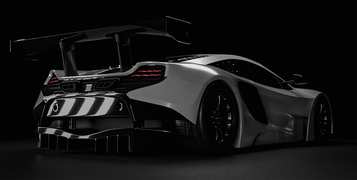
Before the Valkyrie and the LaFerrari, there was the McLaren P1. When it was launched in 2013, it redefined what a road car could be. The P1 was not just about raw power; it was about the integration of aerodynamics, energy recovery, and driver engagement in a package that was both brutal and beautiful.
The P1’s powertrain is a masterpiece of engineering. A 3.8-litre twin-turbocharged V8 engine is paired with an electric motor, producing a combined output of 903 horsepower. This allows the P1 to accelerate from 0 to 60 mph in a blistering 2.8 seconds and reach a top speed of 217 mph (electronically limited).
What truly sets the P1 apart, however, is its Race Mode. With the push of a button, the car transforms. The suspension lowers, the DRS (Drag Reduction System) activates, and the powertrain delivers maximum power. It is a visceral, exhilarating experience that makes the driver feel like a Formula 1 driver.
For the collector, the P1 represents a significant moment in automotive history. It was the car that ushered in the era of the hybrid hypercar and set the template for the machines that followed.
The Lamborghini Aventador SVJ: The Wild Child Unleashed
Lamborghini has always marched to the beat of its own drum, and the Aventador SVJ is perhaps the most audacious expression of this philosophy yet. SVJ stands for “Super Veloce Jota,” a nod to the legendary Miura SVJ and the 1970s Miura Jota project, both of which were lightweight, track-focused versions of their respective models.
The SVJ takes the already formidable Aventador and injects it with a potent dose of track DNA. The naturally aspirated 6.5-litre V12 engine produces a staggering 759 horsepower, revving to a glorious 8,500 rpm. But the real magic lies in the ALA (Aerodinamica Lamborghini Attiva) system, Lamborghini’s active aerodynamics technology.
ALA uses electronically controlled flaps in the front splitter and rear wing to optimize downforce and reduce drag. In corners, the flaps close to maximize downforce, while on straights, they open to reduce drag. This intelligent system allows the SVJ to generate 40% more downforce than the standard Aventador, making it one of the most agile and dynamic cars on the planet.
For the collector who craves drama and excitement, the Aventador SVJ is an irresistible proposition. It is a car that demands attention and rewards the driver with an unforgettable experience.
The Porsche 918 Spyder: The Hybrid Benchmark
When Porsche entered the hybrid hypercar fray, it did so with a clear vision: to create the ultimate driver’s car. The 918 Spyder is the realization of that vision—a car that seamlessly blends the raw emotion of a naturally aspirated V8 with the efficiency and torque of electric motors.
At the heart of the