
The Ultimate Guide to the Most Expensive Cars Ever Sold: A Deep Dive into Automotive Exclusivity
The allure of a car extends far beyond mere transportation. For a select few, the automobile represents the pinnacle of engineering, the ultimate status symbol, and a tangible piece of history. While most of us consider a well-maintained daily driver a significant investment, the world of ultra-high-end automotive collecting operates on a completely different plane. We’re talking about prices that dwarf the GDP of small nations, cars that transcend the definition of “vehicle” and become legendary artifacts.

At first glance, the concept of spending millions on a car seems almost absurd. Why would someone part with the equivalent of a luxury estate or a private jet for a machine that, fundamentally, serves the same purpose as a standard sedan? The answer lies in a complex tapestry of factors: scarcity, provenance, design genius, and the sheer emotional pull of the world’s most iconic marques.
This deep dive explores the titans of the collector car market. We’re not just listing prices; we’re examining the stories, the engineering marvels, and the cultural impact that have cemented these vehicles in the annals of automotive history. From the roaring twenties to the digital age, these are the cars that have redefined the very notion of automotive value.
Understanding the Market: Rarity, Provenance, and the Psychology of the Ultra-Rich
Before we unveil the record-breaking machines, it’s crucial to understand the mechanics of this exclusive market. Unlike the standard automotive industry, where value is primarily determined by depreciation, the collector car market operates on the principles of supply and demand, heavily influenced by history and prestige.
Scarcity is the bedrock of value. When a manufacturer produces a limited run of vehicles—say, fewer than 50 units—the pool of potential owners is inherently restricted. However, true rarity goes beyond simple production numbers. A car that was hand-built, features unique coachwork, or was created as a homologation special for racing holds a distinct advantage. Consider the Duesenberg SSJ; only two were ever made, making it an object of extreme scarcity.
Provenance, often referred to as the car’s \”biography,\” is equally critical. Who owned the car? Did a Formula 1 legend drive it? Did it win a prestigious race? Was it featured in a significant film? The answers to these questions can add millions to a car’s valuation. A Ferrari 250 GTO with a documented racing history is worth exponentially more than one without. This is why historical documentation, such as period photographs, race records, and original logbooks, are meticulously preserved and valued.
Finally, there’s the psychological element. For the ultra-high-net-worth individual (UHNWI), a car is often more than a possession; it’s a statement. In a world where wealth is often understated, a multi-million-dollar car serves as an overt display of success and taste. Furthermore, these cars are often viewed as tangible assets in an increasingly digital economy. Unlike stocks or bonds, a classic car can be appreciated visually and enjoyed physically, offering a dual benefit of aesthetic pleasure and potential financial return. This intersection of passion and investment defines the ultra-luxury collector market.
The 1955 Mercedes-Benz 300 SLR Uhlenhaut Coupé: The £100 Million Benchmark
When discussing the most expensive cars ever sold, one vehicle stands head and shoulders above the rest, setting a benchmark that may never be surpassed. This is not merely a car; it is a legend, a piece of engineering poetry, and arguably the most valuable automobile on the planet.
In 2022, the automotive world was stunned when a 1955 Mercedes-Benz 300 SLR Uhlenhaut Coupé sold for a staggering €135 million (approximately $142 million at the time). This transaction didn’t just break the world record for the most expensive car ever sold; it shattered it by a margin so vast it felt almost surreal. To put this into perspective, the previous record holder, a 1962 Ferrari 250 GTO, had sold for around $48 million a few years prior. This Mercedes-Benz was worth nearly three times that amount.
The story behind this particular vehicle is as captivating as its price tag. Only two Uhlenhaut Coupés were ever built by Mercedes-Benz, named after their creator, Rudolf Uhlenhaut, the brilliant engineer who led the company’s racing division. These were road-legal versions of the dominant W196 R Grand Prix car, which had carried Juan Manuel Fangio to two Formula 1 world championships. However, the Uhlenhaut Coupés were even more specialized, featuring a closed cockpit (hence \”Coupé\”) and enhanced performance specifications.
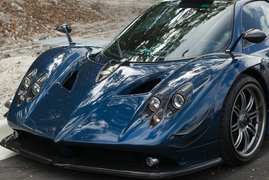
What makes this car so extraordinary? First, its rarity. With only two examples in existence, the chances of another appearing on the market are virtually zero. Second, its provenance. These cars were kept by Mercedes-Benz for decades, serving as high-speed test mules and personal vehicles for Uhlenhaut himself. The car that sold was reportedly his personal transport, often driven at blistering speeds on the Autobahn after race weekends. This direct connection to its creator imbues it with an almost mythical status.
The design of the 300 SLR Uhlenhaut Coupé is a masterclass in functional beauty. Its long, flowing lines and iconic gull-wing doors are instantly recognizable. Under the hood lies a potent 3.0-liter straight-eight engine, capable of propelling the car to speeds exceeding 180 mph—astonishing for the mid-1950s. This blend of breathtaking performance and exquisite design makes it the ultimate expression of automotive engineering from the golden era of motorsport.
The sale itself was a clandestine affair, conducted by RM Sotheby’s at the Mercedes-Benz Museum in Stuttgart. In a move that surprised many, Mercedes-Benz decided to sell one of their most prized possessions to raise funds for a global scholarship program. The buyer, an anonymous private collector, outbid a select group of other invitees. The fact that the manufacturer chose to sell such a significant piece of its heritage underscores the car’s unparalleled value.
While the price tag may seem astronomical, for the world’s most discerning collectors, the 300 SLR Uhlenhaut Coupé represents the Holy Grail. It combines the prestige of Mercedes-Benz, the engineering genius of its namesake, the rarity of a one-of-two production, and the romance of the 1950s racing scene. It is more than just a car; it is a rolling masterpiece, a symbol of automotive perfection, and the undisputed king of the collector car world.
The Ferrari 250 GTO: The Eternal Icon
If the 300 SLR Uhlenhaut Coupé is the reigning monarch of the collector car world, the Ferrari 250 GTO is the timeless icon, the archetype of the perfect sports racing car. For decades, this legendary Italian machine held the title of the most expensive car ever sold, and even with the Uhlenhaut Coupé’s record-breaking sale, the 250 GTO remains the benchmark against which all other collector cars are measured.
The story of the 250 GTO is a testament to Ferrari’s ingenuity and racing prowess. Built between 1962 and 1964, the 250 GTO was created to dominate the FIA’s Group 3 Grand Touring Car category. To qualify for racing, Ferrari needed to produce at least 100 examples. However, the car’s complexity and exclusivity meant that only 36 were ever built (33 Series I and 3 Series II). This extreme rarity, combined with its stunning aesthetics and race-winning pedigree, has made it the most coveted car in the world.
The design of the 250 GTO is simply breathtaking. Developed by Giotto Bizzarrini, the 250 GTO features a long, aggressive hood, a compact cockpit, and a Kamm tail that was aerodynamically advanced for its time. Underneath that sculpted bodywork lies the legendary Colombo V12 engine, a 3.0-liter masterpiece that produces around 300 horsepower. This power plant, combined with a lightweight chassis and superb handling, made the 250 GTO virtually unbeatable on the track.
The \”GTO\” in its name stands for Gran Turismo Omologato, signifying its status as a homologated grand touring car. And homologate it did. The 250 GTO became one of the most successful racing cars of the 1960s, winning the GT class in the 24 Hours of Le Mans three years in a row (1962, 1963, and 1964). It also secured the FIA’s International Championship for GT Manufacturers title in 1962, 1963, and 1964. This unparalleled racing success cemented its legendary status.
Beyond its performance, the 250 GTO possesses a mystique that few other cars can match. Each chassis has its own unique story, often involving dramatic races, near-disasters, and long periods of hibernation in private collections. Some have been crashed and painstakingly rebuilt, while others have been hidden away for decades, only to re-emerge as barn finds of legendary proportions. This air of mystery and adventure only enhances its allure.

The market value of the 250 GTO has skyrocketed over the years. In 2013, a Series I example sold for $52 million, setting a new world record at the time. In 20