
The 10 Most Expensive Cars in the World in 2025: Extreme Engineering, Unprecedented Prices, and What They Reveal About the Apex of Automotive Luxury
The world of hypercars is a realm where engineering prowess collides with astronomical wealth, creating machines that transcend mere transportation to become rolling statements of power, exclusivity, and artistic expression. For the ultra-elite, a car is not just a means to get from point A to point B; it is a trophy, a work of art, and a testament to their success. In 2025, the landscape of the most expensive cars in the world continues to evolve, with new benchmarks being set in performance, luxury, and, most notably, price. This year, we are witnessing the culmination of decades of automotive innovation, where electric powertrains are challenging the dominance of internal combustion, and bespoke customization allows for levels of personalization previously unimaginable.
The concept of a “supercar” has been redefined by these automotive marvels. They represent the absolute pinnacle of automotive engineering, pushing the boundaries of what is technically possible on four wheels. These vehicles are often produced in extremely limited quantities, sometimes as one-off commissions, ensuring their exclusivity and rarity. The price tags attached to these machines—often reaching tens of millions of dollars—reflect not only the cutting-edge technology and rare materials used but also the intangible value of owning a piece of automotive history. As we delve into the top 10 most expensive cars in the world for 2025, we explore the stories behind these mechanical masterpieces, the engineering feats that make them possible, and the cultural impact they have on the automotive landscape.
While the original hypercars of the 20th century, such as the legendary Ferrari 250 GTO, commanded record-breaking prices at auction, the 2025 list is dominated by modern creations that have pushed the envelope of performance and design. These vehicles are more than just fast cars; they are rolling sculptures that blend artistry with aerospace-grade engineering. The competition at the top is fierce, with established automotive giants and innovative newcomers vying for the attention of the world’s most discerning collectors. This year’s list showcases a diverse range of automotive philosophies, from the brutal, track-focused machines to the elegant, Grand Touring behemoths, all united by their extraordinary price tags and unparalleled performance capabilities.
Understanding the factors that drive these astronomical prices is key to appreciating the significance of these vehicles. It is a complex interplay of engineering excellence, material science, brand heritage, and exclusivity. A car that costs millions of dollars often incorporates materials that are rare or difficult to work with, such as carbon fiber, titanium, and exotic woods. The manufacturing process itself can take thousands of hours, involving the meticulous hand-crafting of individual components. Furthermore, the brand prestige associated with these marques plays a crucial role. A Ferrari, a Bugatti, or a Koenigsegg carries a legacy of performance and luxury that has been cultivated over decades, and owning one is a statement of status and taste.
The most expensive cars in the world are also at the forefront of technological innovation. Many of these vehicles serve as testbeds for new technologies that will eventually trickle down to more mainstream models. This includes advancements in aerodynamics, lightweight construction, and powertrain technology. In 2025, we are seeing the rise of electric hypercars that challenge the traditional notion that extreme performance requires a large internal combustion engine. These electric marvels offer instant torque and blistering acceleration, often surpassing their gasoline-powered counterparts. The integration of artificial intelligence and advanced driver-assistance systems is also becoming more prevalent, blurring the lines between driver and machine.
For automotive enthusiasts and industry professionals alike, the most expensive cars in the world represent the aspirational peak of the industry. They serve as benchmarks for what is possible and inspire the next generation of automotive designers and engineers. While few will ever have the opportunity to drive or own these multimillion-dollar machines, their existence pushes the entire automotive industry forward, driving innovation and raising the bar for performance and luxury across the board. As we explore the top 10 most expensive cars in the world for 2025, we invite you to marvel at the ingenuity, the artistry, and the sheer audacity of these automotive masterpieces.
Zenvo ST1: The Unchained Animal from Denmark ($1.2M)
Kicking off our list is a vehicle that embodies the spirit of raw, untamed automotive power. The Zenvo ST1, hailing from Zealand, Denmark, is less of a car and more of a force of nature. Assembled by hand in a small facility, the ST1 represents the culmination of Danish engineering ingenuity and a passion for pushing the boundaries of performance. Its creator, Christian von Koenigsegg’s former mentor, sought to create a car that would challenge the established hypercar hierarchy, and in the ST1, he succeeded masterfully.

The heart of the Zenvo ST1 is its monstrous 6.8-liter V8 engine, a powerplant that defies conventional automotive design. What makes this engine truly extraordinary is its unique forced induction system. It combines the instant response of a supercharger with the high-RPM power delivery of a turbocharger, creating a powerband that is both brutal and beautifully linear. The result is an absolutely obscene amount of horsepower—a staggering 1,104 hp—and a colossal 1,054 pound-feet of torque. This power is not just for show; it is channeled to the car’s rear wheels through a sophisticated traction control system, ensuring that this raw power can be harnessed effectively on the road or the track.
The Zenvo ST1’s design is as aggressive as its performance. With its sweeping lines, NACA ducts, and imposing rear wing, the car commands attention wherever it goes. The interior is a blend of luxury and sportiness, featuring high-quality leather, carbon fiber accents, and a driver-focused cockpit that puts the driver at the center of the experience. The car is also equipped with a range of advanced features, including a digital instrument cluster, a premium sound system, and a navigation system, ensuring that the driving experience is as comfortable as it is exhilarating.
The exclusivity of the Zenvo ST1 is a significant factor in its price. Only a limited number of these vehicles are produced each year, making them a rare sight even in the world of hypercars. Each car is hand-built and meticulously inspected, ensuring that every detail meets Zenvo’s exacting standards. This level of craftsmanship and attention to detail is a hallmark of the world’s most expensive cars, and the ST1 is no exception. The combination of its extreme performance, unique engineering, and limited production makes the Zenvo ST1 a true unicorn in the automotive world. For the collector who seeks something truly different, something that stands apart from the more common supercars, the ST1 represents an unparalleled opportunity to own a piece of automotive history.
Ferrari LaFerrari: The Hybrid Icon ($1.4M)
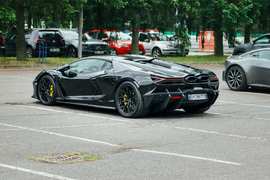
In the pantheon of automotive legends, Ferrari holds a special place. The Italian marque has produced some of the most iconic cars in history, and the LaFerrari stands as a testament to its enduring legacy of excellence. Launched as Ferrari’s flagship hybrid hypercar, the LaFerrari represents a bold step into the future of performance motoring, combining the company’s racing heritage with cutting-edge hybrid technology. This machine is a true work of art, a fusion of Italian design flair and engineering brilliance that commands attention on any road it graces.
The name itself, “LaFerrari,” which translates to “The Ferrari,” signifies the car’s status as the ultimate expression of the brand’s capabilities. It is a car that embodies the core values of Ferrari: passion, performance, and innovation. Few cars on the road are as striking or as exhilarating to drive. The LaFerrari’s design is a masterclass in aerodynamic efficiency, with every curve and contour serving a purpose. Its aggressive stance, scissor doors, and flowing lines create a silhouette that is both beautiful and menacing, a true reflection of its Jekyll and Hyde personality.
Underneath its stunning exterior lies a powertrain that redefines the term “hypercar.” The LaFerrari combines a naturally aspirated 6.3-liter V12 engine with a KERS (Kinetic Energy Recovery System), similar to those used in Formula 1 racing. This hybrid system allows the car to deliver a combined output of 950 horsepower and 715 pound-feet of torque. The result is breathtaking performance that borders on the supernatural. The LaFerrari accelerates from 0 to 60 mph in less than 3.0 seconds, a figure that would be impressive for any car, let alone one that weighs nearly 2,800 pounds. It continues to pull relentlessly, reaching 124 mph in under 7 seconds, with a top speed that exceeds 217 mph.
The driving experience in the LaFerrari is nothing short of extraordinary. The KERS system provides an instant surge of electric power, filling in any gaps in the V12’s powerband and ensuring that acceleration is always brutal and immediate. The car’s handling is equally impressive, with a chassis that is both stiff and compliant, allowing it to carve through corners with precision and grace. The steering is direct and communicative, providing the driver with a level of feedback that is rare in modern cars. The sound of the V12 engine, combined with the whine of the electric motor, creates a symphony that is both thrilling and intoxicating.
The interior of the LaFerrari is a testament to Ferrari’s commitment to driver-focused design. The cabin is a snug, cockpit-like environment that cocoons the driver and passenger in a blend of luxury and sportiness. The seats are supportive and comfortable, providing excellent lateral support during high-speed cornering. The dashboard is dominated by a