
The 10 Most Expensive Cars in the World: A Glimpse into Hypercar Supremacy
In the rarefied atmosphere of the automotive elite, mere transportation ceases to be the primary objective. Here, we encounter rolling sculptures that defy conventional logic, embodying the audacious priorities of the one percent where extravagance and swagger triumph over practicality. While lifestyle critiques are inevitable, these mechanical marvels are undeniably breathtaking. Join us as we count down our favorites from the zenith of automotive engineering.
The Zenvo ST1 ($1.2 Million)
Zenvo ST1
Kicking off our enumeration is a machine less akin to a car and more akin to an untamed beast—the Zenvo ST1. Forged in Zealand, Denmark, this automotive titan unleashes a truly staggering amount of power by synergizing a 6.8-liter V8 engine with both a supercharger and a turbocharger. Just how much power constitutes “staggering”? Consider this: 1,104 horsepower and 1,054 pound-feet of torque, all channeled relentlessly to the car’s rear wheels. This Danish marvel exemplifies the pinnacle of boutique hypercar engineering, where bespoke craftsmanship meets brute force in a symphony of speed.
The Ferrari LaFerrari ($1.4 Million)
Ferrari
Few vehicles on the asphalt command attention quite like the LaFerrari, and even fewer can match its electrifying velocity. With a dry weight of less than 2,800 pounds, this dragon-like performance machine catapults from 0 to 60 mph in under three seconds. Its acceleration trajectory is nothing short of breathtaking, reaching 124 mph in less than seven seconds. At its zenith, the LaFerrari crests a top speed of 217 mph, solidifying its status as a true icon of Italian automotive prowess. This hybrid marvel seamlessly blends Formula 1 technology with road-going refinement, creating an unparalleled driving experience that continues to captivate collectors and enthusiasts worldwide.

The Pagani Huayra ($1.4 Million)
Pagani Huayra
The Huayra is as renowned for its euphonious name as it is for its face-melting performance. Pronounced “why-rah,” the moniker pays homage to the Incan God of Winds. Beneath its sculpted exterior, the Huayra harbors an AMG-sourced 6.0-liter V12 engine, augmented by two turbochargers. This potent combination yields 620 horsepower and a colossal 740 pound-feet of torque, ensuring that the Huayra lives up to its gusty namesake. Pagani’s meticulous attention to detail is evident in every curve and contour, making the Huayra a rolling masterpiece of aerodynamic efficiency and aesthetic perfection.
The Aston Martin One-77 ($1.4 Million)
Aston Martin
Beneath the aggressively vented hood of the Aston Martin One-77 resides a naturally aspirated V12 engine displacing a gargantuan 7.3 liters—a formidable displacement by any standard. This powerhouse expels 750 horsepower and 553 pound-feet of torque, numbers that underscore the car’s exceptional capabilities. These figures establish the One-77 as the fastest Aston Martin ever conceived, with the ability to eclipse 220 mph under optimal conditions. From a standstill, this British predator rockets to 60 mph in a mere 3.5 seconds, embodying the quintessence of refined British motoring elevated to hypercar levels.
The Koenigsegg One:1 ($2 Million)
Koenigsegg One:1
A sum of $2 million opens doors to myriad possibilities—a luxurious estate, approximately eighty Mazda MX-5s, or perhaps the Swedish “megacar” depicted above. A pragmatic mind might readily identify more judicious uses for one’s life savings, yet megacars operate beyond the realm of conventional logic. They exist to be mega. After acquainting oneself with the sheer capabilities of the One:1, the $2 million price tag begins to feel less like an expense and more like a concession for entry into an exclusive echelon of automotive exclusivity. This Swedish masterpiece pushes the boundaries of performance, offering a driving experience that borders on the extraterrestrial.
The Ferrari F60 America ($2.5 Million)
Ferrari F60 America
Mechanically, the Ferrari F60 America is indistinguishable from the venerable F12 Berlinetta. However, the F12 is hardly a pedestrian automobile to begin with. Its 6.2-liter V12 engine churns out a glorious 740 horsepower, sufficient to propel the car from 0 to 60 mph in a scant 3.1 seconds. This ultra-rare celebratory model pays homage to Ferrari’s bespoke heritage, harkening back to the era when the company crafted exclusive, region-specific sports cars for discerning clientele in the 1950s and 1960s. The F60 America represents a modern iteration of this tradition, blending timeless design with cutting-edge performance.
The Mansory Vivere Bugatti Veyron ($3.4 Million)
Bugatti
A compilation of the world’s most expensive automobiles would be incomplete without the inclusion of the legendary Bugatti Veyron. We turn our spotlight specifically to the Mansory Vivere edition, not solely because it ranks among the fastest cars globally, but because it also commands one of the most substantial price tags. Mansory, renowned for its audacious customizations, has transformed the Veyron into an even more exclusive and visually arresting machine. This bespoke iteration combines Bugatti’s unparalleled engineering with Mansory’s distinctive design philosophy, creating a hypercar that stands out even in a realm of automotive extravagance.
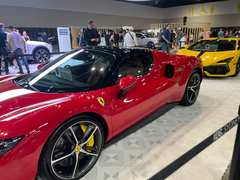
The W Motors Lykan Hypersport ($3.4 Million)
Lykan Hypersport
Many will recall the Lykan Hypersport from its starring role in the blockbuster film Furious 7. In the movie, this Lebanese supercar executed a series of gravity-defying stunts, famously crashing through not one, not two, but three skyscrapers in Dubai. Amidst a franchise populated with high-end exotics and one-off custom creations, the fact that the Hypersport commanded such prominent screen time is a testament to its undeniable magnetism. Its striking design and cinematic legacy have cemented its place in automotive lore, making it a sought-after collectible for those who appreciate a blend of Hollywood glamour and hypercar performance.
The Lamborghini Veneno ($4.5 Million)
Lamborghini
From every conceivable angle, the Lamborghini Veneno presents a spectacle of automotive artistry—a design so audacious that it occasionally prompts the question of whether it’s an alien spacecraft surveying our planet for potential annexation. It simply defies earthly comprehension. The most astonishing aspect, perhaps even more so than its otherworldly appearance, is its price tag—a staggering $4.5 million. This Italian masterpiece represents the zenith of Lamborghini’s design philosophy, pushing the boundaries of what is aesthetically and technically possible in a road-legal vehicle.
The Koenigsegg CCXR Trevita ($4.8 Million)
Koenigsegg CCXR Trevita
Beneath the CCXR Trevita’s lustrous finish lies a 4.8-liter, dual-supercharged V8 engine, delivering a combined output of 1,004 horsepower and 797 pound-feet of torque. This immense power ensures that overtaking semitrucks on the freeway is a triviality. The car’s specifications—both in terms of performance and price—border on the comical, especially considering that only three examples were ever produced. The Trevita represents the pinnacle of Koenigsegg’s engineering prowess, a rare gem in the automotive world that combines breathtaking speed with unparalleled exclusivity. Its unique carbon fiber finish, developed through a proprietary process, gives the car a diamond-like appearance, making it a true work of automotive art.
The Evolution of Automotive Investment: From Classics to Hypercars
The landscape of high-value automotive collecting has undergone a seismic shift over the past few decades. What was once the exclusive domain of vintage marquees and classic racing machines has expanded dramatically to encompass the realm of contemporary hypercars. This evolution reflects not only changes in automotive technology but also the shifting priorities of ultra-high-net-worth individuals seeking tangible assets that deliver both emotional satisfaction and potential financial appreciation.
The Enduring Allure of Vintage Marquees
For generations, the epitome of automotive investment resided in the hallowed halls of classic car auctions. Legendary marques such as Ferrari, Aston Martin, and Bugatti from the mid-20th century commanded stratospheric prices, their value intrinsically linked to their historical significance, racing provenance, and scarcity. A pristine 1962 Ferrari 250 GTO, for instance, represents a tangible piece of automotive history, a testament to a bygone era when design and engineering were approached with an artisanal sensibility. These vehicles are not merely cars; they are rolling artifacts that tell stories of legendary drivers, iconic races, and cultural milestones.
The investment thesis for vintage cars is predicated on a combination of rarity, condition, and provenance. A car that has been meticulously restored to its original specifications, ideally with documented racing history, can appreciate exponentially over time. However, this market demands specialized knowledge, as provenance can be as elusive as it is valuable. Counterfeit documentation and undisclosed accident histories can plague even the most promising investments, necessitating the expertise of seasoned appraisers and restorers.
The Rise of the Modern-Day Mechanical Masterpiece
In recent years, the automotive investment landscape has been dramatically reshaped by the emergence of the contemporary hypercar. As engineering capabilities have advanced, manufacturers have begun producing vehicles that challenge the very definition of automotive performance. These modern marvels, often produced in extremely limited quantities