
Title: The Pinnacle of Automotive Extravagance: A Deep Dive into the World’s Most Expensive Cars

In the rarefied atmosphere where engineering mastery meets artistic expression, automobiles transcend mere functionality to become rolling monuments of wealth and aspiration. These are not simply vehicles designed for the commute; they are rolling sculptures, technological marvels, and potent symbols of a lifestyle reserved for the ultra-affluent. For those operating at the zenith of the economic spectrum, the metrics of practicality and efficiency often yield to the allure of exclusivity, performance, and sheer audacious design. This exploration delves into the echelon of automotive luxury, dissecting the machines that command prices stretching into the tens of millions, redefining the very concept of a supercar.
The landscape of hypercars is a constantly shifting tableau, a domain where established marques vie for supremacy and insurgent brands emerge with audacious claims. While the specific rankings may fluctuate with the unveiling of new limited-edition models or private sales of legendary classics, the underlying appeal remains constant: an intoxicating blend of breathtaking speed, bespoke craftsmanship, and scarcity that renders these vehicles objects of intense desire. As we navigate this exclusive stratum of the automotive world, we invite readers to ponder the confluence of factors that elevate a car from a high-performance machine to a multi-million-dollar artifact.
The Zenvo ST1: Danish Ingenuity Unleashed
Our journey into the realm of automotive opulence begins with a creation from the relatively nascent, yet remarkably ambitious, Danish manufacturer Zenvo Automotive. The Zenvo ST1, often cited with a price tag hovering around the $1.2 million mark, represents a compelling synthesis of brute force and meticulous engineering. Hailing from the unassuming island of Zealand, Zenvo has carved a niche for itself by eschewing the common practice of outsourcing powertrain development. Instead, the ST1 is a testament to self-reliance, featuring a bespoke engine that serves as the beating heart of this Danish beast.
At the core of the ST1’s formidable character lies a leviathan 6.8-liter V8 engine. However, what truly sets this powerplant apart is its aggressive induction strategy. Unlike conventional setups, the ST1 employs a dual-boost system, integrating both a mechanical supercharger and a turbocharger. This symbiotic relationship between forced induction technologies ensures that the engine remains potent across the entire rev range. The supercharger provides immediate low-end torque, virtually eliminating any hint of turbo lag, while the turbocharger takes over at higher engine speeds to deliver a relentless surge of power.
The resulting output figures are nothing short of staggering. The Zenvo ST1 produces an astronomical 1,104 horsepower and a colossal 1,054 pound-feet of torque. These figures place the ST1 in the upper echelons of hypercar performance, rivaling machines from more established Italian and German manufacturers. Power is channeled exclusively to the rear wheels through a sophisticated seven-speed automatic transmission, which features paddle shifters for drivers who desire more direct control over the car’s immense reserves of power.
Visually, the ST1 is a study in aggressive aerodynamics and functional beauty. Its low-slung profile is punctuated by a series of NACA ducts and strategically placed vents designed to manage the significant thermal loads generated by the high-performance powertrain. The cabin, while luxurious, is clearly driver-focused, eschewing unnecessary frippery in favor of high-quality materials such as Alcantara and carbon fiber. The instrumentation is a blend of digital clarity and analog theater, with a central digital display that provides critical performance data, flanked by traditional analog gauges for key metrics like oil pressure and boost levels.
The exclusivity of the Zenvo ST1 is further amplified by its limited production run. Zenvo typically manufactures these vehicles in very small batches, often in the single digits, ensuring that ownership remains a privilege reserved for a select few. This scarcity, combined with the car’s extraordinary capabilities and unique Danish provenance, solidifies its position as a compelling contender in the world’s most expensive cars list. For the discerning collector seeking a machine that offers both exhilarating performance and a compelling origin story, the Zenvo ST1 presents an undeniable proposition.
The Ferrari LaFerrari: A Prancing Horse Masterpiece
Few automotive brands evoke the same visceral reaction as Ferrari. For nearly a century, the Prancing Horse has been synonymous with speed, style, and the pinnacle of Italian automotive engineering. When Ferrari decided to create a successor to the legendary Enzo, the expectations were stratospheric. The result, the LaFerrari, not only met these expectations but arguably transcended them, establishing itself as one of the most iconic hypercars of the modern era. Valued at approximately $1.4 million at the time of its launch, the LaFerrari represents the zenith of Ferrari’s technological prowess and design philosophy.
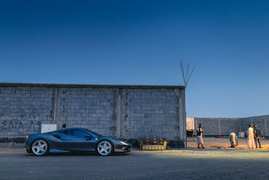
The name itself, “The Ferrari,” is a bold declaration of intent, signifying that this vehicle is the definitive expression of the brand’s identity. This sentiment is reflected in its revolutionary powertrain, which marked a significant departure from Ferrari’s traditional naturally aspirated V12 lineage. The LaFerrari is a hybrid, a strategic embrace of electrification that would define the next generation of hypercars. This system, known as HY-KERS (High Performance Hybrid Integrated Kinetic Energy Recovery System), combines a fearsome V12 engine with an electric motor.
At the heart of this hybrid symphony lies a naturally aspirated 6.3-liter V12 engine. Displacing 6,262 cubic centimeters, this magnificent powerplant is a masterpiece of engineering in its own right. It produces a searing 789 horsepower and 516 pound-feet of torque, revving to a dizzying 9,250 rpm. However, the true genius of the LaFerrari lies in the seamless integration of the electric motor. This unit, powered by a compact lithium-ion battery pack, delivers an additional 160 horsepower and 199 pound-feet of torque.
When combined, these power sources unleash a combined output of 949 horsepower and an electronically limited peak torque of 715 pound-feet. This prodigious power is channeled through a seven-speed dual-clutch transmission, a unit developed by Ferrari’s Corse Clienti division. The dual-clutch system allows for gear changes that are virtually instantaneous, completing a full gear swap in a mere 150 milliseconds. This rapid-fire shifting, combined with the linear power delivery of the hybrid system, results in truly breathtaking acceleration figures.
From a standstill, the LaFerrari obliterates the 60 mph barrier in a blistering less than 3.0 seconds. The surge of acceleration continues unabated, with the car reaching 124 mph (200 km/h) in under 7 seconds. The quarter-mile is dispatched in a mere 9.8 seconds, a figure that places it firmly in the realm of elite drag racers. Top speed, while electronically limited to protect the delicate components of the hybrid system, stands at a staggering 217 mph.
Beyond its staggering performance metrics, the LaFerrari is a visual masterpiece. Its design is a masterclass in aerodynamic efficiency, with flowing lines that manage airflow with surgical precision. The cabin, accessible through dramatic dihedral (scissor) doors, is a dramatic fusion of race car functionality and Italian luxury. The driver is cocooned in a carbon fiber monocoque chassis, a structure that provides both exceptional rigidity and significant weight savings. The steering wheel, inspired by Formula 1 designs, places all essential controls within easy reach of the driver’s fingertips.
The exclusivity of the LaFerrari is perhaps its most defining characteristic. Production was strictly limited to just 499 units, ensuring that ownership remained a privilege reserved for Ferrari’s most devoted clients. The waiting list for this magnificent machine was reportedly closed years before production even commenced. This scarcity, combined with its revolutionary technology and iconic status, has cemented the LaFerrari’s place as one of the most sought-after and valuable hypercars ever produced.
The Pagani Huayra: A Masterclass in Aerodynamic Artistry
When one envisions the epitome of automotive artistry, the name Pagani often springs to mind. The Italian manufacturer, founded by the visionary Horacio Pagani, has carved a unique niche in the hypercar landscape by blending breathtaking performance with an almost obsessive attention to detail. The Pagani Huayra, a successor to the legendary Zonda, represents the culmination of this philosophy. Pronounced “why-rah,” the name is inspired by the Incan God of Winds, a fitting moniker for a car engineered to interact with the air in the most sophisticated manner imaginable.
At the heart of the Huayra lies a powerplant sourced from a legendary German institution: Mercedes-AMG. This partnership has yielded a truly remarkable engine, a 6.0-liter twin-turbocharged V12. This is not a mere off-the-shelf engine; it is a bespoke creation, meticulously developed by AMG specifically for Pagani. The twin-turbochargers are meticulously tuned to deliver power with an immediacy that belies their forced-induction nature.
The resulting performance figures are nothing short of spectacular. The AMG-sourced V12 produces a staggering 620 horsepower and a colossal 740 pound-feet of torque. This prodigious torque is available across a broad rev range, providing the driver with an almost inexhaustible supply of power. Power is transmitted to the rear wheels through a seven-speed sequential transmission, a unit developed in collaboration with Xtrac, a renowned motorsport engineering firm. This gearbox is celebrated for its lightning-fast shift times, enabling the driver to exploit the full potential of the Huayra’s powerband.
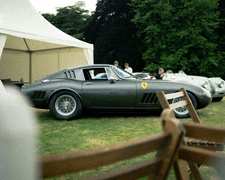
What truly sets the Huayra apart from