
The Billionaire’s Playground: A Deep Dive Into the World’s Most Expensive Cars
In the rarefied atmosphere where asphalt meets aspiration, automobiles transcend mere transportation to become rolling monuments of wealth and engineering prowess. These are not the cars you see in daily commutes; they are hyper-exclusive, hand-built marvels that whisper, rather than shout, the status of their owners. As an industry veteran with a decade navigating the intersection of luxury automotive and high-net-worth clientele, I’ve witnessed firsthand how the definition of “expensive” continues to be rewritten. The vehicles topping the charts today are technological tour de fortes, fusion of art and physics that challenge the very limits of what’s possible behind the wheel.
The landscape of the ultra-luxury car market—a segment often dominated by European marques—is constantly shifting. What was once considered the pinnacle of automotive engineering is now simply the baseline for entry into this exclusive club. Driven by technological innovation, particularly in hybridization, and the insatiable demand for bespoke customization, these machines command prices that dwarf the GDP of small nations. For the discerning collector, an investment in one of these hypercars is not just about acquiring a vehicle; it’s about securing a piece of automotive history, a testament to human ingenuity, and a highly liquid asset in the ever-volatile world of alternative investments.
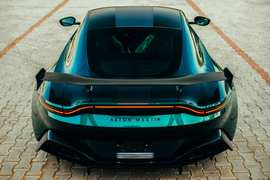
This comprehensive guide will navigate you through the stratospheric realm of the world’s most expensive cars. We will dissect the engineering genius, explore the bespoke craftsmanship, and analyze the market dynamics that justify these astronomical valuations. While some may view these vehicles as extravagant folly, for those in the know, they represent the apex of performance, design, and exclusivity—a playground reserved for the one percent.
Understanding the Metrics: What Makes a Car “Expensive”?
Before embarking on our countdown, it’s crucial to clarify the criteria that catapult these vehicles into the million-dollar stratosphere. Unlike mass-produced luxury sedans or even standard supercars, the price of these elite machines is dictated by a confluence of factors that go far beyond horsepower figures or top speeds.
Exclusivity and Rarity: This is perhaps the most significant driver of value. In the world of hypercars, scarcity is manufactured. Most of these vehicles are produced in single or double-digit production runs. For instance, a car limited to just ten units worldwide inherently commands a premium over a model produced in the hundreds. This scarcity is often enforced by the manufacturer through “Invitation Only” sales policies, where prospective buyers must prove their worthiness—often by being existing collectors of the brand—before being allowed to purchase.
Bespoke Customization and Materials: The modern luxury automotive client rarely wants a car “as is.” They demand personalization. This opens the door to astronomical upcharges. Imagine specifying every stitch in the interior, opting for hand-painted coachlines, or commissioning a unique metallic flake for the paint that refracts light in a specific way. Companies like Mansory, Singer, and Rolls-Royce’s Bespoke division specialize in transforming already expensive cars into unique works of art. The materials used are also a critical factor. We’re talking about aeronautical-grade carbon fiber, titanium alloys, ethically sourced exotic leathers, and even precious metals embedded in the bodywork. Each bespoke element adds hours of skilled labor and unique materials, justifying substantial cost increases.
Technological Innovation: The automotive industry is in the midst of a technological arms race, and the most expensive cars are often the testbeds for this innovation. Hybridization, for example, has allowed manufacturers to combine the raw power of internal combustion engines with the instant torque of electric motors, creating performance benchmarks previously thought impossible. Features like active aerodynamics—where wings and spoilers adjust in real-time based on speed and cornering G-forces—or advanced predictive suspension systems that read the road ahead, require years of research and development. The cost of this R&D must be recouped, and it is passed on to the privileged few who can afford these technological marvels.
Performance Metrics: While exclusivity and materials drive the price, performance ensures the car’s place in the automotive hierarchy. Top speed, acceleration (specifically the 0-60 mph and 0-124 mph benchmarks), and braking performance are the metrics by which these machines are judged. A car that can achieve speeds exceeding 250 mph or accelerate to 60 mph in under three seconds is a technological feat requiring precision engineering and robust construction, which comes at a premium cost.
Heritage and Brand Prestige: Certain brands carry an almost mythical status in the automotive world. Ferrari, Lamborghini, Bugatti, and Rolls-Royce are not just car manufacturers; they are cultural icons. A car bearing one of these legendary badges commands a premium based on the brand’s history, its racing pedigree, and the lifestyle it represents. For many buyers, the emotional connection and the prestige associated with owning a piece of that heritage are invaluable.
Now, let’s delve into the specifics. Here are the ten most expensive cars in the world, as of 2025, representing the pinnacle of automotive engineering and luxury.
Zenvo ST1 ($1.2 Million)

Kicking off our list is a testament to Danish engineering prowess. The Zenvo ST1 is not just a car; it’s a statement of intent from a relatively young manufacturer aiming to compete with the established titans of the hypercar world. Assembled in Zealand, Denmark, the ST1 is a brutal, uncompromising machine that prioritizes raw power and driver engagement above all else.
At the heart of the ST1 lies a 6.8-liter V8 engine, a powerplant that has been meticulously engineered to produce a staggering amount of horsepower. What makes the Zenvo’s approach unique is its innovative forced induction system. Rather than relying solely on a turbocharger or a supercharger, the ST1 employs both. This combination allows the engine to deliver immense torque across the entire rev range. The result is an earth-shattering 1,104 horsepower and 1,054 pound-feet of torque, all channeled exclusively to the rear wheels.
The driving experience is equally visceral. With a dry weight of just under 3,000 pounds, thanks to an extensive use of carbon fiber, the ST1 rockets from 0 to 60 mph in a blistering 2.9 seconds. It continues to pull with unrelenting force, reaching 124 mph in under 7 seconds. Top speed is electronically limited, not by the engine’s capability, but by tire technology, standing at a breathtaking 233 mph.
Inside, the cabin is a blend of race-inspired functionality and luxury. The seats are form-fitting carbon fiber buckets wrapped in premium leather, providing the necessary support during high-G cornering. The dashboard is a digital masterpiece, displaying vital information in a clear, concise manner, while the center console features toggle switches and buttons that harken back to classic aircraft cockpits.
Production of the Zenvo ST1 was extremely limited, with only 15 units ever produced. This exclusivity, combined with its unique hybrid forced induction system and extreme performance metrics, solidifies its position as one of the most desirable hypercars on the planet. It represents a segment of the market that craves mechanical purity and raw, unfiltered power—a true driver’s car in an increasingly automated world.
Ferrari LaFerrari ($1.4 Million)
The name itself, “LaFerrari,” translates to “The Ferrari,” a bold declaration by the legendary Italian marque that this vehicle represents the absolute pinnacle of their engineering and design philosophy. Unveiled at the 2013 Geneva Motor Show, it was the spiritual successor to the Enzo and the first production Ferrari to incorporate a full hybrid system, a technological leap that set a new benchmark for performance cars.
The LaFerrari is a masterpiece of aerodynamic efficiency and aesthetic drama. Its design is an aggressive, almost predatory sculpture, with sharp creases, dramatic air intakes, and a low-slung profile that hugs the tarmac. Every curve and vent serves a purpose, channeling airflow to cool the massive hybrid powertrain and generate downforce at high speeds. The cabin is a futuristic, driver-focused environment, clad in carbon fiber and Alcantara, with race-style seats that position the driver low, almost at the apex of the car’s center of gravity.
Underpinning this stunning bodywork is a powertrain that redefines the concept of a hybrid. It combines a naturally aspirated 6.3-liter V12 engine, producing 789 horsepower, with an electric motor that adds 160 horsepower. Together, they deliver a combined output of 949 horsepower and 715 pound-feet of torque. This excess of power is managed by a seven-speed dual-clutch transmission that shifts gears with near-instantaneous precision, ensuring that the driver is never left wanting for acceleration.
The performance figures are nothing short of astonishing. Thanks to its lightweight carbon fiber monocoque construction and the instant torque delivery of the electric motor, the LaFerrari accelerates from 0 to 60 mph in less than 3.0 seconds. It reaches 124 mph in under 7 seconds and continues to pull relentlessly to a top speed of 217 mph. The car’s handling is equally remarkable, with a sophisticated suspension system and advanced aerodynamics that provide an intoxicating blend of grip and agility.

The LaFerrari was produced in a limited run of 499 units, and due to its significance as Ferrari’s flagship technological statement, they were all sold out before the car was even officially unveiled. Today, the LaFerrari is a highly sought-after collector’s item, with prices on the secondary market soaring far above its original sticker price. It represents a perfect synthesis of Ferrari’s