
The Billionaire’s Playground: A Deep Dive into the World’s Most Expensive Cars
In an era where the average new car price is creeping ever higher, it’s easy to feel like the automotive world is becoming an exclusive club. Yet, for the vast majority of us, rising costs are simply a reflection of inflation, offset by unprecedented advancements in performance, safety, and technology. However, for the globe’s wealthiest elite—the 58 million millionaires and 2,800 billionaires—the concept of “expensive” takes on an entirely different dimension. For them, standard luxury and sports cars are mere trifles. Their vehicles are not just modes of transport; they are rolling monuments to wealth, engineering marvels, and ultimate expressions of personal extravagance. This is the exclusive realm of the world’s most expensive cars, where price tags soar into the tens of millions, and the concept of “limited edition” takes on a whole new meaning.
The automotive landscape for the ultra-rich is defined by exclusivity, bespoke craftsmanship, and performance that borders on the supernatural. In this stratosphere, manufacturers compete not just on speed or luxury, but on the ability to translate the most audacious dreams of their clients into tangible, road-legal masterpieces. From the hallowed halls of Bugatti and Pagani to the bespoke workshops of Rolls-Royce, these automotive legends are pushing the boundaries of what is possible, creating vehicles that will forever be etched in the annals of automotive history. This in-depth exploration delves into the crème de la crème of the automotive world, uncovering the stories, the engineering, and the sheer audacity behind the most expensive cars on the planet.
The Pinnacle of Automotive Luxury: What Defines These Automotive Legends?
Before we embark on our journey through the rarefied air of the automotive elite, it’s crucial to understand what elevates these machines from mere high-performance vehicles to multi-million dollar icons. The answer lies in a confluence of factors that go far beyond engine size or top speed. At the heart of it all is bespoke craftsmanship. Unlike mass-produced supercars, these vehicles are often one-offs or produced in extremely limited runs—sometimes as few as a single unit. This exclusivity is a primary driver of value, ensuring that the owner possesses something truly unique.
Artistic Design is another critical element. These are not just cars; they are rolling sculptures. Designers are given free rein to create breathtaking forms that prioritize aesthetic impact over aerodynamic efficiency, though the two are rarely mutually exclusive. The lines are often fluid, organic, and dramatic, transforming the vehicle into a moving piece of art. This artistic vision is often realized through painstaking manual labor, with artisans spending hundreds, if not thousands, of hours hand-crafting every curve and surface.
Technological Innovation plays a pivotal role, though it manifests differently than in mainstream automotive development. While manufacturers strive for cutting-edge technology, the focus here is often on bespoke engineering solutions tailored to the specific client’s desires. This can include everything from custom infotainment systems to elaborate, tailor-made mechanical components. The result is a vehicle that is not only powerful but also a showcase of the manufacturer’s technical prowess and commitment to fulfilling the most demanding requests.
Material Science represents another frontier in this high-stakes automotive arena. The use of exotic materials is not merely for weight reduction; it is a statement of intent. Carbon fiber, titanium, platinum, and even rare woods are employed with abandon, chosen for their aesthetic appeal, rarity, and the craftsmanship required to work with them. The interiors are often upholstered in the finest leathers, silks, and exotic furs, creating an environment of unparalleled luxury.
Finally, the Brand Pedigree cannot be overstated. Names like Bugatti, Pagani, and Rolls-Royce carry an almost mythical status in the automotive world. These brands have spent decades, if not centuries, building a legacy of excellence, and the price tags reflect this heritage. Owning one of these vehicles is not just about possessing a car; it is about joining an exclusive club of individuals who appreciate and can afford the pinnacle of automotive achievement.
The Roster of Rarity: Unveiling the World’s Most Expensive Cars
Let us now turn our attention to the stars of our show, the automotive legends that grace the highest echelons of the collecting world. While the specific rankings may fluctuate slightly based on private sales and auction results, the following list represents the undisputed titans of the hyper-expensive automotive landscape.
The Bugatti Divo: Precision-Engineered Exclusivity
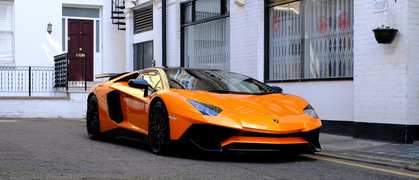
Kicking off our list at a formidable $5.8 million, the Bugatti Divo represents the antithesis of the Chiron’s “everyday hypercar” philosophy. While the Chiron is a marvel of brute force and accessible luxury, the Divo is a precision-engineered track weapon refined for the road. Named after Albert Divo, a French former air force pilot and Bugatti works driver who won the legendary Targa Florio race twice in the 1920s, the Divo is a testament to Bugatti’s rich racing heritage.
Only 40 examples of the Divo were ever produced, ensuring its immediate rarity. But the Divo’s value extends far beyond its low production numbers. It is built upon the formidable chassis of the Chiron, retaining the legendary 8.0-liter quad-turbocharged W16 engine that produces a staggering 1,479 horsepower. However, the Divo is not merely a rebadged Chiron. Bugatti’s engineers took the Chiron’s already potent powertrain and chassis and subjected them to a radical transformation.
The most significant change lies in the vehicle’s aerodynamics and weight. The Divo features a dramatically restyled body with a massive rear wing, redesigned front splitter, and optimized air intakes that generate a staggering 456 kilograms of downforce at 236 mph—significantly more than the standard Chiron. This increased downforce allows the Divo to corner with astonishing tenacity, boasting lateral acceleration of up to 1.6g. To complement this enhanced aerodynamic package, Bugatti engineers undertook an extensive weight-saving regimen. They revised the carbon fiber bodywork, replaced the Chiron’s fixed rear wing with a larger, more aggressive unit, and incorporated lighter wheels and suspension components. The result is a car that, despite its considerable size, feels nimble and agile on the track.
The interior of the Divo is a masterclass in functional luxury. While retaining the Chiron’s high-quality materials, the Divo’s cabin is finished in a more aggressive and driver-focused specification. The seats are deeply bolstered racing buckets, trimmed in a combination of Alcantara and leather, providing exceptional support during high-speed cornering. The color scheme often features a striking contrast between deep blues and blacks, accented with vibrant yellow stitching that echoes the car’s vibrant exterior paintwork.
Performance-wise, the Divo is a revelation. While its top speed is electronically limited to 236 mph—lower than the Chiron’s 261 mph—its acceleration is breathtaking. The Divo rockets from 0 to 60 mph in a mere 2.4 seconds and can reach 124 mph in just 6.5 seconds. This seemingly contradictory trade-off—lower top speed for superior handling—is the very essence of the Divo’s character. It is not a car designed to chase top-speed records; it is a car engineered to dominate the corners, to provide an exhilarating and visceral driving experience that few other vehicles can match. The Divo is a testament to Bugatti’s engineering prowess and its ability to create something truly special even from an already extraordinary foundation. It is the thinking person’s Bugatti, a machine that rewards the driver who seeks not just speed, but precision, balance, and a connection to the road.
The Pagani Huayra Imola Roadster: The Apex Predator Unleashed
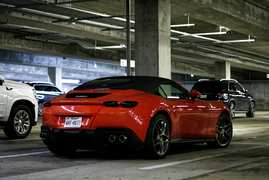
Ascending to the ninth position with a price tag of approximately $6 million, the Pagani Huayra Imola Roadster represents the pinnacle of Italian hypercar engineering and bespoke artistry. Pagani, the brainchild of Horacio Pagani, has carved a niche for itself by producing road-legal machines that blur the line between automotive engineering and fine art. The Huayra Imola Roadster is not merely a modified Huayra; it is a visceral expression of automotive extremism, designed for the discerning collector who demands nothing less than the absolute best.
The Imola Roadster is the culmination of Pagani’s extensive track development, a process that saw the company’s engineers spend countless hours pushing the boundaries of performance at the legendary Imola circuit in Italy—the very track that lends the car its name. This intense development period resulted in a vehicle that is lighter, more powerful, and aerodynamically superior to any previous Huayra variant.
At the heart of the Imola Roadster beats a modified version of the already formidable Mercedes-AMG twin-turbocharged V12 engine. This powerplant has been massaged to produce a staggering 838 horsepower and an earth-shattering 811 lb-ft of torque. This surge of power is delivered through a bespoke seven-speed sequential gearbox, engineered to provide lightning-fast shifts that keep the driver firmly in the power band. The result is a car that can rocket from 0 to 60 mph in a scarcely believable 2.6 seconds and reach a top speed that is rumored to exceed 230 mph, though Pagani rarely discloses precise figures, preferring to let the car’s performance speak for itself.
However, the Imola Roadster’s true genius lies not just in its engine, but in its engineering and aerodynamics