
The Pinnacle of Automotive Excess: A Deep Dive into the World’s Most Expensive Cars in 2026
In an era where the average new car price is climbing steadily, often outpacing inflation and presenting a significant barrier to entry for many consumers, the stratosphere of automotive luxury operates on an entirely different plane. For the ultra-wealthy—a global demographic of nearly 58 million millionaires and 2,800 billionaires whose net worth dwarfs the GDP of entire nations—the conventional luxury or sports car simply doesn’t suffice. When financial constraints are a non-factor, the definition of “value” shifts from practicality and affordability to exclusivity, craftsmanship, and audacious engineering.
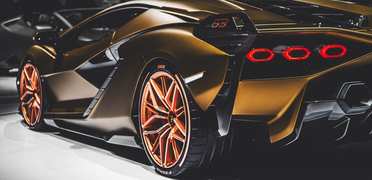
The 2026 landscape of the world’s most expensive cars represents the apex of automotive artistry, a collection of bespoke creations where price tags reach into the tens of millions. These are not mass-produced vehicles; they are rolling sculptures, rolling fortresses of engineering prowess, and rolling statements of unparalleled status. This comprehensive exploration will delve into the ten most extravagant expressions of wealth on four wheels, examining the design philosophy, engineering marvels, and unique stories behind each automotive masterpiece.
Bugatti Divo: Precision Track Dominance
Price: $5.6 million (£4.4 million)
While the Bugatti Chiron has become a benchmark for hypercar performance, it remains relatively accessible to the world’s ultra-affluent. For those who desire something even more exclusive, the Bugatti Divo answers the call. Named in honor of Albert Divo, a former French air force pilot and Bugatti works driver who secured multiple victories in the Targa Florio race during the 1920s, the Divo represents a strategic shift for the brand. Instead of focusing solely on top speed—a metric already mastered by the Chiron—the Divo prioritizes agility, downforce, and track-focused handling.
Production of the Divo was strictly limited to just 40 units, ensuring that ownership remains an exclusive club. Buyers were granted extensive personalization options, allowing for a degree of bespoke tailoring that extends from interior materials to exterior finishes. Mechanically, the Divo shares the Chiron’s formidable quad-turbocharged W16 engine, producing a staggering 1,479 horsepower. However, Bugatti engineers implemented a range of chassis enhancements to optimize its dynamic capabilities. A revised suspension system, reduced weight through the strategic use of carbon fiber, and an aggressive aerodynamic package—including a fixed rear wing and a redesigned front splitter—work in concert to generate significantly more downforce, allowing the Divo to carve through corners with surgical precision. The result is a hypercar that sacrifices a fraction of its top speed for a level of handling prowess that redefines the Bugatti driving experience.
Pagani Huayra Imola Roadster: A Track-Day Weapon for the Elite
Price: $6 million (£4.7 million)
Pagani Automobili has long been synonymous with automotive artistry, creating vehicles that blur the line between mechanical engineering and fine art. The Huayra platform, in its various iterations, has captivated enthusiasts for over a decade. However, the Pagani Huayra Imola Roadster pushes the boundaries of what is possible, emerging from the company’s secretive ‘Grandi Complicazioni’ division—a bespoke atelier dedicated to crafting one-off or ultra-limited-run commissions for the marque’s most discerning clientele.
The Imola Roadster represents an evolution of the already extreme Huayra Imola coupe, which was itself conceived as a track-focused variant. The decision to produce a roadster version presented significant engineering challenges, primarily the need to maintain structural rigidity and aerodynamic efficiency in the absence of a fixed roof. Pagani’s master engineers addressed this by incorporating advanced composite materials and a complex carbon-fiber monocoque structure, ensuring that the roadster’s performance metrics remain tantalizingly close to its coupe counterpart. The engine, a bespoke AMG-sourced twin-turbo V12, has been further optimized to produce upwards of 838 horsepower. This power is managed through an advanced active aerodynamics system, capable of generating 900 kilograms of downforce at speed. With only eight examples slated for production, the Huayra Imola Roadster is a rolling testament to Pagani’s relentless pursuit of perfection, a machine designed not just for speed, but for the visceral thrill of open-top performance at its most extreme.
Pagani Huayra Codalunga: A Homage to Endurance Racing Legends

Price: $7.5 million (£5.9 million)
The intersection of rarity and automotive passion often leads to the most extraordinary creations. The Pagani Huayra Codalunga was born from such a confluence, stemming from a specific request by a pair of wealthy collectors who harbored a shared admiration for the sleek, elongated designs of 1960s Le Mans endurance racers. The term ‘Codalunga’ itself, translating to ‘long tail’ in Italian, directly references this design inspiration.
Pagani’s design team took the already sophisticated Huayra platform and extended the rear section by a remarkable 36 centimeters. This elongation was not merely a stylistic flourish; it was a functional necessity to optimize the car’s aerodynamic profile for high-speed stability. The resulting silhouette is undeniably dramatic, evoking the grace of the iconic Lancia Stratos HF Stradale and the purposeful aggression of the Ferrari P4. Beneath the bespoke bodywork, the Codalunga retains the core of the Huayra’s formidable powertrain, featuring a twin-turbo V12 engine tuned to deliver approximately 830 horsepower. The interior is a masterclass in craftsmanship, showcasing Pagani’s signature woven leather upholstery and extensive use of exotic materials. With only five units produced, each homologated for road use, the Huayra Codalunga is a rare sighting on public roads, a rolling piece of automotive history that pays homage to a golden era of motorsport while pushing the boundaries of modern coachbuilding.
Mercedes-Maybach Exelero: The Ultimate Tyre Testing Machine
Price: $8 million (£6.2 million)
Unlike the bespoke commissions that populate the upper echelons of this list, the Mercedes-Maybach Exelero has a unique origin story. It was not conceived as a plaything for the ultra-wealthy, but rather as a high-performance testbed for Fulda, the German tire division of Goodyear. In the early 2000s, Fulda sought a vehicle capable of validating their new generation of high-performance tires, which were designed to operate at speeds exceeding 350 km/h (217 mph). The requirement was for a car that could not only achieve these speeds but also subject the tires to the immense loads and thermal stress associated with such velocities.
The result, unveiled in 2004, was the Exelero. Built upon the robust chassis of the existing Maybach 57 limousine, the vehicle was extensively re-engineered to accommodate the demanding performance requirements. The design was a collaborative effort, with four students from the University of Pforzheim contributing to the final aesthetic. The Exelero’s design is a striking departure from conventional automotive styling, featuring a bulbous, aerodynamic body that prioritizes function over conventional notions of beauty. Its sheer mass, intentionally kept high to simulate real-world loads, combined with the power of its twin-turbocharged V12 engine—delivering 690 horsepower—enabled it to reach a top speed of 351 km/h (218 mph). Following its successful tenure as a tire testing vehicle, the Exelero has led a storied life, featuring in television programs and music videos before finding its permanent home in the Friedhelm Loh Collection at the Auto & Technik Museum Sinsheim in Germany.
Bugatti Centodieci: A Modern Reinterpretation of an Icon
Price: $9 million (£7 million)
When a manufacturer celebrates a significant anniversary, the nature of the commemoration often reflects the brand’s heritage and identity. In 2019, Bugatti marked its 110th anniversary with the unveiling of the Bugatti Centodieci, a hypercar that pays homage to one of the brand’s most revered models: the EB110 Supersport of the 1990s. The EB110, conceived during the brief period when the Bugatti marque was owned by Italian entrepreneur Romano Artioli, represented a bold attempt to resurrect the legendary French brand. While its tenure was relatively short-lived, the EB110 carved a significant niche in automotive history with its innovative quad-turbocharged W16 engine and exceptional performance for its era.

The Centodieci serves as a spiritual successor, translating the design language of the EB110 into a modern Bugatti idiom. The design process itself was a testament to the brand’s engineering capabilities, with the entirely new bodywork developed using the latest virtual reality technology in a compressed six-month timeframe. Visually, the Centodieci echoes the EB110’s distinctive front fascia, characterized by its wide grille and signature quad headlights, though rendered with modern sophistication. The aerodynamic package has been extensively revised to optimize downforce and stability at the speeds the car is capable of achieving. Under the hood, the Centodieci utilizes a more potent version of the Chiron’s W16 engine, producing an astounding 1,578 horsepower. This power enables the hypercar to accelerate from 0 to 60 mph in a breathtaking 2.4 seconds and achieve a top speed electronically limited to 380 km/h (236 mph). Production was strictly limited to just ten